Table of Contents
ToggleThe No.1 Deficiency Behind All Autoimmune Diseases: How Vitamin D Impacts Your Immune Health
Autoimmune diseases have exploded in prevalence over the last few decades. Millions of people worldwide are suffering from conditions where the body’s immune system mistakenly attacks its own tissues. Doctors often prescribe medications that suppress the immune system, but few talk about what causes it to go haywire in the first place.
So, what if there’s one major deficiency behind most autoimmune diseases? What if a simple nutrient imbalance is at the heart of this global health epidemic? Research suggests that Vitamin D deficiency might just be that missing piece. Let’s dig deep into why this “sunshine vitamin” plays such a crucial role in preventing—and even managing—autoimmune diseases.
Understanding Autoimmune Diseases: A Silent Epidemic
Autoimmune diseases occur when your body’s defense system, which is supposed to protect you from bacteria and viruses, starts attacking healthy cells. This misfire leads to chronic inflammation and damage to various organs and tissues. Conditions like lupus, multiple sclerosis, rheumatoid arthritis, and Hashimoto’s thyroiditis are just a few examples.
The tricky thing about autoimmune diseases is that they often develop silently over years. Fatigue, brain fog, joint pain, and digestive issues might appear long before a formal diagnosis. Most people think of them as unrelated symptoms—until the immune system has already caused significant damage.
What’s even more alarming is that autoimmune diseases are now among the top 10 leading causes of death in women under 65. Clearly, something in our modern world is fueling this epidemic. And while genetics play a role, lifestyle and nutritional deficiencies seem to be the driving forces.
How the Immune System Works—and When It Goes Wrong
Think of your immune system as a highly trained army. Its job is to identify and destroy invaders like viruses, bacteria, or toxins. But this system relies on balance and proper “intelligence” to know who’s friend or foe.
When the immune system loses this ability to distinguish between self and non-self, it begins attacking its own tissues. This self-destruction leads to chronic inflammation, tissue damage, and ultimately, autoimmune diseases.
Vitamin D plays a massive role here. It acts like a general that gives orders to the immune troops. Without enough Vitamin D, the immune system becomes confused and overly aggressive. Instead of defending, it starts attacking—creating the perfect storm for autoimmunity.
Common Autoimmune Disorders: A Quick Overview
Autoimmune diseases can affect almost every system in the body. Here are a few of the most common:
-
Rheumatoid Arthritis (RA): The immune system attacks the joints, leading to pain, stiffness, and swelling.
-
Hashimoto’s Thyroiditis: The body’s immune cells destroy thyroid tissue, causing hypothyroidism.
-
Lupus (SLE): A complex disease that can affect the skin, kidneys, brain, and joints.
-
Multiple Sclerosis (MS): The immune system damages the protective covering of nerve fibers in the brain and spinal cord.
-
Type 1 Diabetes: The immune system destroys insulin-producing cells in the pancreas.
What’s fascinating is that people with these different diseases often share the same underlying deficiency: low Vitamin D levels.
The Root Cause Debate: Genetics, Environment, or Lifestyle?
For decades, scientists believed genetics were the main driver of autoimmune diseases. However, genetics only explain a small percentage of cases. Identical twins, for example, can share the same DNA, yet only one may develop an autoimmune condition.
So, what’s the missing link? Environmental triggers—like infections, toxins, and most importantly, nutrient deficiencies—play a much larger role than we once thought. Among all nutrients, Vitamin D stands out because it directly influences immune function and inflammation control.
Our modern lifestyle—indoor living, sunscreen use, poor diet, and less time outdoors—has led to a global Vitamin D deficiency epidemic. And that deficiency could be the single biggest factor making our immune systems unstable.
Introducing the No. 1 Deficiency: Vitamin D
If there’s one nutrient that deserves the spotlight in autoimmune research, it’s Vitamin D. While it’s often thought of as a bone-health vitamin, its true power lies in immune regulation.
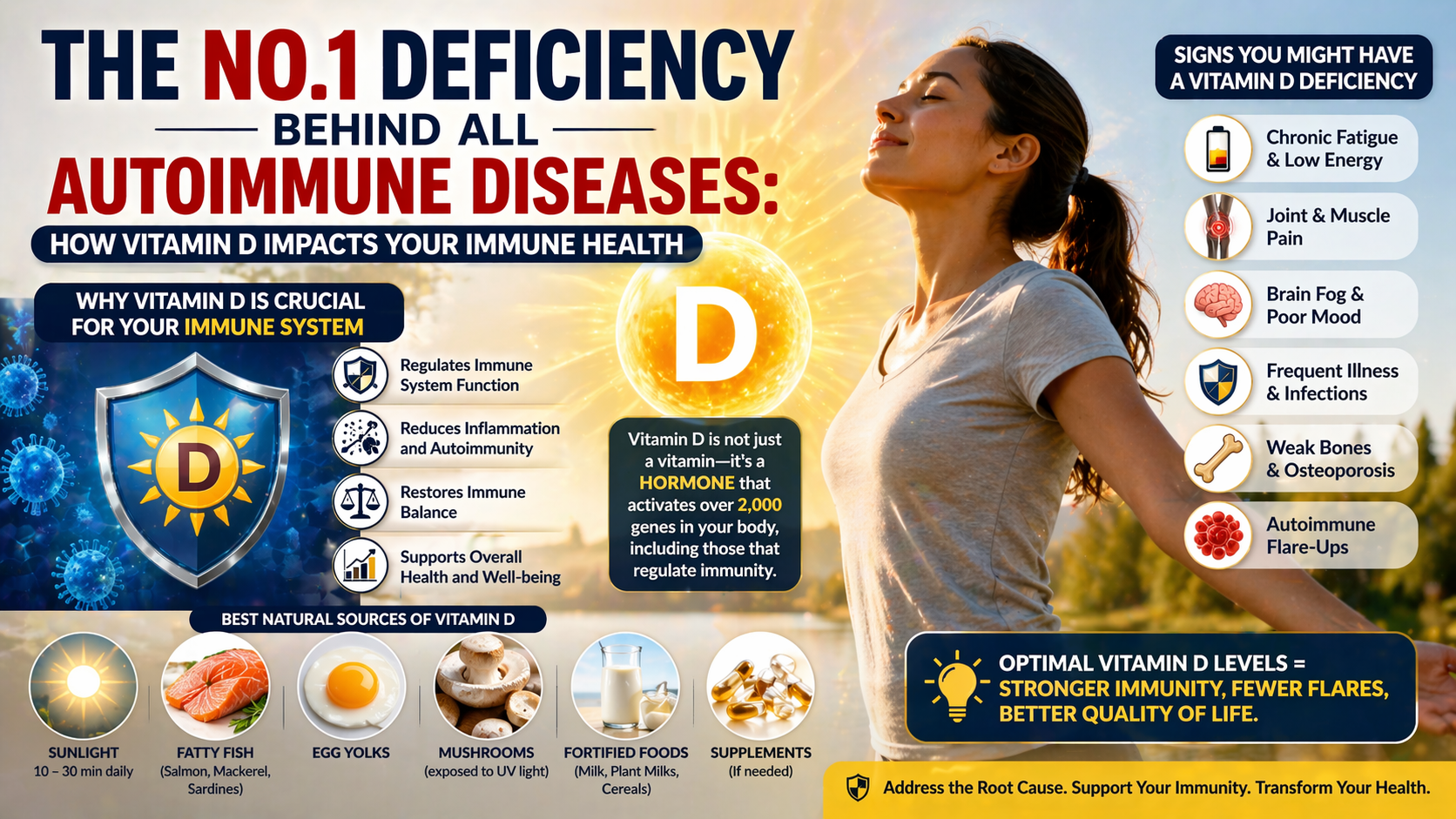
Vitamin D is technically a hormone, not just a vitamin. It controls the expression of over 2,000 genes—many of which are involved in immune function. Without it, your immune cells can’t communicate properly, which can lead to uncontrolled inflammation and autoimmunity.
Studies have consistently shown that people with autoimmune diseases have significantly lower Vitamin D levels than healthy individuals. This isn’t just correlation—it’s causation in many cases, backed by biological mechanisms.
Why Vitamin D Is More Than Just a “Sunshine Vitamin”
You’ve probably heard Vitamin D called the “sunshine vitamin,” but that nickname doesn’t do justice to its importance. It’s produced when your skin is exposed to sunlight, specifically UVB rays. Once produced, it goes through a series of conversions in the liver and kidneys to become its active form—calcitriol.
Calcitriol is a powerful hormone that binds to Vitamin D receptors (VDRs) found in nearly every cell of your body, including immune cells. When Vitamin D binds to these receptors, it activates genes that regulate immune balance, inflammation, and tissue repair.
Without enough Vitamin D, this signaling breaks down. The result? A confused immune system that may start to attack healthy tissue instead of protecting it.
How Vitamin D Influences the Immune System
Vitamin D doesn’t just support your immune system—it regulates it. It acts as a kind of thermostat, keeping immune activity within a healthy range.
Here’s how:
-
It enhances the activity of regulatory T cells (Tregs), which prevent the immune system from attacking the body’s own cells.
-
It suppresses pro-inflammatory cytokines, reducing chronic inflammation.
-
It strengthens the body’s first line of defense—the innate immune system—helping it quickly neutralize infections.
So when Vitamin D is deficient, these protective mechanisms fail. The immune system becomes hyperactive, leading to inflammation and self-attack—exactly what happens in autoimmune diseases.
Scientific Evidence Linking Vitamin D Deficiency to Autoimmune Diseases
Decades of research support the connection between Vitamin D and autoimmune conditions.
-
Multiple Sclerosis: Studies show people living farther from the equator—where sunlight exposure is lower—have higher rates of MS. Supplementation with Vitamin D has been shown to reduce relapse rates.
-
Type 1 Diabetes: Children with higher Vitamin D intake have a significantly lower risk of developing Type 1 diabetes.
-
Rheumatoid Arthritis: Low Vitamin D levels are linked to greater disease severity and joint inflammation.
-
Lupus: Many lupus patients are severely deficient in Vitamin D, and replenishing levels often improves fatigue and pain.
These findings suggest that Vitamin D deficiency isn’t just a side effect—it’s a trigger and amplifier of autoimmune activity.
The Role of Vitamin D Receptors in Immunity
Your immune cells are covered in Vitamin D receptors (VDRs)—tiny docking stations that allow Vitamin D to deliver its instructions. Think of these receptors as mailboxes. Without enough Vitamin D, those mailboxes stay empty, and your immune system doesn’t get the right messages.
When active Vitamin D binds to these receptors, it influences how immune cells behave. It can calm overactive immune responses, prevent unnecessary inflammation, and help the body distinguish between friend and foe. This balance is essential because autoimmune diseases often occur when the immune system loses this distinction.
Interestingly, studies have found genetic variations in Vitamin D receptors that make some people more prone to autoimmune diseases. This means that even if two people have the same Vitamin D intake, one might still struggle to maintain proper immune regulation. It’s not just about how much Vitamin D you have—it’s also about how well your body uses it.
Modern Lifestyle and the Global Vitamin D Crisis
You might think that Vitamin D deficiency only happens in places where it’s cold and cloudy—but that’s far from the truth. Even people living in sunny countries are facing dangerously low Vitamin D levels. Why? Because our modern lifestyle has changed everything.
We spend most of our time indoors—working in offices, studying in classrooms, or scrolling on our phones. When we do go outside, we’re often covered in sunscreen, which blocks UVB rays—the very thing we need to produce Vitamin D. Add to that the fear of skin cancer, pollution blocking sunlight, and diets lacking Vitamin D-rich foods, and you have a perfect recipe for deficiency.
According to global studies, nearly 1 billion people worldwide are deficient in Vitamin D. That includes children, adults, and the elderly. This deficiency doesn’t just weaken bones—it silently sabotages your immune system, making you more susceptible to autoimmune conditions, infections, and even cancers.
The takeaway? Your body was designed to live under the sun. Without that natural connection, your immune system struggles to function properly.
Symptoms of Vitamin D Deficiency You Shouldn’t Ignore
Vitamin D deficiency is often called the “invisible deficiency” because its symptoms can mimic other conditions—or show up subtly over time. However, paying attention to your body can help you spot the warning signs early.
Here are some common symptoms:
-
Chronic fatigue and low energy levels
-
Muscle weakness or frequent cramps
-
Joint pain or body aches
-
Low mood or depression
-
Frequent infections (like colds or flu)
-
Hair loss or brittle nails
-
Slow wound healing
If you’re experiencing several of these symptoms, it’s a strong signal that your Vitamin D levels might be low. The problem is that many people ignore these early signs, attributing them to stress or aging. By the time an autoimmune disease manifests, the deficiency has usually been there for years.
That’s why testing your Vitamin D levels is so important—it gives you a clear snapshot of what’s happening inside your body.
Testing and Understanding Your Vitamin D Levels
Checking your Vitamin D status is simple, but few people do it until they’re already unwell. A standard blood test measures serum 25-hydroxyvitamin D [25(OH)D]—the main indicator of your Vitamin D levels.
Here’s a quick guide to interpreting your results:
| Vitamin D Level (ng/mL) | Status |
|---|---|
| Below 20 | Deficient |
| 20–30 | Insufficient |
| 30–50 | Adequate (for most) |
| 50–80 | Optimal (for immunity) |
| Above 100 | Potentially toxic |
Functional medicine experts suggest keeping your levels between 50–80 ng/mL for optimal immune function.
If your results show deficiency, don’t panic—it’s very common and fixable. The key is to restore your levels safely through sunlight, food, and supplementation.
Regular testing (every 6–12 months) ensures you’re staying within the healthy range, especially if you’re prone to autoimmune flare-ups or live in an area with limited sun exposure.
How to Correct Vitamin D Deficiency Naturally
You can correct Vitamin D deficiency naturally through three main strategies: sunlight exposure, diet, and supplementation.
1. Sunlight Exposure
The most natural way to get Vitamin D is through direct sunlight on your skin. Aim for about 15–30 minutes of midday sun exposure several times per week, depending on your skin tone and location. The goal is to expose large areas like your arms and legs without sunscreen during this brief window—just enough to trigger Vitamin D production without burning.
Keep in mind that glass, clothing, and sunscreen block UVB rays, so time outdoors doesn’t always equal Vitamin D synthesis.
2. Vitamin D-Rich Foods
Food sources of Vitamin D are relatively rare, but some excellent options include:
-
Fatty fish (salmon, sardines, mackerel, tuna)
-
Cod liver oil
-
Egg yolks
-
Fortified milk, orange juice, or cereals
-
Beef liver
While helpful, it’s nearly impossible to get optimal levels from food alone—most people need additional support.
3. Supplements
Vitamin D3 (cholecalciferol) is the most effective supplement form. It mimics the kind of Vitamin D your skin makes from sunlight. For better absorption, take it with a meal containing fat or pair it with Vitamin K2, which ensures calcium goes to your bones—not your arteries.
How Much Vitamin D Do You Actually Need?
The official recommended daily intake varies by country, but many experts argue that current guidelines are far too low.
-
General maintenance dose: 1,000–2,000 IU daily
-
For deficiency correction: 5,000–10,000 IU daily (short-term under supervision)
-
For children: 400–1,000 IU daily depending on age
However, everyone absorbs and processes Vitamin D differently. Factors like body weight, gut health, genetics, and sun exposure play big roles. It’s always best to tailor your dosage based on blood test results and professional guidance.
Remember: more isn’t always better. Too much Vitamin D can cause calcium buildup and other side effects—but deficiency is far more common and dangerous for your immune system.
Why Some People Don’t Absorb Vitamin D Properly
Even with enough intake, some people struggle to absorb or convert Vitamin D efficiently. This can be due to several underlying factors:
-
Digestive issues: Conditions like celiac disease, Crohn’s disease, or leaky gut impair nutrient absorption.
-
Liver or kidney dysfunction: These organs convert Vitamin D into its active form.
-
Obesity: Vitamin D is fat-soluble and can get trapped in fat tissue, making it less available for use.
-
Medications: Certain drugs, like steroids or cholesterol-lowering statins, reduce Vitamin D absorption.
If you’re supplementing and still not seeing improvement, these root causes might be to blame. Addressing them with the help of a healthcare professional can make all the difference.
The Connection Between Gut Health and Vitamin D Absorption
Your gut is more than just a digestion center—it’s a control hub for your immune system. Around 70% of your immune cells live in your gut, which means that any imbalance there can lead to immune dysfunction and inflammation.
A healthy gut lining helps absorb fat-soluble vitamins like D, A, E, and K. When your gut is inflamed or leaky, absorption becomes inefficient, no matter how much you supplement. Additionally, an imbalanced gut microbiome can disrupt Vitamin D metabolism and weaken your immune defenses.
Probiotics, fiber-rich foods, and avoiding processed sugars can help restore gut balance. Think of your gut as the gateway to better Vitamin D status—and by extension, a more resilient immune system.
Other Key Nutrients That Work with Vitamin D
Vitamin D doesn’t work alone—it relies on a team of supporting nutrients to perform its immune-regulating magic. If you’re deficient in these cofactors, your body may not be able to fully utilize Vitamin D, even if your blood levels look normal.
Here are the most important partners of Vitamin D:
1. Vitamin K2
Vitamin K2 works hand in hand with Vitamin D to direct calcium to where it belongs—your bones and teeth—instead of your arteries and soft tissues. Without enough K2, Vitamin D supplementation can sometimes cause calcium buildup in the wrong places. Foods rich in K2 include natto (fermented soybeans), hard cheeses, and egg yolks.
2. Magnesium
Magnesium is essential for activating Vitamin D in the liver and kidneys. It’s also crucial for muscle function, nerve health, and inflammation control. Low magnesium levels can make it difficult to correct a Vitamin D deficiency, even with supplementation. Good sources include leafy greens, nuts, seeds, and dark chocolate.
3. Zinc and Selenium
Both zinc and selenium play crucial roles in supporting immune function and reducing oxidative stress. They work synergistically with Vitamin D to regulate immune responses and prevent the body from overreacting—a key factor in autoimmune diseases.
4. Omega-3 Fatty Acids
These healthy fats, found in fish oil and flaxseeds, help reduce inflammation throughout the body. When combined with Vitamin D, they can significantly lower autoimmune flare-ups and promote immune balance.
When your diet is rich in these nutrients, your Vitamin D can function optimally, providing maximum benefits to your immune system and overall health.
Can Fixing Vitamin D Deficiency Reverse Autoimmune Conditions?
This is one of the most exciting questions in modern medicine. While Vitamin D alone may not completely “cure” autoimmune diseases, research shows that correcting a deficiency can dramatically reduce symptoms, flare-ups, and disease progression.
For instance:
-
Multiple sclerosis (MS): Supplementing Vitamin D has been shown to reduce relapse rates and slow the disease’s progression.
-
Rheumatoid arthritis (RA): Patients with optimal Vitamin D levels experience less joint pain and inflammation.
-
Hashimoto’s thyroiditis: Adequate Vitamin D can lower thyroid antibodies and improve hormone balance.
-
Type 1 diabetes: Early Vitamin D supplementation in children can reduce the risk of developing the disease by up to 30%.
In essence, Vitamin D acts as a stabilizer for your immune system. When levels are restored, the immune system becomes less aggressive and more balanced—allowing healing to occur naturally.
Many holistic doctors now consider Vitamin D optimization one of the foundational steps in reversing autoimmune conditions. Combined with a nutrient-rich diet, stress management, and healthy lifestyle habits, it can lead to life-changing results.
Real-Life Success Stories and Clinical Cases
Science aside, real people are proving every day that balancing Vitamin D can change lives.
Take Sarah, a 38-year-old mother who struggled with chronic fatigue, joint pain, and depression for years. She was eventually diagnosed with lupus and prescribed multiple medications. After discovering her Vitamin D levels were at a shocking 15 ng/mL, she began a high-dose supplementation plan under medical supervision. Within six months, her energy returned, her flares reduced dramatically, and she could enjoy life again.
Or consider David, a 45-year-old engineer battling multiple sclerosis. His Vitamin D level was only 22 ng/mL. After increasing his intake to reach 70 ng/mL and spending more time in natural sunlight, his MS progression slowed significantly, and his neurologist reduced his medication dose.
Stories like these are becoming more common as awareness grows. While every case is unique, the message is clear: addressing Vitamin D deficiency can transform autoimmune management from damage control to proactive healing.
Practical Tips for Maintaining Optimal Vitamin D Levels Year-Round
Staying consistent is the secret to keeping your Vitamin D levels in the optimal range. Here are some simple, practical steps you can take:
-
Get Regular Sun Exposure:
Aim for short, frequent sessions of midday sunlight on bare skin. If you live in a region with long winters, consider a UVB lamp designed for Vitamin D production. -
Eat a Vitamin D-Friendly Diet:
Include fatty fish, egg yolks, and fortified foods in your weekly meals. These provide a steady dietary source, especially in months with less sun. -
Supplement Wisely:
Choose a high-quality Vitamin D3 supplement with K2. Start with a moderate daily dose (2,000–5,000 IU) and adjust based on your blood test results. -
Check Your Levels Regularly:
Test your blood at least twice a year—once in late winter (lowest levels) and once in late summer (highest levels). This helps you fine-tune your regimen. -
Support Absorption:
Ensure your gut health is optimal by eating probiotics, managing stress, and avoiding excessive alcohol or processed foods. -
Balance with Other Nutrients:
Don’t forget magnesium, zinc, and omega-3s—they’re the team that helps Vitamin D do its job efficiently.
By making these small adjustments, you can build an environment in your body that supports strong immunity, stable mood, and vibrant health all year long.
Conclusion: Empowering Your Immune System Starts with a Single Nutrient
The rise of autoimmune diseases is one of the great mysteries of modern health—but the answer may be simpler than we think. Vitamin D deficiency has quietly become a global epidemic, weakening our immune systems and throwing them off balance.
By understanding how vital this hormone-like vitamin is to our immune health, we can take charge of our well-being. Whether through sunlight, food, or smart supplementation, restoring your Vitamin D levels can help your immune system regain its natural intelligence—to protect rather than attack.
It’s time to get back to the basics: sunlight, nourishment, and awareness. The power to strengthen your immune system and reduce your risk of autoimmune disease truly begins with one small step—reclaiming your Vitamin D.
FAQs
1. Can I get enough Vitamin D just from sunlight?
It depends on your location, skin tone, and lifestyle. While sunlight is the best source, many people need supplements—especially during winter or if they work indoors.
2. How long does it take to correct Vitamin D deficiency?
It usually takes 3–6 months of consistent supplementation and sunlight exposure to bring your levels to optimal range, depending on how low you start.
3. Is Vitamin D toxicity possible?
Yes, but it’s rare and usually occurs only with extremely high doses over time. Regular blood tests ensure you stay within a safe range (50–80 ng/mL).
4. Can Vitamin D replace autoimmune medications?
No, but it can complement your treatment. Always work with your doctor before adjusting medications or supplement doses.
5. What’s the best time to take Vitamin D supplements?
Take it with your largest meal of the day—preferably one that contains healthy fats—to boost absorption and effectiveness.
3 thoughts on “The No.1 Deficiency Behind All Autoimmune Diseases: How Vitamin D Impacts Your Immune Health”