Table of Contents
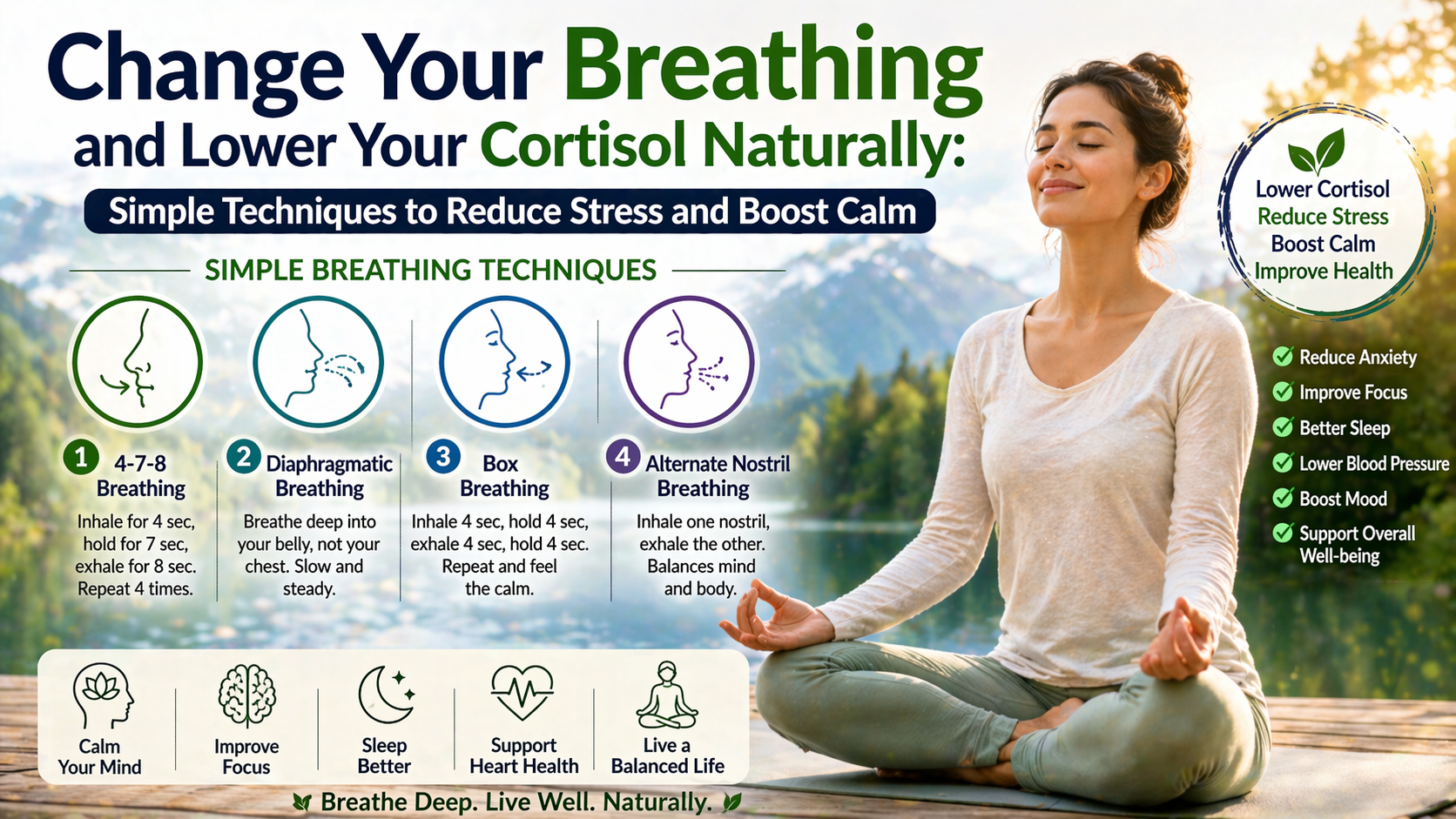
ToggleChange Your Breathing and Lower Your Cortisol Naturally: Simple Techniques to Reduce Stress and Boost Calm
Introduction: The Hidden Power of Your Breath
Most of us breathe without thinking twice about it. It’s automatic—something your body handles on autopilot. But here’s a mind-bending truth: how you breathe can literally shape how you feel, how well you sleep, how you focus, and even how your body responds to stress. Sounds wild, right? The way you inhale and exhale influences your nervous system and hormones—especially cortisol, the body’s main stress hormone.
Cortisol isn’t bad on its own—it helps you wake up in the morning, gives you energy, and helps your body respond to challenges. But when it’s chronically elevated (which happens when you’re always stressed or anxious), it becomes a silent destroyer—messing with your metabolism, mood, immune system, and even your ability to think clearly.
Here’s where your breath becomes your superpower. By learning to control your breathing patterns, you can lower cortisol naturally—no pills, no supplements, no fancy equipment. Just your breath. This article will dive deep into the science, the techniques, and the daily habits that can help you reset your stress response and finally feel calm, clear, and in control again.
Understanding Cortisol: The Stress Hormone Explained
Cortisol is often labeled as the “stress hormone,” but that’s only part of the story. It’s actually one of the most vital hormones in your body, produced by your adrenal glands, and it helps regulate metabolism, inflammation, and your body’s sleep-wake cycle. In healthy amounts, cortisol acts like a built-in alarm system—it gives you energy when you need it and helps you stay alert. But when cortisol levels stay high for too long, it turns from a friend into a foe.
When your brain perceives a threat—real or imagined—it sends a distress signal to your adrenal glands, which release cortisol and adrenaline. These hormones increase your heart rate, blood pressure, and glucose levels, preparing your body to fight or flee. That’s useful if you’re running from danger, but not so great when the “threat” is just a stressful email, financial pressure, or endless daily responsibilities.
Chronically high cortisol can lead to a range of health issues: weight gain (especially around the belly), trouble sleeping, fatigue, mood swings, and weakened immunity. You might also find it harder to focus or feel calm. Over time, your body becomes stuck in a constant state of alert, making relaxation feel nearly impossible.
But here’s the good news—you can take back control. One of the most effective and accessible tools for managing cortisol is breathing. Changing the way you breathe directly affects your nervous system, telling your brain, “I’m safe.” That single message begins to reset your stress response and lower cortisol naturally.
How Stress and Breathing Are Connected
Have you ever noticed how your breathing changes when you’re anxious or stressed? It becomes shallow, fast, and centered in your chest. That’s your body’s fight-or-flight response in action. The moment your breathing quickens, your brain interprets it as a sign of danger, and cortisol floods your system to prepare you for “battle.”
Now flip that around. When you consciously slow your breathing—making it deeper and steadier—you’re sending the opposite message: I’m safe, everything’s okay. This triggers your parasympathetic nervous system (often called the “rest-and-digest” system), which helps your body relax and lowers cortisol levels.
This mind-body connection is powerful. Breathing patterns are like a remote control for your nervous system. Shallow, rapid breaths keep your stress system on high alert. Deep, rhythmic breathing invites calmness and balance. Scientists have found that just a few minutes of slow, mindful breathing can reduce cortisol and heart rate, improve mental clarity, and even strengthen your immune response.
So, your breath isn’t just about oxygen—it’s a language. And learning to “speak” it correctly can transform the way your body handles stress.
The Science Behind Breathing and Cortisol Regulation
Let’s talk about what’s actually happening inside your body when you breathe differently. Breathing isn’t just about pulling air into your lungs; it’s an intricate system connected to your brain, heart, and hormones. When you breathe deeply and slowly, it activates a major nerve called the vagus nerve, which connects your brain to many of your internal organs. This nerve is the key to flipping your body from “fight-or-flight” (sympathetic mode) to “rest-and-digest” (parasympathetic mode).
When the vagus nerve is stimulated through slow, controlled breathing, it tells your brain to relax. The brain responds by lowering heart rate, reducing blood pressure, and signaling your adrenal glands to slow down cortisol production. Essentially, your breath becomes a messenger, informing your body that it’s safe to power down stress mode.
Research backs this up. Studies published in journals like Frontiers in Psychology and Journal of Neurophysiology show that deep breathing exercises can significantly lower cortisol levels in as little as 10 minutes of practice per day. Even better, the benefits compound over time—the more consistently you practice, the more balanced your stress response becomes.
Breathing affects your body chemistry, too. Slow breathing increases oxygen levels in your blood while balancing carbon dioxide, helping maintain a calm and clear state of mind. It also regulates your heart rate variability (HRV)—a key indicator of your body’s resilience to stress. A higher HRV is linked to lower cortisol, better emotional control, and improved overall well-being.
In short, the science is clear: controlled breathing doesn’t just make you feel calmer—it physiologically changes your body’s chemistry to make you calmer. That’s an incredible superpower you carry in every breath.
Signs Your Cortisol Levels Are Too High
If you’re wondering whether your cortisol levels might be out of balance, your body is probably giving you clues. Chronic stress and poor breathing habits often go hand-in-hand, and they manifest in several physical and emotional symptoms. Here are some of the most common signs that your cortisol may be too high:
-
Persistent Fatigue: You wake up tired, even after a full night’s sleep.
-
Weight Gain: Especially around the abdomen—cortisol promotes fat storage in this area.
-
Mood Swings or Anxiety: High cortisol disrupts neurotransmitters like serotonin and dopamine.
-
Sleep Problems: Trouble falling asleep, staying asleep, or waking up frequently at night.
-
Cravings for Sugar or Salt: Elevated cortisol can mess with your blood sugar regulation.
-
Weakened Immunity: You get sick more often or take longer to recover.
-
Brain Fog: Difficulty focusing, remembering things, or making decisions.
When these symptoms show up, they’re not random—they’re your body’s way of saying, “Slow down. I need balance.” And one of the fastest ways to restore that balance is by changing your breathing pattern.
Through consistent breathwork, you can lower cortisol naturally, helping your body shift from chaos to calm. Think of each deep breath as a reset button—a quiet reminder that you’re in control, no matter what’s happening around you.
The Role of the Autonomic Nervous System in Stress Response
To truly understand how breathing influences cortisol, we need to explore the autonomic nervous system (ANS) — the automatic control system that runs behind the scenes of your body. It governs vital functions like heart rate, digestion, and breathing without you having to think about them. The ANS has two main branches: the sympathetic nervous system (SNS) and the parasympathetic nervous system (PNS).
The SNS is your body’s accelerator — it kicks in during stressful situations, triggering the famous fight-or-flight response. When activated, it tells your adrenal glands to release cortisol and adrenaline, flooding your body with energy to handle whatever challenge you’re facing. This system is life-saving when used occasionally. But in today’s world, constant work pressure, social media noise, and financial worries mean that many of us live with the SNS constantly switched “on.”
On the other hand, the PNS acts as the brake — it promotes rest, recovery, and healing. When you breathe slowly and deeply, you activate this system through the vagus nerve, helping your body shift from high alert to deep calm. As this happens, your heart rate slows, your muscles relax, and cortisol levels naturally begin to drop.
This balance between the sympathetic and parasympathetic systems determines your overall sense of well-being. Too much SNS activity and you feel anxious, restless, or wired. Too much PNS activity and you may feel sluggish. Breathing acts as the perfect balancing tool, helping your body find the sweet spot between energy and calmness.
So, if you ever feel like your body is stuck in stress mode, remember — your breath is the switch that can help restore equilibrium. One conscious breath can begin resetting your entire nervous system.
Shallow vs. Deep Breathing: What’s the Difference?
If you’ve ever caught yourself sighing or breathing from your chest when stressed, you’re not alone. Most people are chest breathers, meaning they take short, shallow breaths that barely engage the diaphragm. This kind of breathing keeps your body locked in a low-level state of stress. It signals to your brain that you’re still in danger, even if nothing threatening is happening.
Shallow breathing primarily uses the upper chest muscles and shoulders. It increases heart rate and limits oxygen exchange, making you feel tense, lightheaded, or anxious. Over time, it can even contribute to tight neck and shoulder muscles and poor posture.
In contrast, deep breathing, also known as diaphragmatic or belly breathing, involves expanding the diaphragm — a large muscle located below your lungs. When you breathe deeply, your belly rises as your lungs fill completely with air. This style of breathing encourages full oxygen exchange and activates the parasympathetic nervous system, lowering cortisol and slowing the heart rate.
To test your breathing style, place one hand on your chest and the other on your belly. Take a deep breath. If the hand on your belly moves more than the one on your chest, congratulations — you’re breathing deeply. If not, it’s time to retrain your body.
Deep breathing is not just a relaxation trick — it’s a physiological reset button. Each deep breath signals safety, telling your body it can release the tension it’s holding onto. With practice, you can reprogram your breathing patterns and lower cortisol naturally throughout your day.
How Improper Breathing Keeps You in Fight-or-Flight Mode
Let’s be honest — most of us never learned how to breathe properly. We take thousands of breaths every day, but many of them are shallow, fast, and incomplete. This kind of breathing might seem harmless, but it actually traps your body in a constant state of stress. It keeps your sympathetic nervous system — your fight-or-flight mode — switched on, even when you’re not in danger.
Here’s how it happens: when your breathing is short and rapid, your brain interprets it as a signal that something is wrong. This activates the stress response, increasing cortisol, heart rate, and blood pressure. You may not notice it immediately, but over time, your body starts to believe it’s in a never-ending emergency. That’s why you might feel anxious for “no reason,” struggle to relax, or have trouble falling asleep even when you’re exhausted.
Improper breathing also disrupts the balance of oxygen and carbon dioxide in your blood. Low carbon dioxide levels caused by over-breathing (also called hyperventilation) can make you feel dizzy, fatigued, or even panicky. This creates a feedback loop: your breathing speeds up because you feel anxious, and you feel anxious because your breathing is fast.
The good news? You can break this cycle with awareness and practice. When you slow your breathing and focus on full, diaphragmatic breaths, you interrupt the stress pattern. Your vagus nerve activates, cortisol production decreases, and your body begins to relax. It’s like flipping a switch from chaos to calm.
Every slow, steady breath tells your brain, “I’m safe now.” And once your brain believes that, everything else — your hormones, heart rate, and even digestion — starts to align with that message.
How to Breathe to Lower Cortisol Naturally
Now that you understand how breathing affects stress and cortisol, let’s get practical. Learning to breathe the right way doesn’t require fancy equipment or hours of meditation. It’s about consistency and mindfulness. Here’s how you can start retraining your breath to naturally reduce cortisol and reset your stress response:
-
Start by Noticing Your Breath: Before you can change your breathing, you need to become aware of it. Take a few moments throughout your day to check in — are you breathing from your chest or your belly? Is your breath short or deep? Awareness is the first step toward change.
-
Engage Your Diaphragm: Place one hand on your chest and one on your abdomen. Inhale slowly through your nose, allowing your belly to rise first, then your chest. Exhale gently through your mouth. Aim to make each breath smooth and unforced.
-
Slow It Down: Try breathing at a pace of about six breaths per minute — roughly a 5-second inhale and 5-second exhale. This rhythm is scientifically shown to lower cortisol and calm the nervous system.
-
Breathe Through Your Nose: Nose breathing filters, warms, and moistens the air you inhale, but more importantly, it helps regulate nitric oxide levels in your body, improving circulation and promoting relaxation.
-
Practice Regularly: Just like exercise, breathwork gets easier and more effective with practice. Aim for at least 5–10 minutes of focused breathing once or twice a day. Over time, your body will start adopting deeper breathing patterns naturally, even when you’re not thinking about it.
When practiced regularly, these simple breathing techniques act like natural medicine — lowering cortisol, easing anxiety, and helping you feel more grounded in your body.
The 4-7-8 Breathing Technique: Step-by-Step Guide
If there’s one breathing method that’s gained massive popularity for lowering cortisol and calming the nervous system, it’s the 4-7-8 technique — often called the “relaxing breath.” Developed by Dr. Andrew Weil, this method combines controlled breathing with timing that slows your heart rate and triggers the body’s relaxation response almost instantly.
Here’s exactly how to do it:
-
Find a comfortable position. Sit or lie down with your back straight and shoulders relaxed. You can close your eyes if it helps you focus.
-
Inhale quietly through your nose for a count of 4 seconds.
-
Hold your breath for a count of 7 seconds — this pause allows oxygen to saturate your blood and begins calming your nervous system.
-
Exhale completely through your mouth for a count of 8 seconds, making a soft “whoosh” sound.
-
That’s one cycle. Repeat the process 4 to 6 times, or until you feel noticeably calmer.
The 4-7-8 breathing pattern works because it slows your breathing rhythm while extending your exhalation — a signal to your brain that the threat has passed. This activates the parasympathetic nervous system, slows your heartbeat, and lowers cortisol levels.
Even better, this technique is incredibly versatile. You can use it before bed to fall asleep faster, before a big meeting to stay composed, or anytime stress starts to rise. Some people report feeling calmer after just three breaths — that’s how powerful it can be.
Try making it a daily ritual: a few rounds in the morning to start your day grounded, and a few before bed to unwind. Over time, you’ll find that your default breathing becomes slower and steadier, naturally helping you maintain lower cortisol throughout your day.
Box Breathing for Stress Management
Another powerful breathing method for cortisol control is box breathing, also known as “square breathing.” It’s widely used by athletes, soldiers, and even high-level executives to stay calm under pressure. This technique works by balancing the time you spend inhaling, holding, exhaling, and pausing — hence the term “box.”
Here’s how to practice box breathing:
-
Inhale through your nose for 4 counts.
-
Hold your breath for 4 counts.
-
Exhale through your mouth for 4 counts.
-
Pause again for 4 counts before the next inhale.
Repeat this cycle 4 to 10 times. The even rhythm helps regulate oxygen and carbon dioxide levels in your body, while the brief breath-holds create a calming physiological balance.
Box breathing is especially effective because it’s structured and easy to remember — you can do it discreetly anywhere, anytime. Feeling overwhelmed during work? Take a two-minute box-breathing break. Stuck in traffic and getting frustrated? Four rounds can bring you back to calm.
What makes this technique so effective for cortisol control is its impact on heart rate variability (HRV). A higher HRV means your body can adapt to stress more efficiently. Practicing box breathing regularly helps increase HRV, reduce cortisol, and improve focus and mental clarity.
The beauty of box breathing lies in its simplicity. With just a few mindful breaths, you can shift your physiology from chaos to calm — proving that you truly hold the power to manage stress in your lungs.
Diaphragmatic Breathing: Activating the Relaxation Response
If there’s one breathing technique that should become second nature for everyone, it’s diaphragmatic breathing — also known as belly breathing or abdominal breathing. This is the most natural and efficient way to breathe, but ironically, it’s the one most of us forget as we grow older and more stressed. Babies do it instinctively — their bellies rise and fall with each breath — but adults often revert to shallow chest breathing, which fuels stress and raises cortisol.
Here’s how diaphragmatic breathing works: the diaphragm is a dome-shaped muscle located just below your lungs. When you inhale deeply, this muscle contracts and moves downward, allowing your lungs to expand fully and draw in more oxygen. When you exhale, it relaxes and moves upward, pushing air out efficiently. This gentle movement massages your internal organs, improves circulation, and activates your parasympathetic nervous system, lowering your cortisol and heart rate.
How to Practice Diaphragmatic Breathing:
-
Find a comfortable position. You can lie down on your back with your knees bent or sit upright with your back straight.
-
Place one hand on your chest and the other on your belly. This helps you feel which part of your body is moving as you breathe.
-
Inhale slowly through your nose for 4–6 seconds. Your belly should rise under your hand while your chest stays relatively still.
-
Exhale slowly through your mouth for 6–8 seconds, feeling your belly fall as you release all the air.
-
Repeat for 5–10 minutes, focusing on keeping your breath smooth and controlled.
To deepen the practice, imagine your belly filling up like a balloon as you inhale, and gently deflating as you exhale. The key is to breathe with ease — not force.
Over time, diaphragmatic breathing strengthens your respiratory muscles, improves oxygen efficiency, and helps keep your cortisol in check. It’s a foundational breathing habit that, once mastered, makes every other stress-reducing technique even more effective.
Try incorporating this into your daily routine — a few minutes in the morning, during work breaks, or before bed. It’s simple, but its effects on cortisol and relaxation are profound.
Breathing and Mindfulness: The Perfect Pair for Cortisol Control
Mindful breathing is where the science of breath meets the art of awareness. It’s not just about how you breathe, but also where your attention goes while you do it. When you breathe mindfully, you focus your full awareness on the rhythm of your breath, letting go of distractions and grounding yourself in the present moment.
Why does this matter for cortisol? Because stress thrives on overthinking — worrying about the future, replaying the past, and mentally multitasking. When your mind is scattered, your body reacts as if you’re under threat, releasing more cortisol. Mindful breathing interrupts that pattern by anchoring your focus in the now, signaling safety to your brain and reducing the need for a stress response.
Here’s a simple mindfulness-breathing exercise to try:
-
Sit comfortably and close your eyes.
-
Take a deep breath in through your nose for 4 seconds.
-
Exhale slowly through your mouth for 6 seconds.
-
As you breathe, notice the sensations — the cool air entering your nostrils, your chest expanding, your shoulders relaxing.
-
If your mind wanders (and it will), gently bring it back to your breath.
Practicing mindful breathing for even 5 minutes a day can lower cortisol, reduce anxiety, and improve emotional stability. Over time, you’ll find it easier to stay calm in stressful moments because your body learns to associate deep breathing with safety and peace.
Breathing mindfully transforms something automatic into something deeply healing — a built-in stress relief tool you can use anytime, anywhere.
How Daily Breathing Habits Impact Your Hormones and Mood
Your daily breathing habits quietly influence your entire hormonal balance, especially cortisol. When you breathe rapidly or shallowly throughout the day, your body stays slightly on edge—producing more cortisol than necessary. Over time, this pattern makes you feel tired, irritable, and emotionally drained. On the other hand, when you consistently take deeper, slower breaths, your body begins to favor hormone harmony. Cortisol stabilizes, serotonin increases, and your overall mood improves.
It’s fascinating how something as subtle as breathing can create such a ripple effect. Your breath affects your heart rate variability (HRV), which directly influences your emotional resilience. People with better HRV tend to handle stress more easily and recover faster after challenges. Consistent breathwork improves HRV by training your heart and nervous system to stay calm and balanced.
When your breathing becomes mindful and consistent, you’ll likely notice better sleep, more patience, and sharper focus. Many people report that after a few weeks of daily practice, their general sense of anxiety fades and they feel more “in control” of their emotions. That’s because their cortisol rhythm—normally high in the morning and low at night—returns to its natural state.
A steady breathing routine teaches your body a new normal: calm, balanced, and clear. The transformation doesn’t require effort; it just asks for awareness. Each conscious breath you take builds a foundation of hormonal harmony and emotional peace.
Integrating Breathwork Into Your Daily Routine
Knowing how to breathe is one thing, but making it part of your life is what truly changes everything. The key to lowering cortisol through breathwork is consistency. You don’t need long meditation sessions; small, mindful moments throughout your day work wonders.
Here are some practical ways to integrate breathing into your daily rhythm:
-
Morning reset: Before checking your phone or emails, sit up in bed and take five deep diaphragmatic breaths. This gently wakes your body without spiking cortisol.
-
Work breaks: Every couple of hours, step away from your desk and do one minute of box breathing. It resets your focus and keeps stress levels in check.
-
Before meals: Take three slow breaths before eating. This activates your parasympathetic system, improving digestion and lowering cortisol.
-
Commute calm: Use slow nasal breathing while driving or riding public transport. This turns travel time into a relaxation practice.
-
Bedtime wind-down: Try 4-7-8 breathing to help your body shift into sleep mode and lower nighttime cortisol.
When these micro-practices become habits, your baseline stress naturally decreases. Instead of reacting to stress, your body learns to respond with calm. You’ll notice that your energy lasts longer, your sleep feels deeper, and your mind stays clearer.
Think of breathwork like brushing your teeth—it’s not something you do only when things are bad; it’s something you maintain daily for lifelong health.
Common Mistakes People Make When Trying to Breathe Better
While breathing exercises sound simple, there are a few mistakes that can limit their benefits or even make you feel dizzy or anxious. Here are the most common ones and how to fix them:
-
Over-breathing: Trying too hard to “take deep breaths” can lead to hyperventilation. The goal isn’t more air—it’s slower, gentler breathing.
-
Holding tension: Your shoulders, neck, and jaw should stay relaxed. If they’re tight, you’re not letting your diaphragm do the work.
-
Mouth breathing: Breathing through your mouth bypasses the body’s natural filtration and tends to increase stress levels. Stick to nose breathing as much as possible.
-
Forcing the rhythm: Breathwork should feel soothing, not stressful. If counting feels uncomfortable, focus on smoothness instead.
-
Inconsistency: Doing a technique once or twice won’t reprogram your stress response. Make it a habit—short, frequent sessions are better than occasional long ones.
When you approach breathing gently and consistently, your body adapts naturally. With practice, your breath will deepen on its own, and you’ll notice your stress reactions becoming less intense.
Lifestyle Factors That Complement Breathing for Lower Cortisol
While breathwork is a powerful tool, it becomes even more effective when paired with other healthy habits. Cortisol regulation is holistic—it’s influenced by how you sleep, eat, move, and think.
-
Sleep: Aim for 7–9 hours of quality rest each night. Poor sleep raises cortisol and reduces your ability to handle stress.
-
Nutrition: Eat balanced meals with whole foods, lean proteins, and healthy fats. Avoid excessive caffeine and sugar—they can spike cortisol.
-
Movement: Gentle exercise like yoga, walking, or stretching complements breathwork beautifully. Physical movement helps burn off excess cortisol and releases feel-good endorphins.
-
Mindfulness and gratitude: Taking time to slow down, reflect, and appreciate small things helps calm your nervous system.
-
Social connection: Laughing, hugging, or simply talking with loved ones can lower cortisol instantly.
Breathing forms the foundation, but these lifestyle shifts reinforce it. Together, they build a life that supports calm, balance, and resilience from the inside out.
Real-Life Benefits: What Happens When You Master Your Breath
The transformation that comes from mastering your breath is both physical and emotional. People who practice breathwork regularly often report:
-
Lower stress and anxiety levels
-
More consistent energy throughout the day
-
Better focus and mental clarity
-
Improved sleep quality
-
Fewer headaches and muscle tension
-
Enhanced emotional balance
Physiologically, you’re teaching your body how to live in the rest-and-digest state rather than the fight-or-flight state. Cortisol drops to a healthy rhythm, blood pressure normalizes, and your immune system becomes stronger.
Mentally, you become more grounded. Instead of reacting to challenges impulsively, you respond thoughtfully. That’s the power of the breath—you’re not just controlling oxygen; you’re controlling how you experience life itself.
How Long It Takes to See Results from Breathing Exercises
Everyone’s body is different, but most people notice a difference after just one focused session. You may feel your heart rate slow, your muscles loosen, or your mind quiet down. However, lasting changes—like consistently lower cortisol levels—usually appear after 2–4 weeks of daily practice.
Your body learns through repetition. The more often you practice, the faster your nervous system rewires itself for calm. Over time, your “default” state becomes more peaceful, and stressful moments no longer feel overwhelming.
Think of it like fitness for your mind and hormones. Each session builds your resilience and lowers your cortisol baseline just a little more. Stick with it daily, and you’ll find that calm becomes your new normal.
Conclusion: Breathe Your Way to a Calmer, Healthier You
Your breath is the most powerful, underused tool for managing stress and balancing your hormones. By changing how you breathe, you can directly influence your cortisol levels and shift your body out of survival mode. The science is clear—and your body will feel the difference.
You don’t need fancy techniques or expensive equipment. You just need awareness, consistency, and patience. Start small: a few slow, mindful breaths each morning. Build from there. Every deep breath is a message of safety to your body, a promise that you are in control.
Over time, you’ll not only lower cortisol—you’ll reclaim your calm, your focus, and your joy. So, the next time life feels overwhelming, remember: the answer might just be one good breath away.
FAQs
1. How many minutes of breathing per day can lower cortisol?
Just 5–10 minutes of slow, mindful breathing daily can begin lowering cortisol and improving your stress response. Longer sessions (15–20 minutes) deepen the benefits.
2. Can breathing exercises replace medication for anxiety or stress?
While breathing exercises can significantly reduce stress, they’re not a replacement for medical treatment. They work best as a complementary practice.
3. Is it normal to feel dizzy when starting breathwork?
Yes, mild dizziness can occur if you’re not used to deep breathing. Slow down and take gentler breaths—never force your inhalations or exhalations.
4. What’s the best time of day to practice breathing exercises?
Morning sessions set a calm tone for the day, while evening sessions help unwind and lower cortisol before sleep. Ideally, practice twice daily.
5. Can breathwork improve sleep quality?
Absolutely. Techniques like 4-7-8 breathing and diaphragmatic breathing help your body relax and lower nighttime cortisol, promoting deeper, more restful sleep.
The No.1 Top Warning Sign You Have a Fatty Liver (And How to Reverse It Naturally)…..
Best Site for Parrot Health….