Table of Contents
ToggleThe First Sign of Gallstones Over 75% of the Time: Early Symptoms, Causes & Treatment
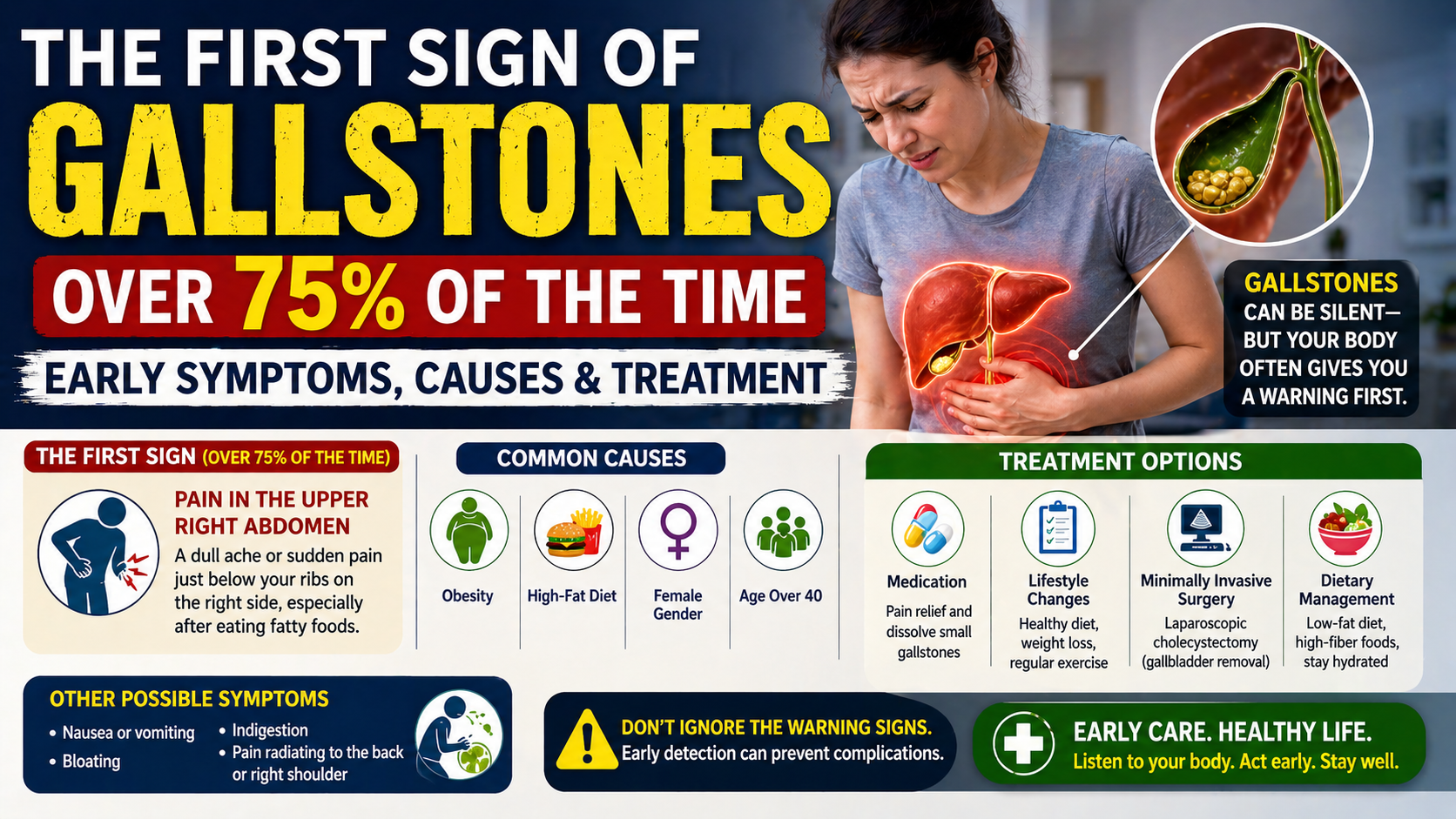
Gallstones are among the most common digestive issues affecting millions of people worldwide, but the tricky part is that most individuals don’t even realize they have them until the pain hits. Over 75% of the time, the first sign of gallstones is a sudden, sharp pain in the upper right side of the abdomen—just below your ribs. This pain can appear suddenly, often after a heavy or fatty meal, and can last anywhere from a few minutes to several hours. It’s not just ordinary stomach discomfort—it’s a warning signal from your gallbladder that something isn’t right.
This article will explore everything you need to know about this first sign, what it means, and how to recognize the warning before it becomes an emergency. We’ll also discuss why gallstones form, what causes the pain, how to treat them, and how to prevent them from coming back.
Understanding What Gallstones Really Are
Gallstones are small, hard deposits that form in your gallbladder—a tiny, pear-shaped organ just below your liver. Think of the gallbladder as a storage pouch for bile, a digestive fluid produced by the liver that helps break down fats. When the balance of substances in bile gets disturbed, solid particles can begin to form, eventually turning into stones.
These stones vary in size. Some are as small as a grain of sand, while others can grow as large as a golf ball. You can have one large stone or hundreds of smaller ones. Interestingly, not everyone with gallstones will have symptoms. Many people live for years without realizing they have them—until that first painful sign appears.
Gallstones can block the normal flow of bile, leading to irritation and inflammation of the gallbladder, known as cholecystitis. This is usually when the pain becomes severe and medical attention is required. Understanding what gallstones are and how they behave helps you recognize the signs early and take preventive measures before complications arise.
Types of Gallstones: Cholesterol vs. Pigment Stones
Not all gallstones are the same. There are two main types: cholesterol stones and pigment stones.
-
Cholesterol stones are the most common type, making up about 80% of all gallstones. These form when there’s too much cholesterol in the bile. When your liver releases excess cholesterol that your bile can’t dissolve, it starts to crystallize and grow into stones.
-
Pigment stones, on the other hand, are darker and smaller. They form when there’s too much bilirubin—a substance produced from the breakdown of red blood cells. Conditions like liver disease, infections, or blood disorders can increase bilirubin levels and trigger pigment stone formation.
Sometimes, people have a mix of both types. Knowing the type of gallstones you have can help your doctor determine the best treatment approach.
How Gallstones Form Inside the Gallbladder
Gallstone formation is a slow process that can take months or even years. It usually starts when the bile contains too much cholesterol or bilirubin, or when the gallbladder doesn’t empty completely. Imagine a bowl of soup left to sit—eventually, some ingredients settle at the bottom and harden. The same happens in your gallbladder when bile doesn’t flow properly.
When bile stagnates, cholesterol or bilirubin crystals start to form. Over time, these crystals combine and grow into solid stones. If the stones stay small and don’t block bile ducts, they might not cause any symptoms. But once they start obstructing the flow, the pain begins—this is often the first sign that alerts you to their presence.
Certain lifestyle factors, such as a high-fat diet, obesity, rapid weight loss, or even pregnancy, can make gallstone formation more likely. Genetics also play a role, so if your parents had gallstones, your chances are higher too.
The Role of the Gallbladder in Your Body
Before understanding gallstone pain, it’s important to know what your gallbladder actually does. The gallbladder’s main job is to store and release bile. When you eat fatty foods, your body sends a signal to the gallbladder to release bile into the small intestine. This bile helps break down fats so they can be absorbed properly.
But when gallstones are present, they can block the ducts that carry bile. Imagine trying to squeeze toothpaste out of a tube with a marble stuck in the middle—that’s what your gallbladder is dealing with. The pressure builds, bile backs up, and you start to feel pain.
Despite its small size, the gallbladder plays a big role in digestion. Without it, your body can still digest fats, but not as efficiently. That’s why keeping it healthy is so crucial.
Why Gallstones Are More Common Than You Think
Gallstones are surprisingly common. In fact, studies suggest that about 10–15% of adults in developed countries have them. Women, people over 40, and those who are overweight are particularly at risk. Hormones also play a role—estrogen increases cholesterol levels in bile, which is why women, especially those taking birth control pills or hormone replacement therapy, are more susceptible.
Modern diets rich in fats and processed foods are another big reason for the rise in gallstone cases. Additionally, rapid weight loss or fasting can upset the bile balance, leading to gallstone formation. The good news is that most gallstones are harmless unless they cause symptoms. However, once that first attack occurs, chances are it will happen again unless treated.
The First Sign of Gallstones: Pain in the Upper Right Abdomen
Over 75% of people with symptomatic gallstones report that the very first sign is a sharp pain in the upper right side of the abdomen. This pain can start suddenly and may radiate to your back or right shoulder blade. It often appears after eating a heavy, greasy meal—like fried foods or desserts—because the gallbladder is working harder to release bile.
This pain, called biliary colic, can last from 30 minutes to several hours. It’s not the kind of discomfort you can easily ignore—it’s intense, steady, and can leave you breathless. Some people mistake it for heartburn or even a heart attack because of its location and severity.
The key difference is that gallstone pain usually builds up gradually, stays steady for a while, and then fades as the gallbladder relaxes. However, if the pain persists or is accompanied by fever, nausea, or jaundice (yellowing of the skin), it could mean a more serious problem like gallbladder infection or bile duct blockage.
Why This Pain Occurs: The Science Behind the Discomfort
The pain caused by gallstones isn’t random—it’s your body’s reaction to an obstruction. When a stone blocks the cystic duct (the passage connecting the gallbladder to the bile duct), bile gets trapped inside the gallbladder. The organ then contracts harder, trying to push the bile out, which results in sharp, intense pain.
This pressure also irritates the gallbladder wall, leading to inflammation. As inflammation worsens, the pain may spread to other areas, including your back and shoulder. That’s why the pain is often described as radiating or shooting.
If the blockage remains, bile can back up into the liver, causing more serious symptoms like jaundice or infection. Understanding this mechanism helps explain why early detection and treatment are so important—because every gallstone attack increases the risk of complications.
Other Common Early Symptoms You Shouldn’t Ignore
While upper right abdominal pain is the first sign in over 75% of gallstone cases, it’s not the only early symptom. Some people experience subtle digestive issues long before the pain strikes. These signs often come and go, making them easy to brush off as “just indigestion.” But ignoring them could allow the stones to grow and cause more damage later on.
You might notice bloating after meals, especially when you eat foods high in fat. This happens because your gallbladder struggles to release bile efficiently. Another red flag is nausea or vomiting, which may occur when your body reacts to the blocked flow of bile. Some people also feel a dull ache in the middle of the abdomen, which can radiate to the back or shoulder.
Occasionally, gallstones can cause changes in stool and urine color. Pale stools and dark urine suggest bile isn’t reaching your intestines properly, which could mean a blockage. You may also experience burping, indigestion, or a feeling of fullness even after eating small portions. These symptoms can mimic other gastrointestinal conditions like acid reflux or gastritis, which is why many people don’t suspect gallstones at first.
The key takeaway? If you frequently feel unwell after fatty meals or notice recurring digestive discomfort, it’s worth getting checked. Gallstones rarely go away on their own, and early diagnosis can prevent painful complications later.
Gallstone Attacks: What They Feel Like and How Long They Last
A gallstone attack, medically known as biliary colic, can be a frightening experience. The pain usually starts suddenly, often at night or after eating a rich meal, and feels like a deep, squeezing or stabbing sensation beneath your right ribcage. Unlike gas or indigestion, this pain doesn’t ease when you change position, burp, or pass gas—it stays constant and can grow worse over time.
During an attack, the gallbladder contracts against the blocked duct, increasing the pressure inside. This can cause pain radiating to the back, chest, or right shoulder blade. Some people report breaking into a cold sweat or feeling nauseous. The pain can last anywhere from 30 minutes to several hours, typically subsiding once the gallstone moves away from the duct.
However, if the pain persists for more than five hours, or if you develop fever and chills, it could mean a more serious issue like acute cholecystitis (gallbladder inflammation). Repeated attacks can damage the gallbladder, leading to chronic inflammation and scarring.
If you’ve ever had such pain, even once, don’t ignore it. Gallstone attacks often repeat, and each one can become more severe. Seeking medical attention after the first episode can save you from future complications or emergency surgery.
When to Seek Medical Help Immediately
Not all gallstone symptoms require an emergency visit, but certain warning signs should never be ignored. If you experience intense pain in the upper right abdomen lasting more than a few hours, it’s time to call a doctor. This pain might indicate that a stone is firmly lodged in the bile duct or that the gallbladder is inflamed.
Other signs that need immediate attention include:
-
Fever or chills (could indicate infection)
-
Jaundice (yellowing of the skin or eyes, signaling bile duct obstruction)
-
Dark urine and pale stools (suggesting bile flow blockage)
-
Persistent nausea or vomiting
-
Severe tenderness when touching the right side of the abdomen
These symptoms can point to acute cholecystitis, pancreatitis, or bile duct infection (cholangitis)—all of which require urgent medical intervention. Left untreated, they can lead to serious complications such as sepsis, liver damage, or even death.
In some cases, gallstones may pass on their own, but waiting it out is risky. If your pain is severe or you’ve had multiple episodes, your doctor may recommend imaging tests like an ultrasound, CT scan, or HIDA scan to confirm the presence of stones.
Risk Factors: Who’s Most Likely to Get Gallstones
Gallstones don’t just appear randomly—there are specific risk factors that increase your chances. Doctors often refer to the “Four F’s” to describe the most common ones: Female, Forty, Fertile, and Fat. While it sounds simplistic, it actually captures the key trends.
-
Gender: Women are twice as likely to develop gallstones as men, largely due to the effects of estrogen.
-
Age: Risk increases significantly after age 40.
-
Body Weight: Being overweight or obese increases cholesterol levels in bile, promoting stone formation.
-
Pregnancy and Hormones: Pregnancy slows gallbladder emptying, while birth control pills or hormone therapy elevate estrogen levels.
Other risk factors include:
-
Rapid weight loss (common after crash diets or bariatric surgery)
-
Diabetes (high triglycerides can trigger gallstone formation)
-
Family history of gallstones
-
Sedentary lifestyle and high-fat diets
Interestingly, certain ethnic groups, such as Native Americans and Hispanics, have a higher genetic predisposition to gallstones. Understanding your personal risk factors can help you make preventive lifestyle choices before symptoms appear.
How Gallstones Are Diagnosed: From Ultrasound to Blood Tests
If your doctor suspects gallstones, they’ll likely start with a physical exam and review your symptoms. The next step is usually an ultrasound, which uses sound waves to create images of your gallbladder. This painless test is the most accurate and commonly used diagnostic tool for detecting gallstones.
In some cases, your doctor might recommend additional tests, such as:
-
CT Scan: Provides detailed images of your abdomen to detect stones or complications.
-
HIDA Scan (Hepatobiliary Iminodiacetic Acid): Measures how well your gallbladder is functioning and whether there’s a blockage.
-
MRCP (Magnetic Resonance Cholangiopancreatography): Uses MRI technology to visualize bile ducts and stones.
-
Blood Tests: These check for signs of infection, liver inflammation, or bile duct obstruction. Elevated liver enzymes or bilirubin levels often indicate bile flow issues.
Accurate diagnosis is crucial because gallstone symptoms can mimic other conditions like ulcers, heartburn, or even heart disease. Once confirmed, your doctor will determine whether you need treatment immediately or if monitoring is enough.
Treatment Options for Gallstones: From Medication to Surgery
Once gallstones are diagnosed, treatment depends on the severity of your symptoms and the type of stones you have. Not everyone with gallstones needs immediate surgery; some people live symptom-free for years. But if pain or complications develop, your doctor will likely suggest one of several treatment options.
1. Watchful Waiting (No Immediate Treatment)
If your gallstones aren’t causing symptoms, you might not need treatment right away. Doctors often recommend a “wait and see” approach. However, regular checkups are important because once gallstones start causing pain, the problem tends to recur.
2. Medications to Dissolve Gallstones
In certain cases, especially if surgery isn’t an option, your doctor may prescribe ursodeoxycholic acid—a medication that gradually dissolves cholesterol stones by thinning bile. This method can take months or even years and is only effective for small, non-calcified stones. The downside is that stones may return once the medication is stopped.
3. Non-Surgical Procedures (ERCP)
If a gallstone is lodged in the bile duct, doctors may perform an Endoscopic Retrograde Cholangiopancreatography (ERCP). During this procedure, a flexible tube with a camera is passed through your mouth and into your digestive tract to remove the stone. It’s minimally invasive and often used for emergency relief.
4. Gallbladder Removal Surgery (Cholecystectomy)
The most common and permanent treatment for symptomatic gallstones is gallbladder removal surgery. This can be done in two ways:
-
Laparoscopic Cholecystectomy: A minimally invasive procedure using small incisions. Recovery time is typically short—most patients return home the same day.
-
Open Cholecystectomy: A more extensive surgery reserved for complex cases. Recovery may take several weeks.
Without a gallbladder, bile flows directly from your liver into the intestine. Most people digest food normally afterward, though some may need to adjust their diet to reduce fatty food intake.
Lifestyle and Diet Changes to Prevent Gallstones
Even if you’ve had gallstones removed, it’s possible for new ones to form in your bile ducts. That’s why prevention through diet and lifestyle is essential. Gallstones are often linked to poor eating habits, so making a few adjustments can significantly lower your risk.
1. Eat a Balanced, High-Fiber Diet
Incorporate plenty of fruits, vegetables, whole grains, and lean proteins. High-fiber foods promote healthy digestion and prevent bile stagnation. Avoid skipping meals, as fasting or long gaps between meals can lead to bile buildup.
2. Limit Fatty and Processed Foods
Reduce consumption of fried foods, dairy fats, butter, pastries, and red meats. Instead, choose healthier fats like olive oil, avocado, and nuts, which support bile health.
3. Maintain a Healthy Weight
Being overweight increases cholesterol levels in bile, raising the risk of gallstones. However, losing weight too quickly can also trigger stone formation. Aim for gradual weight loss—about 1 to 2 pounds per week—through a combination of diet and exercise.
4. Stay Hydrated
Drinking plenty of water helps your liver and gallbladder function properly. Dehydration thickens bile, making it easier for stones to form.
5. Exercise Regularly
Physical activity helps maintain a healthy weight and reduces cholesterol levels. Even 30 minutes of brisk walking five days a week can make a difference.
Making these changes not only protects your gallbladder but also improves overall digestive and liver health.
Living Without a Gallbladder: What to Expect After Surgery
Many people worry about life after gallbladder removal, but the truth is—you can live perfectly well without it. Your liver still produces bile, but instead of being stored, it flows directly into your small intestine. The main adjustment comes in how your body digests fats.
After surgery, some people experience temporary digestive changes such as loose stools or bloating, especially after fatty meals. These symptoms usually fade within a few weeks as your body adapts.
To help with recovery and adjustment:
-
Eat smaller, more frequent meals to prevent bile overload.
-
Limit greasy or spicy foods during the first few months.
-
Gradually reintroduce fiber to avoid gas and bloating.
Most people return to normal eating habits within a few months. The benefits of surgery often outweigh the discomfort—no more gallstone attacks, less pain, and better digestion in the long term.
Complications if Gallstones Are Left Untreated
Ignoring gallstones can lead to serious, even life-threatening complications. When stones block bile ducts or cause inflammation, several conditions can develop:
-
Acute Cholecystitis (Inflamed Gallbladder) – Occurs when a gallstone blocks the cystic duct. Symptoms include severe pain, fever, and nausea. If untreated, it can lead to gallbladder rupture.
-
Pancreatitis (Inflamed Pancreas) – When a stone blocks the pancreatic duct, digestive enzymes can attack the pancreas, causing intense pain and vomiting.
-
Cholangitis (Bile Duct Infection) – A bacterial infection that spreads quickly and requires immediate antibiotics or surgery.
-
Gallbladder Gangrene or Abscess – Lack of blood flow can kill gallbladder tissue, leading to infection or perforation.
-
Gallbladder Cancer (Rare but Possible) – Chronic inflammation over many years increases cancer risk.
These complications highlight why recognizing the first signs—especially that upper right abdominal pain—is critical. Early diagnosis and treatment can save your life and prevent unnecessary suffering.
Myths and Misconceptions About Gallstones
There’s a lot of misinformation floating around about gallstones. Let’s clear up some of the most common myths:
-
Myth 1: Only overweight people get gallstones.
While obesity increases the risk, thin or athletic people can also develop gallstones due to hormonal changes, diet, or genetics. -
Myth 2: Gallstones always cause symptoms.
Many people have “silent” gallstones that are discovered accidentally during imaging tests. -
Myth 3: You can flush out gallstones with detox drinks.
There’s no scientific proof that detox teas, olive oil flushes, or herbal cleanses can remove gallstones. In some cases, these methods can even worsen symptoms. -
Myth 4: Surgery is dangerous and should be avoided.
Laparoscopic gallbladder surgery is one of the safest and most common procedures today, with very low risk and quick recovery.
Understanding the facts helps you make better decisions and avoid unnecessary fear or false remedies.
Natural Remedies and Home Management Tips
While surgery and medications are the only proven methods to completely remove gallstones, certain natural remedies and lifestyle changes can help manage symptoms and prevent new stones from forming. However, these remedies should complement medical advice, not replace it. Always consult a healthcare provider before trying home treatments—especially if you’re already diagnosed with gallstones.
1. Apple Cider Vinegar and Lemon Juice
Many people swear by apple cider vinegar (ACV) mixed with lemon juice to relieve gallstone pain. The idea is that ACV may help thin bile and prevent cholesterol buildup. Mix one tablespoon of ACV with warm water and a bit of lemon juice. Drink it in the morning on an empty stomach—but don’t overdo it. Too much ACV can irritate your stomach and teeth enamel.
2. Turmeric
Turmeric is known for its anti-inflammatory and antioxidant properties. Curcumin, its active compound, supports bile flow and helps prevent bile thickening. You can add turmeric to your food or take it as a supplement (after consulting a doctor).
3. Milk Thistle
Milk thistle (silymarin) is a popular herb for liver and gallbladder health. It aids detoxification and improves bile production, which can help prevent gallstone formation. Supplements are available, but dosage should be guided by a healthcare provider.
4. Peppermint Tea
Peppermint helps relax the bile ducts and reduce pain. A cup of peppermint tea after meals can soothe digestion and reduce bloating.
5. Diet Rich in Plant-Based Foods
Plant-based foods—especially those rich in fiber—support healthy digestion. Include leafy greens, beans, oats, and fruits like apples and pears. Avoid foods that trigger gallbladder contractions, such as fried foods, cheese, and butter.
6. Regular Fasting and Portion Control
Skipping meals for too long can make bile more concentrated, increasing the risk of stones. Instead, eat smaller, balanced meals at regular intervals.
These home remedies can’t dissolve existing stones, but they may reduce inflammation, promote better bile flow, and minimize symptoms. Think of them as part of a long-term gallbladder wellness plan, not a cure.
Conclusion: Early Detection Saves You from Pain and Complications
Gallstones are far more common than most people realize—and the first sign, that sharp upper right abdominal pain, is your body’s urgent warning that something is wrong. Over 75% of people with gallstones experience this pain before any other symptom. Recognizing it early can mean the difference between a quick recovery and a serious medical emergency.
By understanding how gallstones form, knowing the risk factors, and paying attention to early symptoms, you can take proactive steps to protect your health. Whether it’s making small dietary changes, staying active, or seeking medical advice at the first sign of pain, every action counts.
Ignoring gallstone symptoms can lead to complications like infections, pancreatitis, or even life-threatening situations. But with proper treatment and lifestyle management, you can live a normal, pain-free life—even without a gallbladder.
If you’ve ever felt that deep ache or sharp twinge under your ribs after eating, don’t wait for it to pass. Listen to your body—it’s telling you something important. The earlier you act, the easier it is to prevent long-term damage and get back to living comfortably.
FAQs About Gallstones
1. What is usually the first sign of gallstones?
The first and most common sign—occurring in over 75% of cases—is sharp pain in the upper right abdomen, often after eating fatty foods. The pain may spread to the back or right shoulder and can last for hours.
2. Can gallstones go away on their own?
Small gallstones sometimes pass through the bile ducts on their own, but most do not. Once gallstones form, they typically remain until treated. Lifestyle changes can prevent new ones but rarely dissolve existing stones.
3. How can I tell if my pain is from gallstones or indigestion?
Gallstone pain is usually more intense and longer-lasting than indigestion. It doesn’t improve with antacids, changing positions, or passing gas. It often occurs after heavy meals and may come with nausea or vomiting.
4. Can I live without a gallbladder?
Yes! Many people live healthy lives after gallbladder removal surgery. Your liver still produces bile, but it flows directly into the intestine. Most people adapt within a few weeks and digest food normally.
5. What foods should I avoid if I have gallstones?
Avoid fried foods, red meats, butter, cheese, processed snacks, and sugary desserts. Stick to lean proteins, vegetables, fruits, and whole grains. A low-fat diet helps reduce gallbladder stress and prevents attacks.
2 thoughts on “The First Sign of Gallstones Over 75% of the Time: Early Symptoms, Causes & Treatment”