Table of Contents
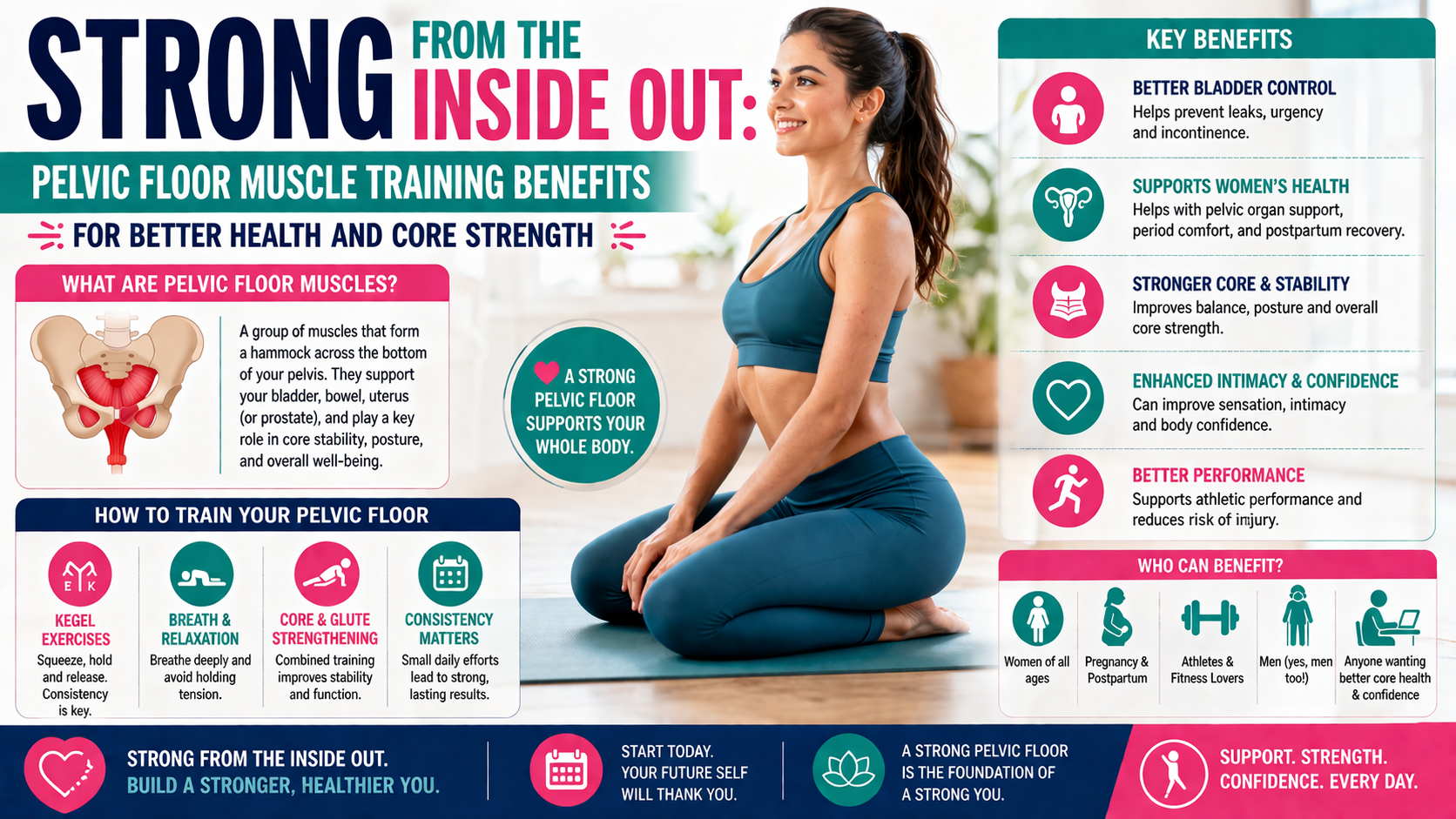
ToggleStrong From the Inside Out: Pelvic Floor Muscle Training Benefits for Better Health and Core Strength
Introduction – Why Pelvic Floor Strength Matters
The pelvic floor is one of the most underrated yet essential parts of the human body. Most people don’t think about it until something goes wrong—like leaking when they laugh, a sudden “gotta go” feeling, lower back pain, pelvic pressure, or discomfort during intimacy. But by the time symptoms show up, the pelvic floor has usually been struggling for years in silence. These muscles are responsible for supporting your organs, stabilizing your spine, helping you breathe properly, controlling your bladder and bowels, and even influencing your posture and core strength. When the pelvic floor weakens, tightens, or becomes poorly coordinated, it affects nearly every part of your daily life. Pelvic floor muscle training is like building the foundation of your entire body. When the foundation is strong, everything above it becomes more stable and functional. What’s empowering is that pelvic floor training isn’t complicated—you don’t need equipment, a gym membership, or advanced fitness knowledge. You only need awareness, consistency, and the willingness to reconnect with your body. Whether you’re young or aging, athletic or sedentary, pregnant, postpartum, or simply wanting to feel more confident in your body, strengthening the pelvic floor helps you become stronger from the inside out.
Understanding the Pelvic Floor
The pelvic floor is a group of muscles and connective tissues that form a supportive sling across the bottom of the pelvis. These muscles attach from the pubic bone in the front to the tailbone in the back and connect to the hip bones on each side. Think of it as a flexible platform holding up your bladder, uterus or prostate, and rectum. Without it, the organs would have no stable support system and would struggle to work efficiently. These muscles are always active—helping to maintain posture, controlling pressure when you sneeze or lift something heavy, and enabling bladder and bowel function. The pelvic floor also works closely with your diaphragm and abdominal muscles, forming the “core canister.” When you inhale, your diaphragm drops, causing the pelvic floor to relax and lengthen. When you exhale, the diaphragm rises, and the pelvic floor lifts and tightens. When this coordination is disrupted—due to stress, poor posture, childbirth, heavy lifting, aging, or injury—problems begin to appear. If the pelvic floor becomes too weak, you may experience leaking, pressure, or instability. If it becomes too tight, you may feel pain, urgency, or difficulty relaxing. Understanding this system makes it clear why pelvic floor training is so much more than just “doing Kegels.” It’s about restoring balance, learning proper coordination, and improving the function of one of your body’s most essential muscle groups.
How Pelvic Floor Muscles training Work
Pelvic floor muscles operate like a well-orchestrated team. They contract, relax, lengthen, and lift in harmony with your breathing and core engagement. These muscles help manage intra-abdominal pressure, which increases when you sneeze, lift, cough, jump, or even laugh. If the pelvic floor doesn’t respond correctly at those moments, you may leak or feel pressure downward. They provide stability for your spine and hips, giving your body a strong base of support. Many people mistakenly think they should constantly “squeeze” their pelvic floor, but this is not correct. Over-contracting or tightening these muscles can lead to dysfunction just as quickly as weakness. A healthy pelvic floor needs the ability to contract strongly, relax fully, and respond reflexively—not remain squeezed all day. Breath is also essential. The diaphragm and pelvic floor are deeply connected. When breathing becomes shallow due to stress or anxiety, the pelvic floor often becomes tight from holding too much tension. Meanwhile, poor posture—like slouching—compresses the pelvis and disrupts the natural movement of these muscles. When everything works together, your body feels lighter, more supported, and more efficient. Pelvic floor training helps restore this coordination and helps you move with strength and confidence.
Common Pelvic Floor Problems
Pelvic floor dysfunction comes in two main forms: weakness and tightness. A weak pelvic floor may cause symptoms like urinary leakage, difficulty holding gas, pelvic heaviness, pressure, or even organ prolapse. This often develops from pregnancy, childbirth, aging, high-impact exercise, chronic coughing, or simply lack of muscle engagement. On the other hand, an overactive or tight pelvic floor is just as problematic. This can lead to pain during intimacy, difficulty starting urination, constipation, pelvic pain, tailbone discomfort, or a constant feeling of urgency. Many people assume tightness means strength, but this is not true. A muscle that cannot relax cannot contract properly. Many people unknowingly develop tight pelvic floors due to stress, holding tension, poor breathing habits, or excessive core workouts. Because these symptoms can feel embarrassing, many people suffer in silence, not realizing how common and treatable pelvic floor problems are.
What Causes Pelvic Floor Dysfunction?
Several factors contribute to pelvic floor issues. Pregnancy and childbirth are among the most significant because they stretch and strain the muscles. Vaginal birth, especially long labor or pushing, can weaken the pelvic floor or create scar-related tension. Aging and menopause also affect these muscles because hormonal changes reduce tissue elasticity. Obesity increases pressure on the pelvis. High-impact sports, heavy lifting, or chronic constipation can also stress the pelvic floor. Even lifestyle habits like sitting too long, poor posture, straining on the toilet, or holding in urine for long periods can weaken or tighten the pelvic floor. Understanding these causes empowers you to take control of your body and rebuild pelvic health.
Why Pelvic Floor Muscle Training Is Important
Pelvic floor muscle training restores balance to your internal support system. When these muscles function properly, you feel more stable, energetic, and confident. Training prevents leakage, supports healthy organs, enhances sexual function, improves posture, reduces back pain, and boosts overall strength. Pelvic floor training is a lifelong investment in your well-being. It prepares women for pregnancy and postpartum recovery and helps men maintain prostate health, bladder control, and sexual performance. A strong pelvic floor truly supports you from the inside out.
Top Benefits of Pelvic Floor Muscle Training
Training offers many benefits, such as improved bladder and bowel control, reduced leaking, and less urgency. It enhances sexual function by increasing blood flow, sensation, and muscle responsiveness. It provides core stability by supporting your spine and helping maintain proper posture. Athletes benefit from power transfer and injury prevention. Pregnant and postpartum women find it aids recovery and comfort. Overall, it enhances confidence, mobility, and daily function.
Pelvic Floor muscle Training for Men
Pelvic floor training is just as important for men. These muscles support the bladder and bowel and play a major role in erections and ejaculation. Strengthening the pelvic floor can help reduce urinary leakage after prostate surgery, improve erectile quality, and enhance overall pelvic health. Men often ignore this area until issues arise, but proactive training can prevent many problems.
How to Locate Your Pelvic Floor Muscles
Finding the pelvic floor can be tricky at first. One technique is to imagine stopping the flow of urine or holding in gas. Another is to tighten the area around your anus gently. It’s important not to clench your buttocks, thighs, or stomach. Breathing deeply while visualizing the lift of the pelvic floor can also help. Many beginners over-squeeze or forget to relax. Learning proper technique ensures you target the correct muscles without creating tension.
Types of Pelvic Floor Exercises
Pelvic floor training includes several types of exercises. Basic Kegels involve gently squeezing and lifting the muscles, holding for a few seconds, then relaxing fully. Quick flicks help with urgency by training fast contractions. Endurance holds build stamina by holding contractions longer. Relaxation exercises help those with tight pelvic floors. Coordinated breathing ensures the pelvic floor and diaphragm work together. This variety ensures full development of strength, flexibility, and control.
Advanced Pelvic Floor Training
Once basic engagement is mastered, the pelvic floor can be incorporated into larger movements like squats, bridges, and lunges. Pilates and yoga are excellent for engaging deep core muscles. Resistance training improves function during daily tasks. Advanced training focuses on timing the pelvic floor with exertion—for example, lifting during exhalation to protect against pressure.
Daily Pelvic Floor muscle Training Routine
A beginner routine might include gentle contractions for 5 seconds each, repeated 10 times, along with quick squeezes and relaxation exercises. As strength increases, longer holds and more repetitions can be added. Intermediate and advanced routines include functional movements and breathwork. The key is consistency—just a few minutes a day can yield powerful results.
Lifestyle Habits That Strengthen (or Weaken) the Pelvic Floor
Good posture, proper hydration, balanced nutrition, and avoiding straining support pelvic health. Bad habits like constipation, holding in urine too long, heavy lifting with poor form, or sitting excessively weaken the pelvic floor. Small changes like breathing deeply, moving often, and using proper lifting techniques make a big difference.
When to Seek Professional Help
If symptoms persist or worsen—such as pain, pressure, leakage, or discomfort during intimacy—a pelvic floor physical therapist can help. They provide personalized exercises, manual therapy, and guidance to restore proper function. Seeking help is not a sign of failure but a smart decision for long-term health.
Myths and Misconceptions About Pelvic Floor muscle Training
Common myths include “Kegels are only for women,” “tight pelvic floors are strong,” or “you should do Kegels all day.” None of these are true. Pelvic floor training must be balanced, intentional, and tailored to your needs. Everyone benefits—but overtraining or improper technique causes more harm than good.
Conclusion
Your pelvic floor is the quiet hero of your body—always working, always supporting you, always influencing your confidence and comfort. Training it is not just about avoiding leakage or reducing pain. It’s about strengthening your foundation so you can move, live, breathe, and age with strength and resilience. When your pelvic floor is strong and healthy, your entire body thrives from the inside out.
FAQs
-
How long does it take to see results from pelvic floor muscle training?
Most people notice improvements within 4–8 weeks with consistent practice. -
Can men benefit from pelvic floor muscle training exercises?
Absolutely. Men experience improved bladder control, sexual function, and prostate support. -
Can you overtrain the pelvic floor?
Yes. Over-contracting can lead to tightness and pain. Balance is key. -
Are Kegels enough on their own?
Not always. Relaxation, breathing, and functional exercises are also important. -
Is pelvic floor training safe during pregnancy?
Yes—when done correctly. It supports delivery and recovery.
The First Sign of Gallstones Over 75% of the Time: Early Symptoms……….
best parrot health website…..