Table of Contents
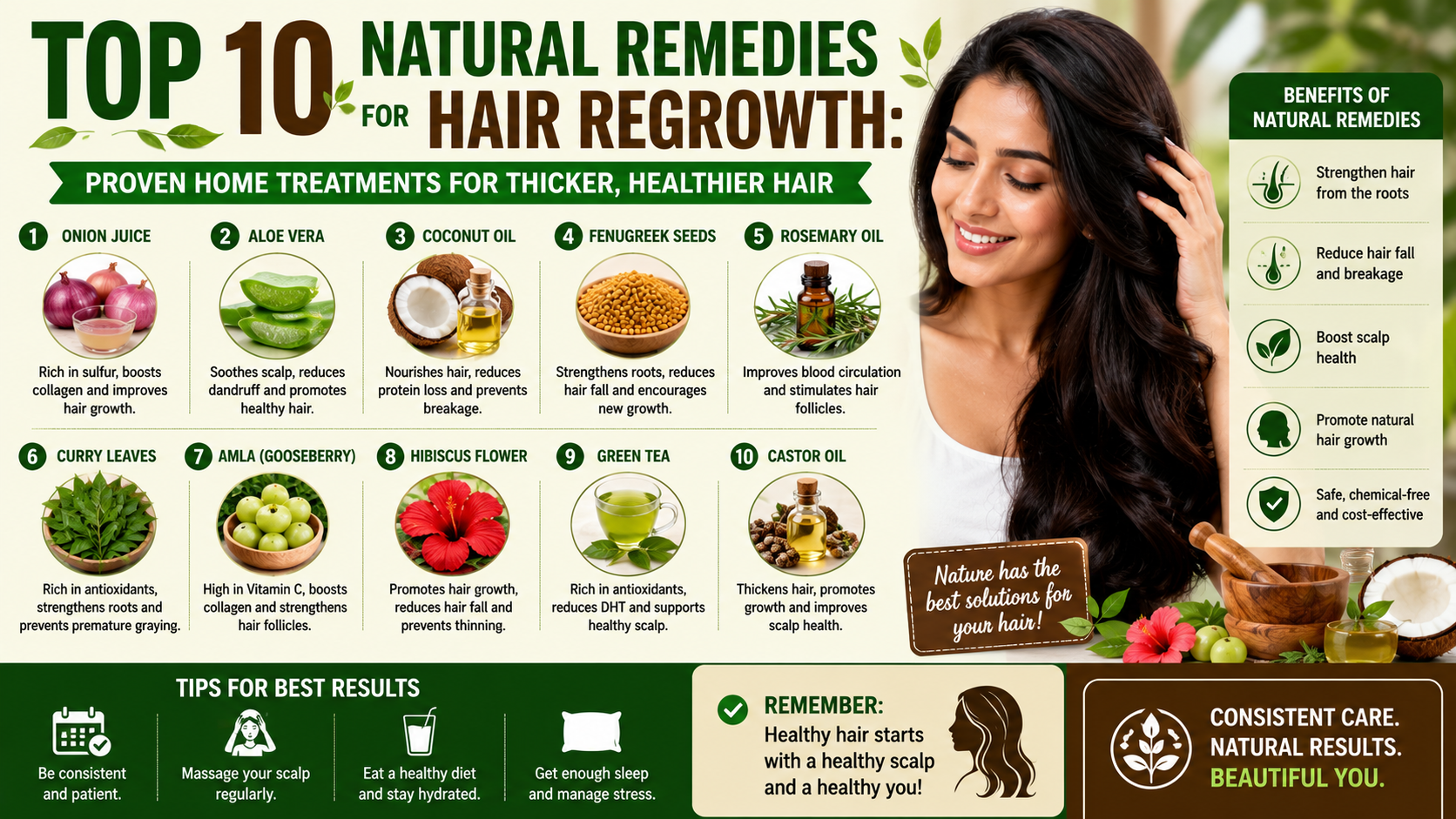
ToggleTop 10 Remedies to Re-Grow Hair Naturally
Introduction
Growing healthy, thick, and shiny hair is something almost everyone desires, yet many struggle with hair thinning, breakage, and slow regrowth. While modern treatments exist, natural remedies have been trusted for centuries—and for good reason. They’re safe, affordable, and most importantly, they nourish the hair from the root instead of offering temporary cosmetic results. Natural remedies improve scalp circulation, strengthen hair follicles, reduce inflammation, and create a healthy environment where hair can thrive again. When you combine the right remedies with consistent care, hair regrowth becomes significantly easier.
But here’s the truth many people miss: hair regrowth isn’t only about what you apply to your scalp—it’s also about your lifestyle, your stress levels, and the nutrients your body receives daily. This article breaks everything down in a simple yet powerful way so you finally understand what your hair needs to grow back naturally. Whether you’re dealing with thinning edges, postpartum shedding, male or female pattern hair loss, or just slow hair growth, these natural methods can kick-start visible improvement with consistent use.
Over the next several sections, you’ll discover the top 10 scientifically supported natural remedies for regrowing hair, how to use them, the diet that accelerates results, the habits you must avoid, and a practical weekly routine to help you stay consistent. Each remedy is explained in a detailed yet conversational way, making it easier to follow—even if you’re a beginner on your hair healing journey. By the end of this article, you’ll have a full roadmap to naturally restoring your hair health from root to tip.
Understanding Hair Growth
Understanding how your hair grows is the first step toward regrowing it naturally. Most people don’t realize that every single strand of hair on their head goes through a cyclical process made up of four phases: the anagen phase (growth), catagen (transition), telogen (resting), and exogen (shedding). When everything functions normally, a majority of your hair stays in the anagen phase for years, allowing it to grow long, thick, and healthy. But when this cycle is disrupted—because of stress, poor nutrition, hormones, or inflammation—hair can prematurely enter the telogen or shedding phase, leading to thinning, bald spots, or slow regrowth.
The scalp itself also plays a massive role in the hair growth journey. Think of your scalp like soil in a garden—if it’s dry, inflamed, clogged, or lacking nutrients, nothing can grow properly. Hair follicles need good blood circulation, oxygen supply, and a clean, balanced environment to thrive. But everyday habits like overwashing, using harsh shampoos, wearing tight hairstyles, or applying excessive heat can damage the follicles and weaken the strands before they even emerge.
Another factor many people overlook is the internal state of the body. When you’re stressed, your body increases cortisol levels, which can shrink hair follicles over time. Nutritional deficiencies, especially in iron, vitamin D, zinc, and biotin, also contribute to thinning. Even dehydration impacts hair quality because follicles rely on moisture for elasticity and strength. The more you understand the science behind hair growth, the easier it becomes to choose remedies that genuinely work instead of falling for temporary quick fixes.
So before applying any natural remedy, it’s essential to reset the foundation by improving scalp health, supporting your body internally, and creating an environment where hair can enter and stay in the growth phase longer. With this knowledge in mind, let’s dive into the first and most powerful natural remedy that has helped thousands stimulate stubborn follicles back to life.
Natural Remedy #1: Onion Juice
Onion juice may not smell glamorous, but when it comes to natural hair regrowth, it’s easily one of the most powerful remedies available. Its effectiveness comes from its incredibly high sulfur content, which is a crucial mineral for rebuilding hair strands and stimulating dormant follicles. Sulfur helps form keratin—the protein your hair is made of—which means applying onion juice directly to the scalp strengthens new growth from the root. Many people also don’t realize that sulfur boosts blood circulation, ensuring that follicles receive more oxygen and nutrients. This alone can trigger noticeable regrowth in areas that have been stagnant for months or even years.
One of the reasons onion juice stands out is its ability to reduce inflammation and fight scalp infections. A large number of people experience hair loss because of bacterial or fungal build-up that blocks follicles and weakens the hair shaft. Onion juice has strong antimicrobial properties that cleanse the scalp and help restore a healthy environment where hair can grow again. In a well-known study, individuals who applied onion juice twice a week saw significant regrowth within just a few weeks, especially in patchy or thinning areas. The results weren’t just cosmetic—they were measurable and long-lasting.
Using onion juice is simple, but technique matters if you want the best results. Start by blending or grating a fresh onion, then strain the juice to remove pulp. Apply the juice directly to your scalp using a cotton ball or applicator bottle. Massage gently for 5 minutes to boost circulation, then leave it on for 30 to 45 minutes before rinsing it out with a mild shampoo. For people sensitive to the smell, you can mix onion juice with aloe vera, coconut oil, or a few drops of essential oil like rosemary to make the experience more pleasant without losing effectiveness.
Consistency is key with this remedy. Applying onion juice two to three times a week can produce thicker, stronger, and fuller hair over time. Many users report new baby hairs appearing along the hairline and bald patches filling in within 6 to 10 weeks. While it may not be the most luxurious treatment, its unmatched regrowth power makes it an essential part of any natural hair growth routine.
Natural Remedy #2: Aloe Vera Gel
Aloe vera gel is one of the most soothing, healing, and scalp-friendly natural remedies you can use for hair regrowth. This plant has been used for centuries in traditional medicine to treat skin irritation, burns, and inflammation—but its benefits extend far beyond skincare. When applied to the scalp, aloe vera helps repair damaged follicles, balance the scalp’s pH, and create a nourishing environment where new hair can grow stronger and healthier. One of the main reasons aloe vera is so effective is because it contains proteolytic enzymes, which repair dead or damaged skin cells on the scalp, opening the door for healthier growth.
Another major advantage of aloe vera is that it deeply hydrates both the scalp and hair shaft. Many people struggle with dryness, flakiness, or itchiness, which can suffocate follicles and lead to shedding. Aloe is naturally rich in vitamins A, C, E, and B12, all of which support cell turnover and provide antioxidant protection. When your scalp is properly hydrated and nourished, hair strands become less prone to breakage and can stay longer in the growth phase. This is especially important for anyone dealing with hair thinning caused by chemical treatments, heat damage, or harsh shampoos.
Using aloe vera is incredibly simple and can be adapted for all hair types. Start with fresh aloe gel straight from the plant for maximum potency. Cut a leaf, scoop out the gel, and blend it to make the texture smooth. Apply it directly to your scalp, making sure to massage gently in circular motions. Leave it on for at least 45 minutes before rinsing. You can also mix aloe with castor oil, coconut oil, or onion juice if you want to boost the restorative effects. Some people even use it as a natural leave-in conditioner because of its lightweight hydration.
Aloe vera is gentle enough for daily use, but even applying it two to three times a week can lead to noticeable improvements. Over time, you’ll see reduced dandruff, less breakage, and a cleaner, healthier scalp. Many people also report that their hair grows faster because aloe vera helps “unstick” clogged follicles and promotes a smoother hair cycle. If you’re looking for a soothing remedy that works without irritation, aloe vera is a must-have in your natural regrowth routine.
Natural Remedy #3: Coconut Oil Massage
Coconut oil is one of the most beloved natural remedies for hair regrowth, and for good reason. Unlike many other oils that simply coat the hair, coconut oil actually penetrates the hair shaft due to its unique molecular structure. This allows it to nourish each strand from the inside out, making the hair stronger, smoother, and far less prone to breakage. When you massage coconut oil into the scalp, you do more than moisturize—you help increase blood flow, deliver essential fatty acids to the follicles, and create a protective barrier that keeps your scalp healthy and hydrated. A well-nourished scalp is the foundation of strong hair growth, and coconut oil is one of the few natural ingredients capable of providing this dual benefit.
Another reason coconut oil is so effective is because it contains lauric acid, a potent antimicrobial agent. Many people suffer from hair thinning due to fungal infections, dandruff, or bacterial buildup on the scalp. These conditions can block follicles, weaken roots, and cause excessive shedding. Coconut oil helps eliminate these issues naturally by reducing inflammation and preventing microbes from spreading. When your scalp is clean and calm, hair has a much better chance of growing back thicker and faster. This is why coconut oil massages remain a traditional remedy across cultures—they simply work.
To use coconut oil effectively, warm a small amount until it becomes a light liquid, making it easier to spread. Apply the oil directly to your scalp using your fingertips and massage gently for 8–10 minutes. The massage itself is just as important as the oil because it stimulates circulation and wakes up dormant follicles. After massaging, spread the remaining oil through your hair from root to tip. Leave it on for at least an hour, or even overnight if your scalp tends to be dry. Rinse with a mild shampoo and avoid harsh sulfates that strip away the oil’s benefits.
With consistent use—about two to three times a week—you’ll notice reduced breakage, smoother strands, and stronger hair roots. Many people also see faster hair growth within a few weeks because coconut oil helps prevent protein loss, which is one of the main causes of weak, thin, and brittle hair. If you’re searching for a natural remedy that nourishes, strengthens, protects, and stimulates growth all at once, coconut oil massage is a tried-and-true solution that deserves a place in your hair care routine.
Natural Remedy #4: Rosemary Essential Oil
Rosemary essential oil has become one of the most talked-about natural remedies for hair regrowth—and not because of hype, but because science actually supports its effectiveness. In fact, several studies have shown that rosemary oil performs as well as minoxidil (the active ingredient in many hair growth products) when it comes to stimulating new growth, improving thickness, and reducing shedding. The secret behind rosemary oil’s power lies in its ability to boost blood circulation and revitalize dormant follicles. When blood flow improves, follicles receive more oxygen and nutrients, which jump-start the regrowth cycle and strengthen hair from the root.
Another reason rosemary oil is such a game-changer is its strong anti-inflammatory and antioxidant properties. Many people experience hair loss because their follicles are inflamed, clogged, or weakened by oxidative stress from pollution, stress, or chemical treatments. Rosemary oil helps counteract this damage by soothing the scalp, reducing cellular stress, and encouraging healthier follicle activity. It’s especially useful for people dealing with thinning caused by hormonal imbalances, alopecia areata, or chronic dandruff. The cooling sensation rosemary oil provides also feels refreshing, making it enjoyable to use on a weekly basis.
Using rosemary oil correctly is crucial because it’s very potent in its pure form. Never apply it directly to the scalp without dilution. The safest method is to mix a few drops (about 4–6 drops) with a carrier oil like coconut oil, jojoba oil, or castor oil. Once the mixture is ready, massage it gently into your scalp for several minutes. The massage increases its effectiveness by stimulating blood flow and helping the oil penetrate deeper. Leave the mixture on for at least one hour, or keep it overnight if your scalp tolerates it well. Rinse with a gentle shampoo, and repeat this process two to three times a week for the best results.
Many people begin noticing improvements in 4–8 weeks, including new baby hairs, thicker strands, and reduced shedding. What sets rosemary oil apart from other remedies is that it not only promotes new growth—it also strengthens existing strands, which prevents future thinning. With consistent use, it can transform weak, stagnant hair into fuller, healthier growth. If you’re looking for a natural remedy rooted in both tradition and science, rosemary essential oil is easily one of the best additions you can make to your hair regrowth routine.
Natural Remedy #5: Ginger for Hair Follicle Activation
Ginger is one of those ingredients people often overlook in the hair-care world, but it’s actually a powerful natural stimulant for hair follicles. Fresh ginger contains gingerol, a compound known for improving blood circulation and fighting inflammation—two issues strongly linked to hair thinning. When applied to the scalp, ginger creates a gentle warming sensation that wakes up sluggish follicles and increases nutrient delivery to the root. Better circulation means healthier growth, stronger hair strands, and reduced breakage over time. Many traditional medicines, especially Ayurveda, have used ginger for decades to revive weak roots and restore hair vitality naturally.
Beyond stimulating growth, ginger also helps detoxify the scalp. Sweat, oil buildup, product residue, and even air pollution can clog follicles and suffocate new hair. Ginger’s natural antimicrobial and antioxidant properties help break down this buildup while encouraging a cleaner, healthier scalp environment. A clean scalp is far more receptive to growth, and this is one reason ginger-based hair packs are popular for treating dandruff, itchiness, and inflammation. People with oily scalps often notice immediate relief because ginger helps regulate sebum without stripping natural moisture.
A simple way to use ginger is to blend or grate a fresh piece, extract the juice, and mix it with a carrier like coconut oil or aloe vera gel. Massage this mixture into your scalp for a few minutes and leave it on for 30–40 minutes before washing it out. You can also add ginger juice to DIY masks with onion juice, castor oil, or fenugreek to increase the potency. Regular application—two to three times weekly—can lead to visible improvements in thickness, shine, and growth rate. Over time, ginger strengthens the scalp and reduces shedding, making it a highly effective natural remedy for follicle reactivation.
Natural Remedy #6: Fenugreek Seeds
Fenugreek seeds, also known as methi, are a goldmine of nutrients essential for strong hair growth. Rich in protein, iron, nicotinic acid, and mucilage, fenugreek helps rebuild hair structure and nourish follicles deeply. The seeds become even more powerful when soaked, turning into a soft paste that coats each strand with strengthening compounds. This protective layer reduces breakage, improves elasticity, and gives hair a natural shine. Fenugreek is especially effective for those dealing with excessive shedding, postpartum hair fall, or thinning caused by nutrient deficiencies.
Fenugreek also has strong antifungal and antibacterial properties, making it incredibly helpful for people suffering from dandruff or scalp irritation. A healthy scalp is essential for hair regrowth because inflammation can weaken the follicle’s ability to produce strong hair. Fenugreek calms irritation, reduces flakes, and restores moisture balance to the scalp. It also contains lecithin, which acts as a natural conditioner that deeply hydrates dry or brittle strands, keeping them fuller and more manageable.
To use fenugreek, soak two to three tablespoons of seeds overnight. Grind them into a paste and apply directly to your scalp and hair. Leave the mask on for 30–45 minutes before rinsing with lukewarm water. You can enhance this remedy by adding yogurt, aloe vera, or coconut oil to the paste for extra hydration. Consistent use—once or twice a week—leads to noticeable thickening, reduced hair fall, and a smoother scalp surface ready for healthier growth.
Natural Remedy #7: Castor Oil
Castor oil is widely recognized as one of the best natural oils for stimulating rapid hair growth. Its high concentration of ricinoleic acid improves blood flow to the scalp, nourishes follicles, and strengthens roots. Castor oil also helps increase hair thickness because it is rich, heavy, and deeply moisturizing. Many people dealing with thinning edges or bald patches use castor oil to increase density over time. The oil’s antibacterial and antifungal properties also protect the scalp from infections that can hinder growth.
What makes castor oil especially powerful is its ability to seal moisture into the hair shaft. This prevents dryness and breakage—two major causes of thinning. When used regularly, castor oil can make hair look fuller, shinier, and healthier. It’s also known for supporting the regrowth of eyebrows and eyelashes, which shows just how potent it truly is.
To use it effectively, mix one tablespoon of castor oil with a lighter carrier oil like coconut or olive oil to reduce thickness. Massage it into the scalp for 5–10 minutes, leave it on for at least an hour, and then wash it out. Use twice a week for best results.
Natural Remedy #8: Egg Hair Mask
Eggs are one of the richest natural sources of protein, which is exactly what your hair needs for strength and growth. When hair lacks protein, it becomes weak, brittle, and prone to breakage. Egg masks help rebuild the hair shaft, improve elasticity, and give the hair a fuller appearance. The yolk contains vitamins A, D, and E, which nourish the scalp and support healthy follicle functioning. Meanwhile, the whites help remove excess oil and cleanse the scalp naturally.
To make an egg mask, whisk one or two eggs with olive oil or yogurt to remove the smell. Apply the mixture to your scalp and hair, leave it on for 20–30 minutes, and rinse with cool water. Regular use adds shine, reduces breakage, and boosts growth.
Natural Remedy #9: Green Tea Rinse
Green tea is packed with antioxidants—especially EGCG—which helps stimulate hair follicles and encourage faster growth. It also reduces DHT levels, a hormone responsible for male and female pattern baldness. Using green tea as a rinse helps strengthen roots, reduce shedding, and improve scalp circulation.
Brew two cups of strong green tea, let it cool, and pour it over your scalp after shampooing. Massage gently, leave for 10 minutes, and rinse. Using it 3–4 times a week can noticeably increase hair volume and reduce hair fall.
Natural Remedy #10: Amla (Indian Gooseberry)
Amla is one of the most nutrient-dense ingredients for hair growth. Rich in vitamin C, antioxidants, and essential minerals, amla strengthens follicles, reduces premature graying, and promotes thick, long hair. It also boosts collagen production, which is crucial for healthy hair growth.
Amla powder can be mixed with water, yogurt, or oils to form a mask. Apply it weekly to improve scalp health, strengthen roots, and increase shine. Regular use helps reduce shedding and stimulates natural regrowth.
Diet for Natural Hair Regrowth
Hair thrives when the body receives the nutrients it needs. Foods rich in protein, iron, zinc, omega-3 fatty acids, and vitamins D, A, and E support healthy growth. Eggs, spinach, nuts, fish, sweet potatoes, berries, and avocados all play a major role. Drinking enough water is also essential to keep follicles hydrated and functioning properly.
Lifestyle Changes for Healthier Hair
Stress, lack of sleep, dehydration, and inactivity can all contribute to hair thinning. Managing stress through meditation, yoga, or walking significantly improves hair health. Eight hours of sleep per night supports hormonal balance, while regular exercise boosts circulation to the scalp.
Hair Care Mistakes That Slow Regrowth
Avoid excessive heat styling, harsh shampoos, overwashing, tight hairstyles, and chemical treatments. These habits weaken the hair shaft, damage follicles, and slow down regrowth. Use gentle, sulfate-free shampoos and avoid brushing wet hair to prevent breakage.
Creating a Weekly Hair Regrowth Routine
A strong routine includes:
-
Oil treatments twice a week
-
A nourishing hair mask weekly
-
A green tea or herbal rinse several times per week
-
Gentle washing and scalp massages
-
A nutrient-rich diet daily
-
Reduced heat styling
Consistency is key.
Conclusion
Natural hair regrowth isn’t about one magic remedy—it’s about creating a healthy environment inside and outside your body. When you combine these 10 remedies with good nutrition, scalp care, and a stress-free lifestyle, hair naturally becomes thicker, healthier, and stronger. Consistency and patience deliver real, long-lasting results.
FAQs
1. How long does it take to see regrowth naturally?
Most people notice results within 6–12 weeks with consistent use.
2. Can these remedies help with bald spots?
Yes, especially onion juice, rosemary oil, and castor oil.
3. How often should I oil my hair?
Two to three times weekly is ideal for most people.
4. Are these remedies safe for all hair types?
Yes, they work for all hair textures and scalp types.
5. Can I combine multiple remedies?
Absolutely—combining them often speeds up results.
1 thought on “Top 10 Natural Remedies for hair regrowth : Proven Home Treatments for Thicker, Healthier Hair”