Table of Contents
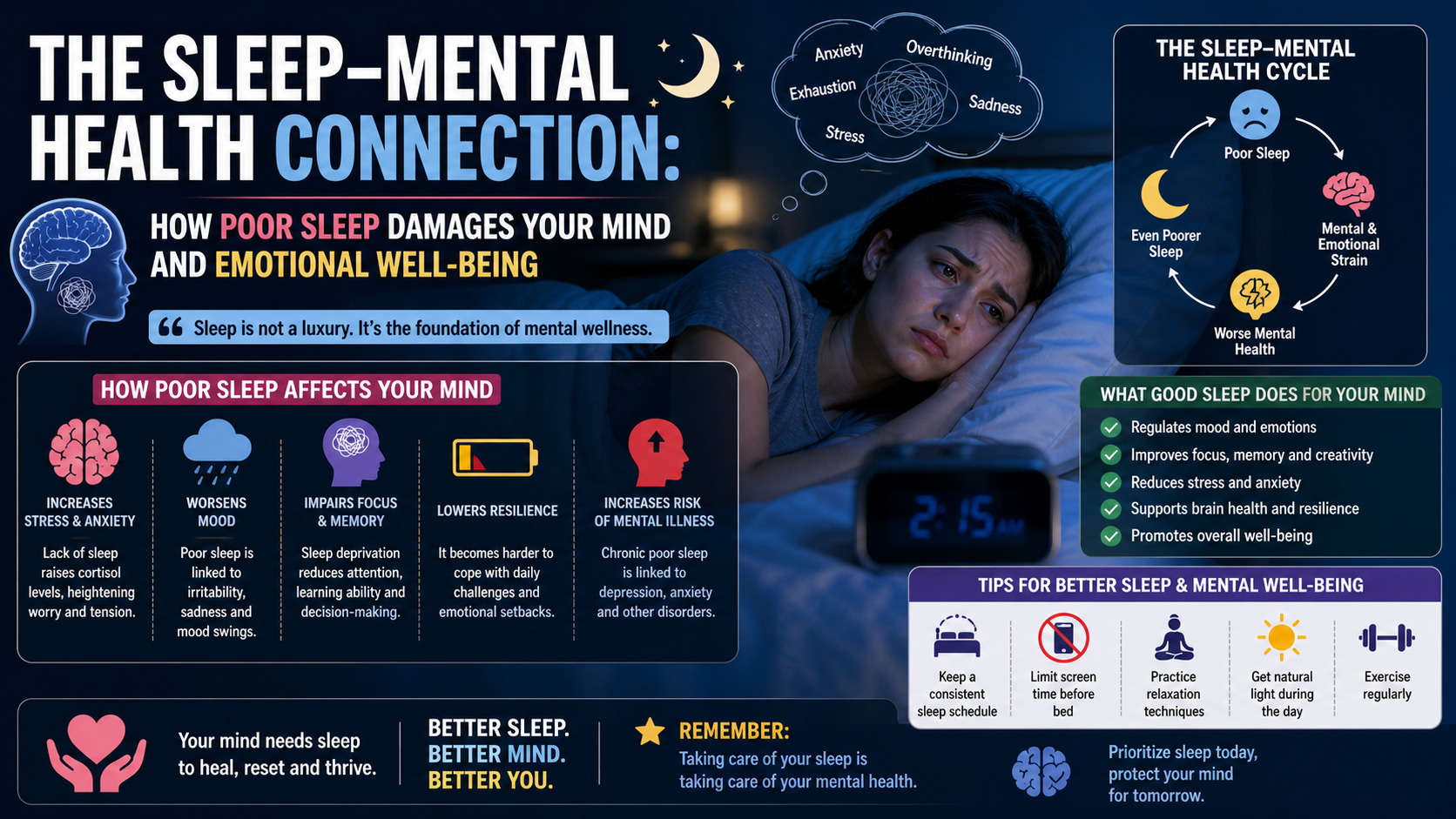
ToggleThe Sleep–Mental Health Connection: How Poor Sleep Damages Your Mind and Emotional Well-Being
Introduction: Why Sleep Is the Foundation of Mental Well-Being
Sleep is not just a passive “shut-down mode” your body enters at night—it is one of the most important pillars of mental health. Think of sleep as your brain’s built-in maintenance system. Just like a phone slows down when too many apps are running or when it hasn’t been restarted for days, your brain behaves the same way when you don’t get enough rest. You may notice you’re more emotional, sensitive, irritable, or simply unable to think clearly. That’s not a coincidence. Your brain literally cannot perform at its best without proper sleep.
When you sleep, your mind organizes memories, clears toxic waste proteins, balances chemicals, repairs neural pathways, and resets emotional responses. Without these nightly repairs, your mental resilience drops dramatically. That’s when anxiety creeps in faster, stress feels heavier, and even tiny problems feel overwhelming. Sleep becomes the quiet superhero behind stable moods, productive thinking, and emotional strength.
But here’s the twist—most people underestimate the damage caused by chronic sleep deprivation. You might think staying awake an extra hour won’t matter, or that scrolling on your phone until 2 AM doesn’t affect you much, but your brain knows the truth. Studies show that even a single night of poor sleep can increase emotional reactivity by up to 60%. Imagine the long-term impact of weeks or months of insufficient rest.
In this article, you’ll discover exactly how a lack of sleep affects your mind, your emotions, your stress levels, your decisions, your relationships, and even your long-term mental health. You’ll also learn practical strategies to improve your sleep and protect your mental well-being.
Sleep isn’t optional—it’s foundational. And your mind pays the price when you skip it.
The Science of Sleep: What Happens in Your Brain When You Rest
Sleep may feel like a peaceful pause, but inside your brain, it’s more like a bustling night shift where different departments clock in to repair, restore, and reorganize. Every night, your brain cycles through stages, each with a unique purpose. Light sleep helps your body transition into deeper stages, preparing both your mind and muscles to fully relax. Deep sleep, often called slow-wave sleep, is where the heavy lifting happens—tissue repair, immune strengthening, and energy restoration. But the real magic for your mental health unfolds during REM sleep, the stage where dreams occur, your brain processes emotions, and your mind files away memories like a librarian organizing a massive book collection.
During REM, your brain becomes almost as active as it is when you’re awake, but instead of reacting to the outside world, it’s sorting through emotional experiences. Ever notice how something that felt overwhelming the night before suddenly feels manageable after a good sleep? That’s because REM sleep helps “smooth out” emotional rough edges, reducing the emotional intensity of memories—something researchers call overnight emotional therapy. Without this stage, your emotional brain stays overactive, making you more sensitive to stress and more prone to anxiety.
Another crucial part of sleep science is your brain’s “cleaning system”—the glymphatic system. Think of it like your mind’s housekeeping crew. While you sleep, this system flushes out toxins and protein buildup that accumulate during the day. When you skip sleep, these toxins remain, leading to mental fog, poor focus, irritability, and—over time—an increased risk of neurodegenerative issues.
Your hormones also get a makeover during sleep. Stress hormones like cortisol reset, mood-boosting chemicals like serotonin and dopamine rebalance, and your nervous system switches from “fight or flight” to “rest and digest.” All of this creates a stable internal environment that supports calmness, clarity, and emotional strength.
So when you don’t sleep enough, your brain essentially misses its nightly repair appointment. Systems malfunction, emotions intensify, and your mental resilience weakens. Sleep isn’t just restorative—it’s essential for mental survival.
u’ll understand why sleep is one of the most powerful tools you have for nurturing a stable, healthy mind.
The Science of Sleep: What Happens in Your Brain When You Rest
Sleep is not a passive state. It is a highly active, carefully orchestrated biological process that involves multiple systems working together. Throughout the night, your brain cycles through stages of light sleep, deep sleep, and REM sleep. Each stage plays a critical role in maintaining emotional balance, cognitive performance, and overall mental health.
Deep sleep, or slow-wave sleep, is like a nightly restoration period. During this time, your body repairs tissues, strengthens the immune system, and regulates hormones. But deep sleep has a huge impact on your brain, too. It’s when the glymphatic system—the brain’s detoxification network—flushes out toxins and metabolic waste. Without this cleansing process, harmful proteins accumulate, contributing to mental fog, irritability, memory problems, and long-term cognitive issues.
REM sleep is equally important. This is when dreaming occurs, and your brain processes emotions, forms long-term memories, and calms heightened emotional responses from the day. Many scientists call REM sleep “overnight therapy” because it helps soften emotional pain, reduce stress, and improve mood. Without enough REM sleep, emotional reactions become stronger, anxiety levels rise, and mental resilience weakens.
During sleep, neurotransmitters like serotonin, dopamine, and norepinephrine rebalance. These chemicals regulate mood, motivation, pleasure, and emotional stability. When sleep is cut short, these chemicals become imbalanced, contributing to anxiety, irritability, sadness, and difficulty experiencing joy. Hormones also reset at night—particularly cortisol, the stress hormone. If you sleep poorly, cortisol remains high the next day, making you feel tense, stressed, and mentally exhausted.
In short, sleep is when your brain repairs, reorganizes, detoxifies, and prepares for a new day. When you deprive yourself of sleep, you deprive your brain of the maintenance it needs to function—and your mental health suffers the consequences.
How Lack of Sleep Disrupts Brain Chemistry
The brain is a delicate chemical environment, and sleep plays a central role in maintaining its balance. When you don’t get enough sleep, neurotransmitters and hormones shift in ways that directly affect your mood and mental functioning. For example, serotonin and dopamine—two key chemicals that regulate feelings of happiness, motivation, and emotional stability—become depleted after poor sleep. This can lead to sadness, low mood, irritability, and decreased enthusiasm for daily activities.
At the same time, stress hormones spike. Cortisol, which is supposed to drop at night, stays elevated when you sleep poorly. High cortisol makes it harder to relax, think clearly, or solve problems. It also increases feelings of stress and anxiety, even over small things. Over time, this leads to chronic tension, racing thoughts, and emotional burnout.
Sleep deprivation also impacts GABA, the brain’s primary calming chemical. When GABA levels drop, you become more sensitive to stress, less able to calm yourself, and more prone to anxiety. Your brain becomes stuck in “fight or flight” mode, constantly on alert even in safe situations.
Another major change occurs in the amygdala—the part of your brain responsible for emotional reactions. Research shows that sleep loss makes the amygdala 60% more reactive, meaning you feel emotions more intensely and react more strongly to stress or conflict. The logical part of your brain, the prefrontal cortex, also becomes less active when you’re tired, making it harder to regulate emotions or reason through problems.
Together, these chemical changes create a perfect storm for mental health issues. Lack of sleep literally rewires your mood, your reactions, and the way you experience the world. What feels like stress, sadness, or emotional instability may actually be your brain signaling that it desperately needs rest.
Sleep Deprivation and Anxiety: A Two-Way Relationship
Sleep and anxiety have a complicated, deeply interconnected relationship. Poor sleep increases anxiety, and anxiety makes it harder to sleep—a cycle that worsens over time if not interrupted. When you’re sleep deprived, your nervous system becomes overstimulated, and your brain shifts into alert mode. This makes it harder to relax, quiet your thoughts, or fall asleep peacefully.
People who don’t sleep enough often experience racing thoughts, tension, rapid heartbeat, and constant worry. Even small issues can trigger big emotional reactions. This happens because lack of sleep weakens the prefrontal cortex—the part of your brain responsible for logic and calm decision-making—and strengthens the amygdala, which controls fear responses. The imbalance leads to heightened anxiety, panic, and difficulty controlling emotional reactions.
In turn, anxiety makes it difficult to fall asleep. Your brain perceives danger, even when you’re safe. This keeps your body in a state of hyperarousal, with cortisol levels high and muscles tense. It becomes nearly impossible to relax into sleep. Over time, nighttime anxiety can turn into chronic insomnia, creating a loop in which sleep deprivation intensifies anxiety, and anxiety causes further sleep loss.
This cycle can disrupt daily life. You may find yourself avoiding social situations, struggling with concentration, or feeling overwhelmed by tasks that once felt manageable. The encouraging news is that improving sleep quality can significantly reduce anxiety, often more effectively than medication alone.
The Link Between Poor Sleep and Depression
Depression and sleep problems frequently appear together, and the connection is profound. Studies show that people who experience chronic sleep deprivation are much more likely to develop depression. One of the reasons is REM sleep. During this stage, the brain processes emotional experiences and reduces the intensity of negative feelings. When REM sleep is disrupted, emotions stay raw, unprocessed, and overwhelming.
Low sleep also disrupts serotonin balance—a neurotransmitter essential for mood regulation. Without enough sleep, serotonin levels drop, leading to sadness, hopelessness, and emotional numbness. Over time, this chemical imbalance can develop into clinical depression.
Depression itself also interferes with sleep. Many people with depression experience insomnia, frequent nighttime awakenings, or oversleeping. These disrupted patterns prevent the brain from getting the restorative sleep it needs, worsening depressive symptoms. This creates a cycle in which poor sleep worsens depression, and depression worsens sleep.
Sleep therapy, especially techniques like cognitive behavioral therapy for insomnia (CBT-I), has been shown to reduce depressive symptoms significantly. By restoring natural sleep rhythms, the brain gains the stability it needs to better regulate mood, making depression easier to manage.
How Sleep Affects Emotional Regulation
Have you ever noticed how everything feels harder when you’re tired? Small frustrations become major irritations, conversations feel more draining, and emotions seem harder to control. That’s not just a mood swing—it’s the brain struggling to regulate emotions without enough restorative sleep.
Sleep deprivation weakens the prefrontal cortex, the part of the brain responsible for impulse control, empathy, judgment, and emotional moderation. At the same time, the amygdala becomes hyperactive, triggering stronger emotional reactions. This imbalance is why people who lack sleep are more sensitive to criticism, more reactive during arguments, and more easily overwhelmed.
Without enough sleep, your emotional threshold shrinks. You’re more likely to feel frustrated, anxious, or sad, and less able to cope with stress. Over time, this can strain relationships, decrease productivity, and contribute to mental health disorders.
Sleep rebuilds emotional resilience. It strengthens the neural pathways that help you respond calmly, think rationally, and recover from emotional challenges. Getting enough sleep is like giving your brain the emotional armor it needs for daily life.
Cognitive Decline Caused by Insufficient Sleep
Cognitive performance depends heavily on sleep. Without it, your brain struggles to perform even simple tasks. Sleep deprivation affects memory, attention, decision-making, and problem-solving abilities. It becomes harder to learn new things, recall information, or stay focused on tasks.
The hippocampus, which is responsible for forming new memories, becomes impaired when you don’t sleep enough. This is why you forget things, struggle to recall conversations, or feel mentally “foggy.” Deep sleep is critical for transferring short-term memories into long-term storage. Without it, your brain becomes cluttered, like a desk piled with unsorted papers.
Your attention span also shortens. Tasks that once felt easy start to feel overwhelming or confusing. You may make more mistakes, take longer to complete assignments, or feel mentally drained at work. Over time, chronic sleep deprivation can mimic symptoms of ADHD or cognitive decline.
Sleep also affects creativity and problem-solving. REM sleep, in particular, helps the brain make new connections, think abstractly, and find creative solutions. Without proper REM, your ability to innovate, brainstorm, or think outside the box decreases.
The Impact of Sleep on Stress Management
Stress and sleep are deeply linked. Poor sleep makes you more sensitive to stress, and stress makes it harder to sleep—a vicious cycle. When you sleep well, your body lowers cortisol levels, helping you feel calm and centered. When you’re sleep deprived, cortisol stays high, keeping your body in a constant state of alertness.
In this state, everything feels more stressful. A small inconvenience can trigger a big reaction. You may feel overwhelmed, on edge, or unable to relax. Chronic stress combined with chronic sleep deprivation can damage your mental and physical health, increasing the risk of anxiety disorders, depression, and burnout.
Good sleep acts as a natural stress buffer. It resets your nervous system, allowing you to respond to challenges with clarity instead of panic. When you prioritize sleep, stress becomes easier to manage, and emotional resilience improves.
Lack of Sleep and Decision-Making
Sleep deprivation impairs your ability to make good decisions. When you’re tired, your brain has trouble weighing risks, processing consequences, or thinking rationally. This is because the prefrontal cortex, which governs logical thinking and judgment, becomes sluggish without rest.
At the same time, emotional areas of the brain become more reactive. This imbalance leads to impulsive decisions, poor judgment, and risk-taking behaviors. You may find yourself overeating, overspending, reacting too quickly, or making emotional choices instead of thoughtful ones.
Sleep helps restore impulse control and strengthens your ability to think clearly. Without it, decision-making becomes chaotic, and daily life becomes more difficult to navigate.
Sleep, Trauma, and PTSD
People who have experienced trauma often struggle with sleep, and lack of sleep can worsen trauma symptoms. Nightmares, nighttime anxiety, and hyperarousal keep the body in a state of alertness, making restful sleep difficult. When sleep is disrupted, the brain cannot properly process traumatic memories.
REM sleep plays a crucial role in reducing the emotional intensity of trauma-related memories. Without enough REM, the brain holds onto fear, stress, and emotional pain, making PTSD symptoms stronger. Improving sleep is one of the most effective ways to reduce trauma symptoms, restore emotional balance, and promote healing.
How Technology and Screen Time Destroy Your Sleep Quality
Screens have become one of the biggest barriers to healthy sleep. Blue light emitted from phones, tablets, and computers suppresses melatonin—the hormone that tells your body it’s time to sleep. When melatonin drops, your brain stays alert even at night.
But it’s not just the light. The content you consume also affects your mind. Social media, videos, and late-night scrolling overstimulate the brain, increasing dopamine levels and making it harder to wind down. Emotional content, especially negative news or stressful conversations, keeps your brain active long after you put your phone down.
To protect your sleep, limiting screen time before bed is essential. Creating a calm nighttime routine helps your brain shift into sleep mode, improving sleep quality and mental health.
Lifestyle Factors That Sabotage Good Sleep
Several lifestyle habits can quietly destroy your sleep quality. Caffeine is one of the biggest culprits. It blocks sleep signals and stays in your system for hours, making it harder to fall asleep even if you feel tired. Alcohol may make you sleepy, but it disrupts REM sleep and leads to frequent awakenings.
Irregular sleep schedules also confuse your internal clock. Staying up late on weekends then waking early on weekdays creates “social jet lag,” disrupting your natural sleep rhythm. Poor diet, lack of exercise, and stress also interfere with sleep.
Improving lifestyle habits can significantly enhance sleep quality and protect mental health.
Evidence-Based Strategies to Improve Sleep for Mental Health
Improving sleep doesn’t require dramatic changes—small adjustments can make a big difference. Establishing a consistent sleep schedule helps regulate your internal clock. A dark, cool, quiet bedroom creates an ideal sleep environment. Avoiding caffeine late in the day and reducing screen time before bed also help.
Relaxation techniques like deep breathing, meditation, or stretching calm your nervous system. Reading, journaling, or taking a warm shower can signal your brain that it’s time to unwind. If racing thoughts keep you awake, writing down worries or practicing mindfulness can ease mental tension.
When to Seek Professional Help
If your sleep problems persist for more than a few weeks, it may be time to seek professional help. Chronic insomnia, sleep apnea, restless legs syndrome, or anxiety-related sleep disturbances often require treatment. A sleep specialist or mental health professional can provide personalized strategies and interventions.
Conclusion: Your Mind Depends on Your Sleep More Than You Think
Sleep is not a luxury. It’s a biological necessity that shapes every part of your mental and emotional life. When you prioritize sleep, you protect your mood, strengthen your resilience, and support long-term mental health. A well-rested mind is calmer, clearer, and more capable of handling whatever life brings. Making sleep a priority may be the most powerful mental health decision you ever make.
FAQs
-
How many hours of sleep do adults really need?
Most adults require 7–9 hours of sleep per night for optimal mental and physical functioning. -
Can lack of sleep cause anxiety?
Yes, sleep deprivation increases anxiety by making the brain more reactive to stress. -
Does oversleeping affect mental health?
Oversleeping can be a symptom of depression or sleep disorders. Quality matters more than quantity. -
Is it harmful to use screens before bed?
Yes, blue light suppresses melatonin and makes it harder to fall asleep. -
How long does it take to fix a sleep schedule?
Most people see improvement within 1–2 weeks of consistent sleep habits.
Types of Anemia…..
1 thought on “The Sleep–Mental Health Connection: How Poor Sleep Damages Your Mind and Emotional Well-Being”