Table of Contents
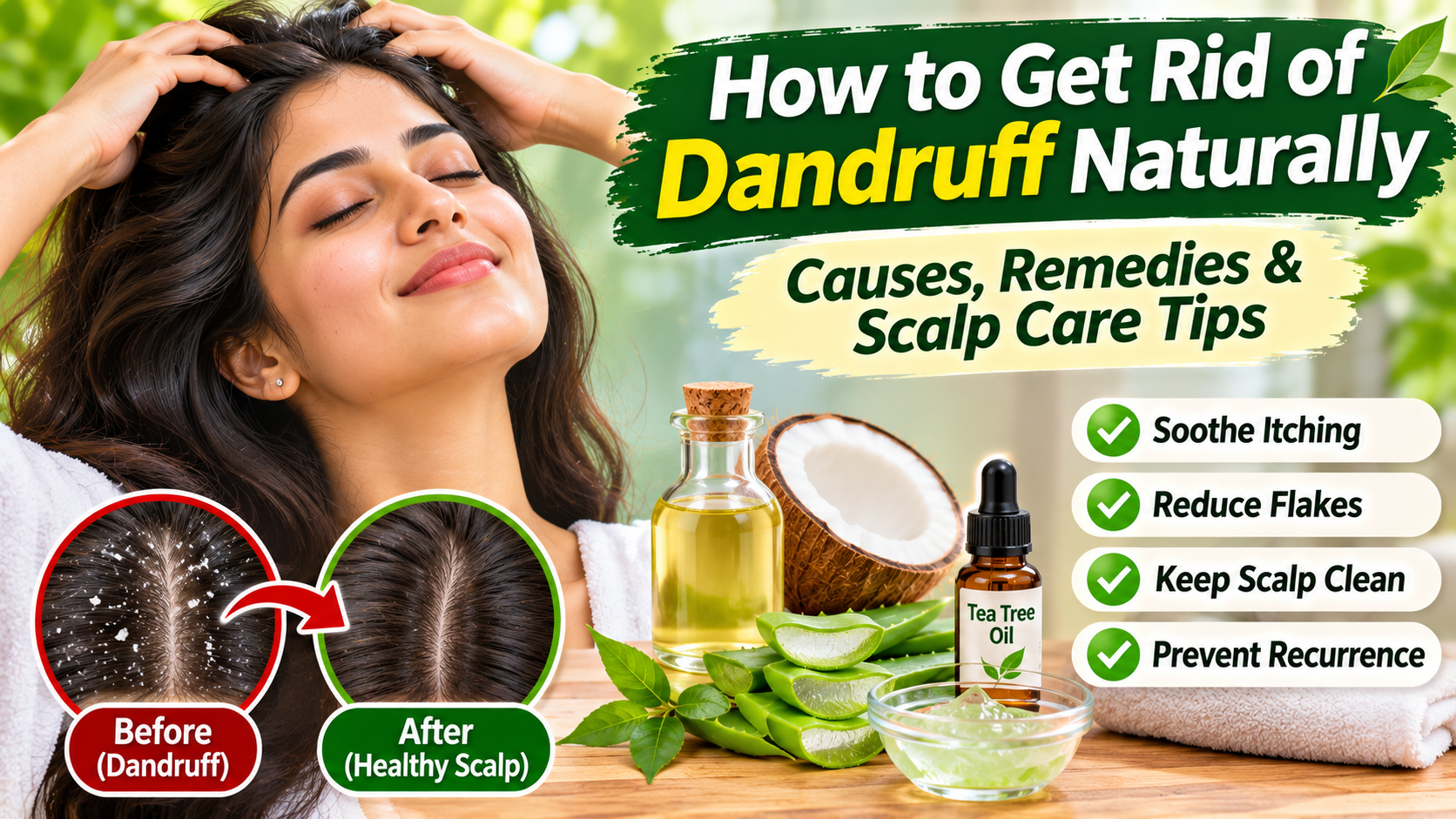
ToggleHow to Get Rid of Dandruff Naturally: Causes, Remedies and Scalp Care Tips
Have you noticed white flakes on your shoulders, persistent itching, or an uncomfortable feeling on your scalp? Dandruff is a common scalp condition that affects people of different ages and hair types. Although it is generally not dangerous or contagious, it can be frustrating, especially when the flakes keep returning despite regular hair washing.
The good news is that dandruff can often be managed with a consistent scalp-care routine, suitable hair products, and the right treatment.
Many people prefer natural dandruff remedies such as aloe vera, coconut oil, and tea tree oil. Some of these ingredients may help soothe dryness or irritation, but not all natural remedies have been scientifically proven to treat dandruff itself.
Understanding what causes dandruff is the first step towards choosing an effective solution.
In this guide, we explain the common causes of dandruff, natural ways to care for your scalp, effective anti-dandruff ingredients, dietary considerations, and practical steps to prevent recurring flakes.
What Is Dandruff?
Dandruff is a common scalp condition characterized by the shedding of visible flakes of skin. These flakes are usually white or yellowish and may appear in your hair, on your scalp, or on your shoulders.
It is often associated with an oily or irritated scalp and can cause itching and discomfort.
One important factor associated with dandruff is a naturally occurring yeast called Malassezia. This yeast lives on the skin of most adults, but in some people, interactions between the yeast, skin oils, and individual skin sensitivity contribute to inflammation and excessive skin shedding.
Dandruff is closely related to a mild form of seborrheic dermatitis, although the two terms are not always interchangeable.
Dandruff is not necessarily a sign of poor hygiene. It can occur even in people who wash their hair regularly.
What Causes Dandruff?
Several factors can contribute to dandruff or make existing symptoms worse.
1. Malassezia Yeast
Malassezia is a yeast that naturally lives on the scalp. In susceptible individuals, it can contribute to irritation, inflammation, and increased skin shedding.
This is one reason antifungal ingredients are commonly used in medicated anti-dandruff shampoos.
2. Excess Scalp Oil
The scalp naturally produces sebum, an oily substance that helps protect the skin and hair.
However, an oily scalp can contribute to dandruff in some people, particularly when combined with inflammation and sensitivity to Malassezia.
3. Seborrheic Dermatitis
Seborrheic dermatitis is an inflammatory skin condition that commonly affects areas rich in oil-producing glands.
It can cause:
- Greasy white or yellowish flakes
- Redness and irritation
- Persistent itching
- Scaly patches on the scalp
- Flaking around the eyebrows, nose, and ears
More persistent or severe cases may require treatment from a dermatologist.
4. Dry or Irritated Scalp
A dry scalp can cause small flakes and itching. Cold weather, hot showers, harsh shampoos, and excessive washing may contribute to dryness.
Dry scalp and dandruff can look similar, but they are not necessarily the same condition.
5. Sensitivity to Hair Care Products
Some shampoos, conditioners, hair dyes, fragrances, and styling products can cause irritation or allergic contact dermatitis.
If itching and redness begin after using a new hair product, stop using it and see whether the symptoms improve.
6. Stress and Weather Changes
Stress may trigger or worsen dandruff and seborrheic dermatitis in susceptible people.
Cold, dry weather can also make scalp flaking more noticeable.
Understanding these triggers helps you choose a scalp-care routine that suits your needs.
Common Signs and Symptoms of Dandruff
Dandruff does not look exactly the same in everyone.
The most common symptoms include:
- White or yellowish flakes in the hair
- Visible flakes on clothing, especially around the shoulders
- An itchy scalp
- Dryness or irritation
- Oily or greasy patches
- Mild redness in some cases
Some people experience only occasional flaking, while others have persistent itching and visible scaling.
If you notice thick plaques, significant redness, sores, bleeding, or patchy hair loss, the condition may be something other than ordinary dandruff.
10 Natural Ways to Care for a Dandruff-Prone Scalp
Natural scalp care can help reduce irritation, avoid unnecessary product buildup, and maintain a comfortable scalp environment.
However, it is important to understand that natural ingredients are not guaranteed cures for dandruff. Evidence for many homemade treatments is limited.
Here are some approaches to consider.
1. Use Aloe Vera Gel to Soothe an Irritated Scalp
Aloe vera is widely used in skincare because of its soothing and moisturizing properties.
Some people find that aloe vera gel helps reduce the uncomfortable feeling associated with dry or irritated skin.
However, there is not enough strong clinical evidence to establish aloe vera as a reliable treatment for dandruff caused by Malassezia.
How to use it:
- Choose a simple aloe vera gel without added fragrance or irritating ingredients.
- Apply a small amount to a limited area of the scalp.
- Check for irritation before using it more widely.
- Rinse it off if you experience discomfort.
Avoid applying aloe vera to broken or infected skin without medical advice.
2. Consider Tea Tree Oil Carefully
Tea tree oil is an essential oil obtained from the leaves of the Australian tea tree.
It contains compounds that have demonstrated antimicrobial activity in laboratory studies. However, this does not mean that homemade tea tree oil mixtures are proven treatments for dandruff.
Some commercially formulated shampoos contain tea tree oil, but evidence of its effectiveness is limited.
Safety precautions:
- Never apply undiluted tea tree essential oil directly to your scalp.
- Avoid using homemade concentrated mixtures.
- Stop using a product if you develop redness, burning, or itching.
- Remember that tea tree oil can cause allergic contact dermatitis.
If you prefer tea tree products, choose a properly formulated scalp product and follow its instructions.
3. Use Coconut Oil Only If Your Scalp Is Dry
Coconut oil is commonly used as a hair-conditioning ingredient. It can help soften hair and reduce moisture loss from the hair shaft.
However, coconut oil has not been established as a treatment for the yeast-related processes involved in dandruff.
For people with an oily or dandruff-prone scalp, applying heavy oils may sometimes make the scalp feel greasier or worsen product buildup.
How to use it cautiously:
- Apply a small amount to dry hair lengths rather than heavily coating an oily scalp.
- Avoid leaving thick oil layers on an already greasy scalp.
- Wash it out properly.
- Discontinue use if itching or flaking worsens.
Coconut oil is best viewed as a hair-conditioning option rather than an antifungal dandruff cure.
4. Choose a Gentle, Fragrance-Free Shampoo
One of the simplest ways to improve scalp comfort is to avoid products that irritate your skin.
If your scalp reacts to strongly fragranced shampoos, hair sprays, or styling products, consider switching to a gentle fragrance-free alternative.
Look for products suitable for sensitive skin.
Wash your scalp according to your hair type and oil production. People with oily scalps may need more frequent washing, while people with very dry or textured hair may need a different schedule.
The goal is to keep the scalp clean without causing unnecessary irritation.
5. Avoid Harsh DIY Scalp Treatments
Some popular online remedies recommend applying lemon juice, undiluted apple cider vinegar, or baking soda directly to the scalp.
These ingredients are not established dandruff treatments.
Lemon juice and vinegar are acidic and may cause burning or irritation, particularly on scratched or inflamed skin. Baking soda is alkaline and can disrupt the skin’s protective barrier.
Repeatedly scrubbing the scalp with abrasive ingredients can make irritation worse.
Instead of experimenting with harsh kitchen ingredients, choose gentle scalp-care products and evidence-based anti-dandruff treatments.
6. Keep Your Scalp Clean
Regular washing helps remove excess oil, dead skin cells, and product residue.
Infrequent washing may allow oil and flakes to accumulate, especially if you naturally have an oily scalp.
Helpful scalp hygiene habits:
- Wash your hair according to your scalp’s needs.
- Massage shampoo gently using your fingertips.
- Avoid scratching with your fingernails.
- Rinse shampoo thoroughly.
- Clean combs and brushes regularly.
- Avoid excessive styling product buildup.
There is no single washing schedule that works for everyone. Adjust your routine according to your hair texture, scalp oiliness, and the instructions on your treatment shampoo.
7. Try a Gentle Scalp Massage
A gentle scalp massage can help loosen surface flakes and make shampooing more comfortable.
However, massage alone does not eliminate the underlying causes of dandruff.
How to massage your scalp:
- Wet your hair with lukewarm water.
- Apply a suitable shampoo.
- Use the pads of your fingertips to massage gently.
- Avoid vigorous rubbing or scratching.
- Rinse thoroughly.
Stop if your scalp feels painful or becomes more irritated.
8. Maintain a Balanced, Nutrient-Rich Diet
Your overall diet supports healthy skin and normal body functions.
Although there is no specific food that reliably cures dandruff, eating a varied diet helps provide nutrients needed for healthy skin.
Include foods containing:
- Zinc: Pumpkin seeds, chickpeas, beans, nuts, and whole grains.
- Vitamin B12: Eggs, dairy products, fish, and fortified foods.
- Omega-3 fatty acids: Fatty fish, flaxseeds, chia seeds, and walnuts.
- Vitamin A: Carrots, spinach, pumpkin, and sweet potatoes.
- Protein: Eggs, lentils, beans, fish, and dairy products.
Avoid assuming that dandruff automatically means you have a vitamin deficiency. Supplements are not routinely necessary unless a deficiency or specific nutritional need has been identified.
9. Manage Stress and Maintain Good Sleep Habits
Stress can contribute to flare-ups of certain inflammatory skin conditions, including seborrheic dermatitis.
Although stress management is not a standalone dandruff treatment, it may support overall skin health.
Try incorporating these habits:
- Take regular walks.
- Practise gentle yoga or meditation.
- Maintain a consistent sleep schedule.
- Make time for relaxing activities.
- Aim for adequate sleep.
- Avoid excessive work-related stress where possible.
Small, consistent lifestyle changes can support your overall well-being.
10. Protect Your Scalp From Environmental Irritation
Weather conditions and environmental exposures can influence scalp comfort.
Cold, dry air may aggravate flaking, while sweat and product buildup may make some scalps feel uncomfortable.
Helpful precautions include:
- Protecting your scalp from excessive sun exposure.
- Avoiding very hot showers.
- Washing away excessive sweat when needed.
- Avoiding harsh chemical treatments during flare-ups.
- Choosing hair products suitable for your scalp type.
These steps support scalp comfort but should not replace appropriate treatment when dandruff is persistent.
Which Anti-Dandruff Shampoo Ingredients Actually Work?
If natural scalp care does not control your dandruff, an anti-dandruff shampoo containing an established active ingredient may be more effective.
Several ingredients are commonly recommended by dermatologists.
| Active ingredient | How it helps |
|---|---|
| Ketoconazole | Antifungal ingredient that targets Malassezia yeast |
| Selenium sulfide | Helps reduce yeast and excessive skin shedding |
| Zinc pyrithione | Helps control dandruff-associated yeast and flaking |
| Salicylic acid | Helps loosen and remove accumulated scales |
| Coal tar | Slows excessive skin cell turnover |
Availability and permitted formulations differ between countries.
How to use anti-dandruff shampoo:
- Select a product appropriate for your scalp condition.
- Apply it directly to the scalp.
- Massage gently.
- Leave it on for the time specified on the product label.
- Rinse thoroughly.
- Repeat according to the recommended frequency.
Some medicated shampoos need to remain on the scalp for several minutes before rinsing.
Do not assume that using more shampoo or leaving it on longer will produce better results.
If one active ingredient does not help, another type may be more suitable. Ask a pharmacist or dermatologist for guidance.
Natural Remedies vs. Medicated Dandruff Treatments
Many people prefer natural ingredients because they seem gentler. However, natural does not automatically mean safer or more effective.
Here is a practical comparison:
| Treatment | Main purpose | Evidence for dandruff |
|---|---|---|
| Aloe vera | May soothe irritation | Limited |
| Coconut oil | Conditions dry hair | Not established as a dandruff treatment |
| Tea tree oil | Antimicrobial properties | Limited clinical evidence |
| Neem | Traditional scalp-care ingredient | Insufficient clinical evidence |
| Apple cider vinegar | Homemade acidic rinse | Not established |
| Baking soda | Removes surface buildup | Not recommended as a dandruff treatment |
| Ketoconazole shampoo | Reduces Malassezia yeast | Established treatment |
| Selenium sulfide shampoo | Controls dandruff-associated yeast and scaling | Established treatment |
The most effective choice depends on whether you have ordinary dandruff, seborrheic dermatitis, dry scalp, or another skin condition.
Dandruff or Dry Scalp: How to Tell the Difference
Dandruff and dry scalp can look similar, but their underlying causes may differ.
| Feature | Dandruff | Dry scalp |
|---|---|---|
| Flakes | May be white or yellowish | Often small and white |
| Scalp condition | May be oily or greasy | Often dry or tight |
| Itching | Common | Common |
| Main contributing factors | Malassezia, oil and skin sensitivity | Dryness and irritation |
| Common approach | Anti-dandruff shampoo | Gentle cleansing and suitable moisturization |
These differences are not always obvious. A dermatologist can help identify the condition when symptoms persist.
Other conditions, such as psoriasis, eczema, and fungal infections, can also cause scalp scaling.
How to Prevent Dandruff From Returning
Dandruff can be a recurring condition, even after symptoms improve.
A consistent scalp-care routine may help reduce future flare-ups.
Follow a Regular Hair-Washing Routine
Wash your hair according to your scalp type. If you have an oily scalp, regular washing may help prevent excessive buildup.
Continue Appropriate Maintenance Treatment
Some people need to continue using anti-dandruff shampoo periodically after their symptoms improve.
Follow the product instructions or your dermatologist’s recommendations.
Avoid Excessive Hair Products
Heavy oils, gels, sprays, and strongly fragranced products may irritate certain scalps.
Use products that your skin tolerates.
Avoid Scratching
Scratching can damage the scalp and increase irritation.
If itching is persistent, treat its underlying cause rather than repeatedly scratching the affected area.
Maintain Healthy Lifestyle Habits
A balanced diet, sufficient sleep, physical activity, and stress management support overall health.
They are helpful habits, although they cannot guarantee that dandruff will not return.
When Should You See a Dermatologist?
Mild dandruff can often be managed at home. However, persistent or severe symptoms may indicate a different scalp condition or require stronger treatment.
Consult a dermatologist if you experience:
- Severe or persistent scalp itching
- Thick, widespread scaling
- Redness or swelling
- Painful or bleeding patches
- Crusting or discharge
- Flaking around the eyebrows, ears, or sides of the nose
- Noticeable or patchy hair loss
- No improvement after using an appropriate anti-dandruff shampoo for about four weeks
A dermatologist may examine your scalp and determine whether you have dandruff, seborrheic dermatitis, psoriasis, eczema, or a fungal infection.
Treatment may include medicated shampoos, antifungal preparations, or other prescribed medicines depending on the diagnosis.
Do not rely exclusively on natural remedies when symptoms are persistent or worsening.
Frequently Asked Questions About Natural Dandruff Treatment
1. How can I get rid of dandruff naturally at home?
Start with a gentle scalp-care routine, wash your hair according to your scalp type, avoid irritating products, and maintain a balanced diet. Aloe vera may soothe some irritated scalps, but natural remedies are not proven cures for all forms of dandruff.
2. What is the fastest way to get rid of dandruff?
A suitable medicated anti-dandruff shampoo containing ketoconazole, selenium sulfide, salicylic acid, or another established active ingredient may help control dandruff. Follow the product instructions and allow sufficient time for improvement.
3. Does coconut oil remove dandruff?
Coconut oil can condition dry hair, but it has not been established as an effective treatment for dandruff. Applying heavy oil to an oily or irritated scalp may make symptoms worse in some people.
4. Is tea tree oil good for dandruff?
Tea tree oil has antimicrobial properties, but strong clinical evidence supporting it as a dandruff treatment is limited. It can also cause allergic reactions. Never apply undiluted tea tree essential oil directly to the scalp.
5. Can lemon juice remove dandruff?
There is insufficient evidence that lemon juice treats dandruff. Its acidity may irritate the scalp, particularly if the skin is scratched or inflamed. It is better to avoid applying concentrated lemon juice directly to your scalp.
6. Does dandruff cause hair loss?
Ordinary dandruff does not usually cause permanent hair loss. However, severe itching and inflammation can contribute to temporary hair shedding. Patchy hair loss may indicate another condition, such as a scalp fungal infection, and should be examined.
7. Is dandruff caused by poor hygiene?
No. Dandruff is not simply caused by poor hygiene. It is associated with several factors, including scalp oil, Malassezia yeast, individual skin sensitivity, and inflammatory skin conditions. Regular washing can help manage oil and flakes but is not the only factor.
8. How often should I wash my hair if I have dandruff?
The ideal frequency depends on your scalp and hair type. People with oily scalps may need more frequent washing, while those with dry or textured hair may require a different schedule. Follow the directions of any medicated shampoo you use.
9. Can stress make dandruff worse?
Stress may trigger or worsen seborrheic dermatitis and dandruff in some people. Managing stress, maintaining regular sleep, and following an appropriate scalp-care routine may help reduce flare-ups.
10. Can dandruff be cured permanently?
Dandruff can often be controlled, but it may return periodically. Some people need ongoing maintenance with an appropriate anti-dandruff shampoo. Persistent symptoms may require dermatologist-guided treatment.
Final Thoughts: Build a Healthy Scalp Care Routine
Dandruff is common, but persistent flakes and itching do not have to become a permanent part of your daily life.
The first step is understanding why your scalp is flaking. Excess oil, Malassezia yeast, seborrheic dermatitis, dry skin, and irritation from hair products can all contribute to similar symptoms.
Natural approaches such as gentle cleansing, avoiding irritating ingredients, and maintaining healthy lifestyle habits can support scalp care. However, ingredients such as coconut oil, lemon juice, baking soda, and neem should not be promoted as proven dandruff cures.
For persistent dandruff, an appropriate medicated shampoo may provide more reliable relief.
Be patient, choose products carefully, and seek professional advice if symptoms continue or become severe.
A healthy scalp starts with understanding your skin, choosing the right treatment, and maintaining a gentle, consistent hair-care routine.
Medical Disclaimer
This article is intended for general educational purposes only and does not replace professional medical advice, diagnosis, or treatment. Natural ingredients may cause irritation or allergic reactions. Consult a qualified dermatologist if you have severe, persistent, or worsening scalp symptoms.
References and Further Reading
- American Academy of Dermatology – How to Treat Dandruff
- NHS – Dandruff: Causes and Treatment
- Mayo Clinic – Dandruff: Diagnosis and Treatment
- Canadian Dermatology Association – Dandruff
- DermNet – Seborrhoeic Dermatitis
Causes of Dyspnea (Difficulty Breathing): Symptoms, Diagnosis, and Treatment Explained…..
1 thought on “How to Get Rid of Dandruff Naturally: 10 Tips for a Healthy Scalp”