Table of Contents
ToggleWhat Is HDL Cholesterol? Healthy Levels and Ways to Improve It
When people talk about cholesterol, the conversation usually focuses on LDL, often called bad cholesterol. But there’s another important number on your blood test that deserves attention: HDL cholesterol.
HDL stands for high-density lipoprotein. It is commonly known as good cholesterol because higher HDL levels are generally associated with a lower risk of heart disease. However, the relationship between HDL and heart health is more complicated than many people realise.
You may have heard that raising HDL automatically protects your heart. That’s not entirely true. Research has shown that increasing HDL numbers with certain medications does not necessarily prevent heart attacks or strokes.
So, what does HDL actually do? What is a healthy HDL level? And can you increase it naturally through food and exercise?
Let’s look at the science and the practical steps that can help you improve your overall cholesterol profile.
What Is HDL Cholesterol?
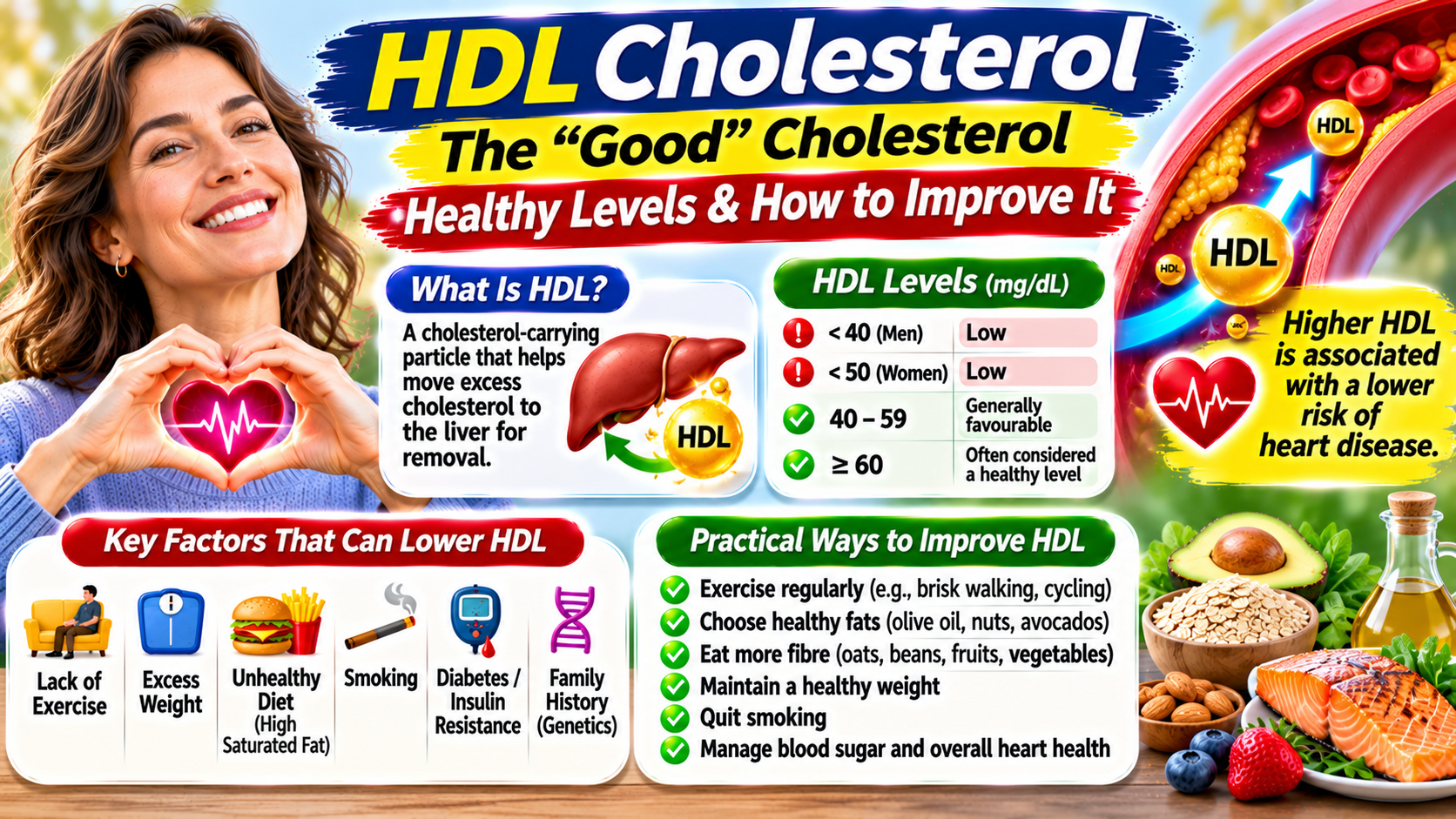
HDL stands for high-density lipoprotein. It is a particle made up of proteins and fats that transports cholesterol through your bloodstream.
Your body needs cholesterol to build cell membranes, produce certain hormones and perform other essential functions. HDL helps transport cholesterol away from tissues and toward the liver, where it can be processed and removed or recycled.
This process is called reverse cholesterol transport.
HDL is often described as good cholesterol because people with higher HDL levels tend to have a lower risk of cardiovascular disease. However, HDL is only one part of the cholesterol picture. Your LDL cholesterol, triglycerides, blood pressure, blood sugar, age and family history also matter.
Why Is HDL Called Good Cholesterol?
The nickname comes from HDL’s role in cholesterol transport.
While LDL particles can contribute to plaque buildup when cholesterol accumulates in artery walls, HDL participates in transporting cholesterol away from tissues and back toward the liver.
This is one reason higher HDL levels are generally associated with better cardiovascular health in population studies.
But there is an important distinction:
An association between high HDL and lower heart disease risk does not prove that artificially increasing HDL will prevent heart disease.
Clinical trials have found that some medicines can raise HDL without reducing cardiovascular events. This is why modern cholesterol management focuses more on reducing harmful cholesterol particles, particularly LDL, and managing overall cardiovascular risk rather than simply trying to push HDL higher.
What Is a Healthy HDL Cholesterol Level?
HDL is measured as part of a standard lipid panel. In the United States, results are usually reported in milligrams per deciliter (mg/dL).
The following are commonly used reference categories for adults:
| HDL cholesterol | General interpretation |
|---|---|
| Below 40 mg/dL in men | Low |
| Below 50 mg/dL in women | Low |
| 40–59 mg/dL in men | Generally more favourable than low HDL |
| 50–59 mg/dL in women | Generally more favourable than low HDL |
| 60 mg/dL or higher | Often considered a favourable level |
These are general reference points, not personal treatment targets.
The American Heart Association emphasises that HDL is not a treatment target on its own. A higher result does not cancel out the risk associated with high LDL, diabetes, smoking or high blood pressure.
Very high HDL also should not automatically be interpreted as extra protection. If your result is unusually high, your clinician can interpret it in the context of your overall health and family history.
HDL vs. LDL: What’s the Difference?
Both HDL and LDL carry cholesterol through the bloodstream, but they have different roles.
| Feature | HDL | LDL |
|---|---|---|
| Full name | High-density lipoprotein | Low-density lipoprotein |
| Common name | Good cholesterol | Bad cholesterol |
| Main role | Helps transport cholesterol toward the liver | Delivers cholesterol to tissues |
| Health association | Higher levels are generally associated with lower risk | Higher levels increase cardiovascular risk |
| Main concern | Low levels can be a risk marker | Elevated levels contribute to artery plaque |
Neither number should be interpreted alone.
For example, someone may have HDL of 65 mg/dL but also have LDL of 190 mg/dL. A favourable HDL result does not make that very high LDL harmless.
For a more detailed explanation, read our guide: LDL Cholesterol: Normal Range, Causes and How to Lower It.
What Causes Low HDL Cholesterol?
HDL levels are influenced by genetics, lifestyle, body weight, medical conditions and certain medications.
Some common factors include:
1. Physical inactivity
People who spend most of their day sitting and get little exercise may have less favourable cholesterol levels.
Regular physical activity can help improve HDL and triglycerides while supporting better cardiovascular health.
2. Excess body weight
Carrying excess weight, particularly around the abdomen, is often associated with lower HDL and higher triglycerides.
Gradual weight loss, when appropriate, can improve several aspects of your lipid profile.
3. Smoking
Cigarette smoking and exposure to secondhand smoke can lower HDL and damage blood vessels.
Quitting smoking is one of the most valuable steps for reducing cardiovascular risk.
4. Diet high in refined carbohydrates
A diet dominated by sugary drinks, sweets, refined grains and highly processed foods can contribute to elevated triglycerides and lower HDL.
Replacing some refined carbohydrates with vegetables, beans, whole grains and other fibre-rich foods can improve overall dietary quality.
5. Type 2 diabetes and insulin resistance
People with insulin resistance or type 2 diabetes often have a pattern of elevated triglycerides, low HDL and other unfavourable lipid changes.
Managing blood sugar, weight, diet and physical activity is important for reducing overall risk.
6. Genetics
Some people naturally have lower HDL because of inherited differences in how their bodies produce and transport cholesterol.
If several family members have unusual cholesterol levels or early cardiovascular disease, discuss this history with your healthcare professional.
7. Certain medications
Some medicines can influence HDL levels. These may include certain beta blockers, anabolic steroids and some hormone-related medicines.
Do not stop or change prescribed medication because of a cholesterol result. Ask your clinician whether your medicine could be contributing to the change.
How to Increase HDL Cholesterol Naturally
If your HDL is low, the best approach is to improve the habits that support your overall cardiovascular health.
The following changes can help.
1. Exercise Regularly
Physical activity is one of the most useful ways to improve a less favourable cholesterol profile.
Aerobic exercise can help raise HDL modestly, reduce triglycerides, improve insulin sensitivity and support healthy blood pressure.
Activities to consider include:
- Brisk walking
- Cycling
- Swimming
- Dancing
- Jogging, if suitable for your fitness level
- Hiking
A practical goal for most adults is at least 150 minutes of moderate-intensity aerobic activity per week.
You can divide this into 30-minute sessions on five days. If you are currently inactive, start with shorter walks and gradually increase your time.
2. Eat More Healthy Fats
The type of fat you eat matters.
Replacing some saturated fats with unsaturated fats can improve your overall cholesterol profile.
Good choices include:
- Olive oil
- Avocados
- Almonds
- Walnuts
- Peanuts
- Chia seeds
- Flaxseeds
- Fatty fish
Remember that these foods are not magic HDL boosters. Their main value is that they can replace less healthy fat sources as part of a balanced eating pattern.
3. Add Fatty Fish to Your Diet
Salmon, sardines, trout and mackerel provide omega-3 fatty acids.
Omega-3 fats are particularly useful for lowering elevated triglycerides. Their effect on HDL is usually modest, so fish should be included as part of a broader heart-healthy diet rather than used as a specific HDL treatment.
For people who do not eat fish, walnuts, chia seeds and flaxseeds provide plant-based omega-3 fats.
4. Choose More Fibre-Rich Foods
Fibre is particularly useful for improving overall cholesterol health, especially LDL.
Include foods such as:
- Oats
- Barley
- Beans
- Lentils
- Chickpeas
- Apples
- Pears
- Vegetables
- Whole grains
Soluble fibre helps reduce cholesterol absorption in the digestive system. Although it does not directly raise HDL substantially, it supports a healthier lipid profile.
5. Reduce Added Sugar and Refined Carbohydrates
Regularly consuming large amounts of added sugar and refined carbohydrates can contribute to high triglycerides and metabolic problems.
Try reducing:
- Sugary soft drinks
- Sweetened coffee and tea
- Candy
- Cakes and pastries
- Refined breakfast cereals
- Highly processed snack foods
You do not need to eliminate every carbohydrate. Choose more whole grains, vegetables, fruit and legumes.
6. Work Toward a Healthy Weight
If you have excess body weight, gradual and sustainable weight loss can improve HDL and triglycerides.
You do not need an extreme diet. Start with manageable changes such as:
- Reducing oversized portions
- Eating more vegetables
- Choosing lean protein sources
- Limiting sugary drinks
- Walking regularly
- Maintaining consistent meal habits
The aim is better metabolic and cardiovascular health, not simply a higher HDL number.
7. Stop Smoking
Smoking can lower HDL and significantly increase the risk of heart disease and stroke.
Quitting improves cardiovascular health, even if your HDL does not increase dramatically.
If you smoke, ask your healthcare professional about counselling, nicotine replacement therapy or other evidence-based quit-smoking support.
Avoiding secondhand smoke is also beneficial.
8. Get Enough Sleep
Poor sleep and irregular sleep schedules are associated with several cardiovascular and metabolic risk factors.
Most adults should aim for approximately 7–9 hours of sleep each night.
Try to maintain a consistent bedtime, reduce late-night screen use and create a comfortable sleeping environment.
If you regularly snore loudly, wake up gasping or feel excessively sleepy during the day, ask your healthcare professional whether sleep apnea should be evaluated.
9. Limit Alcohol Rather Than Using It to Raise HDL
Alcohol can increase HDL levels in some people, but that does not make drinking a healthy cholesterol treatment.
Alcohol can increase triglycerides, contribute to high blood pressure and raise the risk of several health conditions.
If you do not drink, do not start drinking red wine or other alcoholic beverages to improve HDL.
If you drink, discuss your consumption with your healthcare professional and consider reducing it.
10. Follow a Heart-Healthy Eating Pattern
Rather than concentrating on one food, consider following a Mediterranean-style or DASH-style eating pattern.
These approaches emphasise:
- Vegetables and fruits
- Whole grains
- Beans and lentils
- Nuts and seeds
- Fish
- Lean protein
- Unsaturated oils
- Limited processed foods and saturated fats
This approach supports overall cardiovascular health, even if your HDL number changes only slightly.
Best Foods to Include for a Healthy Cholesterol Profile
No single food can guarantee a higher HDL level. However, the following foods can help support better overall cholesterol health when they replace less nutritious choices.
| Food | Why it is useful |
|---|---|
| Salmon and sardines | Provide omega-3 fatty acids that help lower triglycerides |
| Walnuts and almonds | Supply unsaturated fats, fibre and plant compounds |
| Avocados | Provide monounsaturated fats |
| Olive oil | A source of heart-friendly unsaturated fat |
| Oats and barley | Provide soluble fibre that helps lower LDL |
| Beans and lentils | Supply plant protein and fibre |
| Berries | Provide fibre and beneficial plant compounds |
| Leafy vegetables | Supply fibre, vitamins and minerals |
| Chia and flaxseeds | Provide fibre and plant-based omega-3 fats |
Think of these foods as part of an overall heart-healthy eating pattern, not as a prescription to raise HDL.
Can You Increase HDL With Medication?
This is an important question because some medicines can increase HDL numbers. However, raising HDL alone has not consistently been shown to reduce heart attacks or strokes.
Niacin (Vitamin B3)
Niacin can raise HDL and lower triglycerides. However, clinical trials have not shown a consistent cardiovascular benefit when it is added to modern cholesterol-lowering treatment.
It can also cause flushing, liver problems, changes in blood sugar and other side effects.
It is not routinely recommended simply to raise HDL.
Fibrates
Medicines such as fenofibrate and gemfibrozil are mainly used to lower triglycerides in selected patients. They may also increase HDL modestly.
They are not generally prescribed just to increase HDL.
Statins
Statins are primarily prescribed to lower LDL cholesterol and reduce cardiovascular risk.
They may produce a modest increase in HDL, but their main benefit comes from reducing LDL and other atherogenic cholesterol particles.
Other Cholesterol Treatments
Depending on your cardiovascular risk and lipid results, your clinician may consider additional LDL-lowering treatments such as ezetimibe, PCSK9 inhibitors or bempedoic acid.
The goal is to manage the cholesterol abnormalities that contribute to cardiovascular disease, not to chase a higher HDL number.
Never take cholesterol medication or high-dose supplements without discussing the benefits and risks with a qualified healthcare professional.
Does a High HDL Level Mean You Cannot Have Heart Disease?
No.
Although higher HDL levels are generally associated with lower cardiovascular risk, they do not guarantee protection.
A person with high HDL can still have:
- Elevated LDL cholesterol
- High triglycerides
- High blood pressure
- Diabetes
- A family history of early heart disease
- Plaque buildup in the arteries
This is why doctors assess the complete cardiovascular risk picture rather than relying on HDL alone.
The American Heart Association specifically notes that HDL is not a treatment target by itself.
How Is HDL Cholesterol Tested?
HDL is measured through a blood test called a lipid panel or lipid profile.
The test generally includes:
- Total cholesterol
- LDL cholesterol
- HDL cholesterol
- Triglycerides
Fasting is not necessary for every cholesterol test. Your clinician or laboratory will tell you whether you need to avoid food before your blood sample is collected.
For selected patients, additional tests may help provide a clearer picture of cardiovascular risk.
Lipoprotein(a), or Lp(a): This inherited lipoprotein can increase cardiovascular risk. The 2026 ACC/AHA dyslipidemia guideline recommends measuring it at least once during adulthood.
Apolipoprotein B (ApoB): This test can help assess the number of cholesterol-carrying particles that contribute to artery plaque in certain people.
These tests are not required for everyone. Your healthcare professional can decide whether they would be useful based on your medical history and lipid results.
What the 2026 Cholesterol Guidelines Mean for HDL
The 2026 American College of Cardiology and American Heart Association dyslipidemia guideline updates earlier cholesterol recommendations.
One important message is that cholesterol management should focus on reducing overall cardiovascular risk, particularly the harmful lipoproteins that contribute to plaque buildup.
The guideline brings back risk-based LDL and non-HDL cholesterol treatment goals and recommends the PREVENT-ASCVD equations for assessing risk in many adults.
HDL remains useful information in a lipid panel, but it is not a treatment target that doctors should try to increase at all costs.
In practical terms, this means:
- Don’t assume that high HDL cancels out high LDL.
- Don’t take niacin simply to increase your HDL number.
- Focus on improving your overall lipid profile.
- Address smoking, physical inactivity, excess weight and other cardiovascular risk factors.
- Discuss your personal treatment goals with your healthcare professional.
Frequently Asked Questions About HDL Cholesterol
1. What is a good HDL cholesterol level?
For adults, HDL below 40 mg/dL in men and below 50 mg/dL in women is commonly considered low. A level of 60 mg/dL or higher is often considered favourable. However, HDL should always be interpreted alongside other cardiovascular risk factors.
2. How can I increase HDL cholesterol naturally?
Regular exercise, avoiding tobacco, maintaining a healthy weight and eating a balanced diet rich in unsaturated fats can help support HDL levels. These habits also improve overall cardiovascular health.
3. Which foods are best for HDL cholesterol?
Foods such as nuts, avocados, olive oil and fatty fish provide healthy fats. Oats, beans, vegetables and fruit support overall cholesterol management. No single food guarantees a significant HDL increase.
4. Does walking increase HDL cholesterol?
Regular brisk walking can help raise HDL modestly and improve triglycerides, blood pressure and metabolic health. Aim to build toward at least 150 minutes of moderate activity each week.
5. Can HDL cholesterol be too high?
Very high HDL does not necessarily provide extra protection. Its meaning depends on individual circumstances, and an unusually high result should be discussed with a healthcare professional.
6. Does drinking red wine increase HDL?
Alcohol can increase HDL numbers, but this does not mean drinking wine protects against heart disease. Alcohol carries health risks and should not be started as a cholesterol treatment.
7. Does exercise lower LDL and increase HDL?
Regular physical activity can improve the overall lipid profile. It may modestly increase HDL, lower triglycerides and support other cardiovascular benefits. Its effect on LDL is less consistent.
8. Can low HDL be caused by genetics?
Yes. Inherited differences can affect HDL production and metabolism. Lifestyle factors and medical conditions can also influence HDL levels.
9. Is HDL more important than LDL?
No. Both are part of the lipid profile, but elevated LDL is a major causal contributor to atherosclerotic cardiovascular disease. A high HDL result does not neutralise the risks associated with elevated LDL.
10. Should I take supplements to increase HDL?
There is no supplement that is routinely recommended simply to raise HDL and prevent heart disease. Some supplements may interact with medicines or cause side effects. Discuss them with your healthcare professional before use.
Final Thoughts
HDL cholesterol is an important part of your lipid profile, but it is not a number you should chase at any cost.
A higher HDL level is generally associated with better cardiovascular health, yet research has shown that artificially raising HDL does not automatically prevent heart attacks or strokes.
Instead of concentrating only on increasing good cholesterol, focus on the habits that improve your entire cholesterol profile: eat a balanced diet, stay active, maintain a healthy weight, avoid tobacco and manage conditions such as diabetes and high blood pressure.
And if your LDL is elevated, make sure you address it with your healthcare professional rather than assuming a high HDL will protect you.
The goal is not simply to have more good cholesterol. It is to reduce your overall risk and protect your heart for the long term.
Medical Disclaimer
This article is for general educational purposes only and should not replace professional medical advice, diagnosis or treatment. Cholesterol results and treatment recommendations vary from person to person. Consult a qualified healthcare professional about your lipid results and cardiovascular risk. Do not start, stop or change prescribed medication without medical guidance.
Medical References
- American Heart Association. What Your Cholesterol Levels Mean.
- American Heart Association. 2026 Guideline on the Management of Dyslipidemia.
- MedlinePlus. HDL: The Good Cholesterol.
- Mayo Clinic. HDL Cholesterol: How to Boost Your Good Cholesterol.
- American Heart Association. Prevention and Treatment of High Cholesterol.
- American College of Cardiology and American Heart Association. 2026 Guideline on the Management of Dyslipidemia – Full Guideline.
Indepth knowledge on First Aid….
1 thought on “HDL Cholesterol: Normal Levels, Benefits & How to Increase It”