Table of Contents
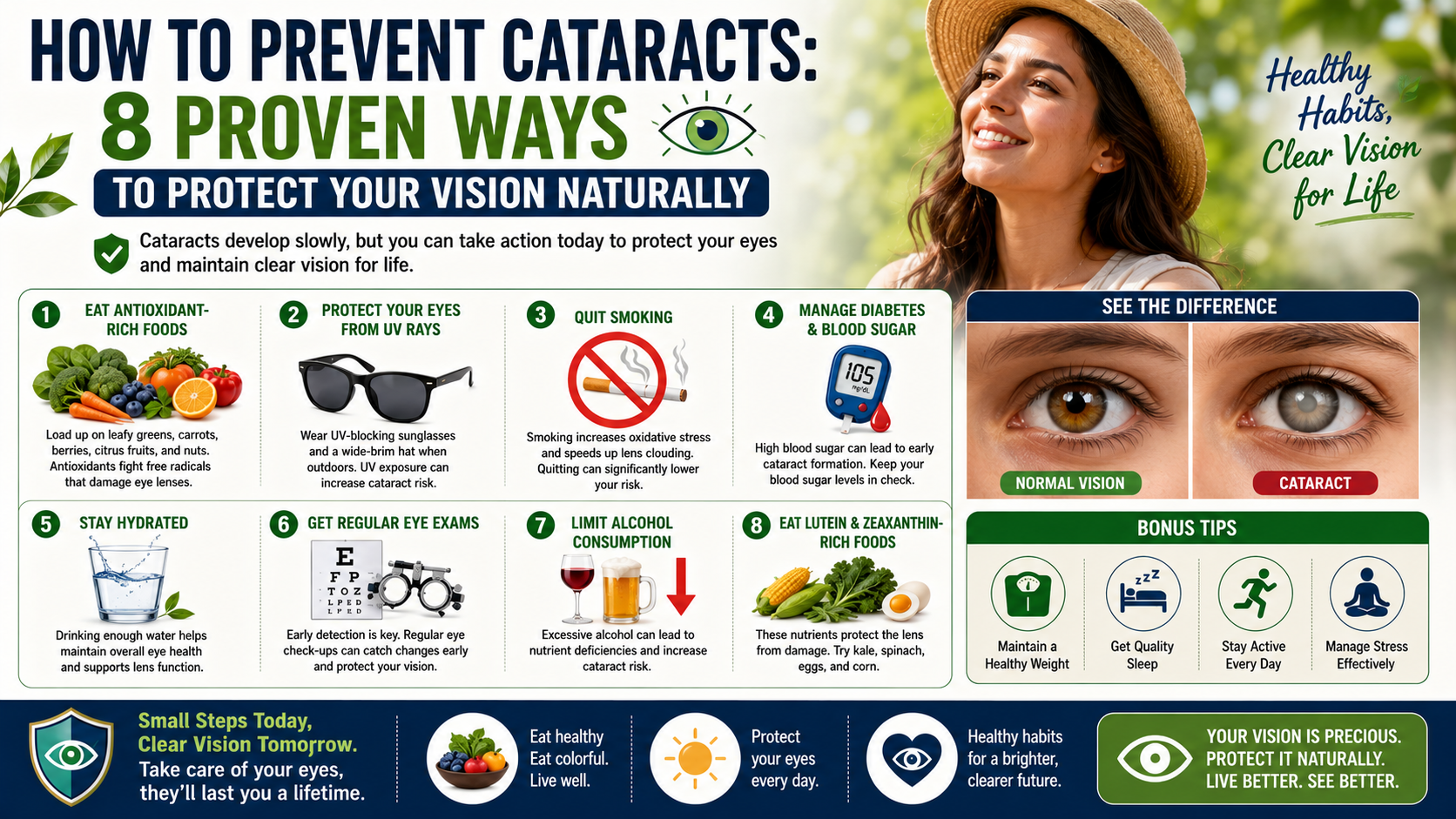
ToggleHow to Prevent Cataracts: 8 Proven Ways to Protect Your Vision Naturally
Introduction
Cataracts may sound like something that only happens when you’re much older, but the truth is that they can begin developing quietly and slowly at any point in adulthood. They’re sneaky, too — you usually don’t notice them until the blurry vision, faded colors, or difficulty driving at night becomes impossible to ignore. But here’s the good news: cataracts are not inevitable. In fact, research shows that most cataracts are strongly linked to lifestyle and environmental factors, meaning there are clear, practical steps you can take to protect your eyes long before surgery is ever considered. That’s exactly what this guide is about.
Before diving into the eight best ways to prevent cataracts, it helps to understand what actually causes them. Many people think cataracts are simply “a natural part of aging,” but the truth is far more interesting. Cataracts form when proteins in the eye lens break down and clump together — something that can be slowed, prevented, or even completely avoided by taking care of your eyes the right way. Think of your eye lens like a camera lens: the clearer and cleaner it is, the sharper and brighter your world becomes. Over time, UV rays, poor nutrition, smoking, dehydration, and even digital screens can cloud that lens, much like scratches and dust ruin a good photo.
In this article, we’ll explore the most effective, science-backed strategies to protect your vision. But we won’t just list them — you’ll get practical tips, examples, and easy habits you can start using immediately. From the sunglasses you choose, to the food you eat, to how much water you drink each day, everything plays a role in keeping your eyes bright and healthy.
If you’ve ever wondered how to preserve your eyesight for years to come, or if cataracts run in your family, or even if you just love your vision and want to keep it sharp — this is the guide you’ve been waiting for.
1. Understanding Cataracts
1.1 What Are Cataracts?
Cataracts are one of those conditions that seem simple on the surface but are surprisingly complex once you look a little closer. At their core, cataracts are a clouding of the eye’s natural lens — the clear, flexible structure behind the iris that focuses light onto the retina. When you’re born, this lens is crystal clear, almost like a perfectly polished window. But over time, proteins within the lens begin to break down and stick together, creating cloudy patches that gradually grow larger. The result? Vision that feels foggy, blurry, or dim, almost as if you’re looking through a smudged camera lens. What most people don’t realize is that although cataracts are common, they are not automatically a natural part of aging. They’re often the result of long-term exposure to UV rays, poor lifestyle habits, medical conditions, or even eye injuries — meaning they can be significantly delayed or even prevented with the right care.
Another important thing to understand is that cataracts don’t appear overnight. They develop slowly, sometimes over decades, making them easy to ignore until they start affecting daily activities. You might notice that colors look faded or yellowish, or that you need brighter lights to read comfortably. Some people begin experiencing double vision in one eye or find that their prescription changes unusually fast. These subtle shifts can be the earliest red flags, long before the cloudiness becomes obvious. Understanding these early signs helps you stay ahead of the curve, giving you time to make the right lifestyle changes before cataracts progress.
It’s also worth noting that there are different types of cataracts, each developing in different parts of the lens. For example, nuclear cataracts form at the center of the lens and typically worsen with age, while cortical cataracts develop at the edges and spread inward like spokes on a wheel. Posterior subcapsular cataracts form at the back of the lens and can progress quickly, especially in people with diabetes or those taking steroids. Knowing the differences can help you better understand your own risk and recognize symptoms earlier.
The biggest takeaway? Cataracts may be common, but they’re not unavoidable. By understanding what they are and how they form, you empower yourself to take the right steps — long before cloudy vision ever gets in your way.
1.2 How Cataracts Affect Vision
When cataracts begin forming, they don’t just “blur” your vision — they distort it in ways you might not expect. Many people describe the early stages as looking through a foggy window or having a thin layer of wax paper over their eyes. At first, you might simply feel like your glasses are dirty, even after cleaning them. But as cataracts grow, the cloudiness becomes more noticeable, scattering light in all directions. This leads to glare, halos around lights, difficulty driving at night, and even headaches from constantly trying to focus. Imagine trying to take a clear photo with a greasy fingerprint on your camera lens — no matter how good your camera is, the image will never look sharp. That’s exactly what a cataract does to your natural lens.
Colors start to lose their vibrancy, too. Many people don’t realize how much their color perception has changed until after cataract surgery, when they suddenly notice how bright and crisp everything looks again. Cataracts gradually turn the lens yellow or brownish, filtering out blues and greens and making the world appear duller. This change is so slow and subtle that it often goes unnoticed, but it dramatically affects day-to-day life: reading becomes harder, recognizing faces at a distance becomes challenging, and activities like sewing, driving, or using digital screens become frustrating.
Another frustrating aspect is the constant adjustment. Your eyes work overtime trying to focus through a cloudy lens, which can cause fatigue and strain. Many people experience frequent prescription changes, not realizing that the real cause is cataract progression, not worsening eyesight. This is one of the reasons regular eye exams are crucial — an eye doctor can spot lens clouding long before it becomes a significant problem.
The psychological impact is real, too. When your vision becomes unreliable, you may naturally avoid night driving, social outings, or outdoor activities. It’s not just about vision clarity — it’s about confidence and independence. Understanding how cataracts change the way you see the world helps underscore why prevention is so important. Protecting your lens today means protecting your quality of life tomorrow.
1.3 Early Signs You Should Never Ignore
Cataracts start small, and that’s exactly why many people miss the early warning signs. One of the first clues is increased sensitivity to bright lights. You might notice that headlights at night feel blinding, or sunlight seems harsher than usual. Halos around lights — especially circular rings when looking at lamps or headlights — are another common symptom. These small changes often get brushed off as fatigue or aging, but they’re actually your lens struggling to handle light the way it used to.
Another early sign is difficulty reading or performing close-up tasks. You may need brighter light than before or find yourself squinting more often. Text can appear faded or slightly out of focus, even with a fresh glasses prescription. Some people experience double vision in one eye, which is different from the kind caused by neurological issues; this double image tends to disappear when the cataract becomes denser.
Color changes are another subtle but important clue. When your lens begins to yellow, you may notice that white objects appear beige, or blues look washed out. This color distortion happens slowly, making it easy to adjust without realizing anything is wrong. Pay special attention if you find yourself increasing screen brightness, turning on extra lamps, or preferring warm-colored environments — these can all signal early cataract formation.
One of the most overlooked early warnings? Frequent prescription changes. If your vision seems to change every few months, and your lenses never feel quite right, it may not be your eyesight that’s shifting — it may be that your lens is clouding. Eye doctors often catch this first, which is why regular checkups are essential.
Finally, night vision problems are often the earliest and clearest sign. If driving at night becomes uncomfortable, if streetlights seem overly bright, or if roads look less sharp, don’t ignore it. These early signs don’t mean you’re destined for cataracts — they mean you have time to act. Catching them early gives you the chance to make lifestyle changes that can slow or even stop cataract progression.
2. The 8 Best Ways to Prevent Cataracts
2.1 Wear UV-Protective Sunglasses Daily
Wearing UV-protective sunglasses might sound like a simple habit, but it’s one of the most powerful things you can do to prevent cataracts. The sun emits ultraviolet radiation — specifically UVA and UVB rays — which penetrate deep into the eyes. Over time, this radiation damages the proteins in the lens, causing them to break down and clump together. This process is a major contributor to cataract formation, and it happens silently, long before you even notice visual symptoms. Many people assume sunglasses are mainly for comfort or style, but in reality, they are a long-term investment in your vision. Think of them as sunscreen for your eyes: you may not always see the damage happening, but it accumulates day after day.
What makes UV protection even more crucial is that your eye lens cannot repair itself the way other tissues can. Once the damage is done, it’s permanent. That’s why wearing quality sunglasses — not cheap fashion ones with dark lenses but no UV filtration — is essential. Dark lenses without UV protection are actually worse because they cause your pupils to expand, letting in even more harmful rays. When choosing sunglasses, look for labels that say “100% UV protection,” “UV400,” or “blocks 99–100% of UVA and UVB.” Polarized lenses are a great bonus because they reduce glare, especially helpful for driving or spending time near water and snow, which reflect sunlight directly into the eyes.
It’s also important to wear sunglasses even when it’s cloudy. Up to 80% of UV radiation still penetrates cloud cover, meaning your eyes can be exposed without you feeling the brightness. Consider keeping an extra pair in your car, your bag, or even by the front door so you never forget. A wide-brimmed hat adds even more protection by blocking overhead sunlight that sunglasses might miss. Parents should make sure kids wear UV-protective eyewear too — children’s eyes absorb more radiation than adults’, making early protection even more valuable.
The bottom line? This one habit alone can dramatically reduce your lifetime risk of cataracts. Every minute you’re outside without UV protection accelerates damage, but every minute you do protect your eyes helps preserve your long-term vision. Your future self — with clear, bright eyesight — will absolutely thank you.
2.2 Eat a Nutrient-Rich, Eye-Healthy Diet
What you eat directly influences how healthy your eyes are, and the connection between nutrition and cataract prevention is stronger than most people realize. The lens of your eye needs antioxidants to stay clear, flexible, and protected from oxidative stress. Oxidative stress is what happens when harmful molecules called free radicals attack your lens proteins, causing them to clump together — a key step in cataract formation. The good news? A diet rich in vitamins, minerals, and antioxidants can slow this process dramatically. It’s like giving your eye lens a protective shield from the inside out.
Let’s start with the superstar vitamins: Vitamin C, Vitamin E, Vitamin A, lutein, and zeaxanthin. These nutrients are essential because they neutralize free radicals and strengthen the tissues of the eye. Vitamin C is especially powerful; studies show that people with high Vitamin C intake have a significantly lower risk of developing cataracts. You can find it in oranges, strawberries, bell peppers, broccoli, and kiwi. Vitamin E, found in nuts, seeds, avocados, and spinach, helps protect eye cells from damage. Together, these vitamins form a powerful defense system that keeps the lens clearer for longer.
Then there’s lutein and zeaxanthin — two carotenoids that act like natural sunglasses for your eyes. They filter harmful blue light and protect the retina and lens from oxidative damage. You’ll find them in leafy greens like kale, spinach, collard greens, and even in egg yolks. If you’ve ever heard the saying “eat the rainbow,” it applies perfectly here. The more colorful your plate — reds, oranges, yellows, greens, and purples — the more eye-protective nutrients you’re getting. Foods like sweet potatoes, berries, tomatoes, carrots, mangoes, and squash all support lens health.
A diet high in processed foods, sugar, and unhealthy fats increases inflammation and accelerates cataract development. So, reducing junk food isn’t just good for your waistline — it’s essential for your eyes. Consider swapping sugary snacks for fruits, white bread for whole grains, and fried foods for baked or grilled options. Even small changes, done consistently, create dramatic improvements over time.
If you’re someone who struggles to get enough nutrients from food alone, supplements can help — but they should never replace a healthy, balanced diet. Think of supplements as a backup, not the main source. The goal is long-term nourishment, not quick fixes. Eating for eye health is simply eating for overall health, and your body will feel the benefits everywhere, not just in your vision.
2.3 Quit Smoking and Reduce Alcohol Intake
Smoking is one of the most damaging habits for your eyes, and its connection to cataracts is stronger than many people realize. Each cigarette introduces thousands of chemicals into your bloodstream — including free radicals that aggressively attack the delicate proteins inside your eye lens. Over time, this constant bombardment causes the lens to harden, discolor, and develop the clumps that eventually become cataracts. Studies have consistently shown that smokers are two to three times more likely to develop cataracts than non-smokers. And the risk increases the longer you smoke. Even secondhand smoke can contribute to cataract formation, which means nonsmokers who live with smokers also face elevated risks.
The harmful effects don’t stop there. Smoking reduces the amount of antioxidants in your bloodstream, making it harder for your eyes to defend themselves against oxidative stress. Antioxidants like Vitamin C and Vitamin E are essential for keeping the lens clear, but smoking depletes them rapidly. In essence, it puts your eyes in a constant state of vulnerability. The good news? The moment you quit smoking, your body begins to repair itself. Within just a few months, antioxidant levels start returning to normal, and your risk of cataracts begins to decrease. Quitting might feel difficult, but the payoff is clearer vision and long-term eye protection.
Alcohol, on the other hand, affects your eyes in a different but equally concerning way. Excessive drinking leads to dehydration, inflammation, and nutritional deficiencies — all of which contribute to cataract formation. Heavy alcohol use interferes with Vitamin A absorption, a crucial nutrient for lens health. It also increases oxidative stress in the body, harming both the retina and the lens. That doesn’t mean you need to give up alcohol entirely; moderate use (like an occasional drink) is typically safe. But drinking in excess — especially daily — significantly raises cataract risk.
Cutting down on alcohol helps your eyes stay hydrated and allows your body to absorb the nutrients they need to stay strong. A good rule of thumb is to drink slowly, stay hydrated with water, and limit alcohol to a few times a week. For those who want to protect their eyesight, balancing social habits with health-conscious choices is key.
When you quit smoking and reduce alcohol intake, you give your eyes the chance to thrive. You’ll notice improvements not just in your vision but in your energy levels, skin, and overall wellbeing. Clear eyes start with clear choices, and these two habits make one of the biggest impacts on cataract prevention.
2.4 Manage Diabetes and Blood Sugar Levels
Diabetes is one of the strongest risk factors for cataracts, and managing your blood sugar is essential if you want to protect your vision. When blood glucose levels stay high for long periods, the excess sugar enters the eye lens and begins converting into sorbitol — a substance that draws water into the lens. This process causes the lens to swell, distort, and become cloudy, accelerating cataract development far earlier than normal. In fact, people with diabetes often develop cataracts 10–15 years earlier than those without it.
But the story doesn’t end there. High blood sugar also triggers oxidative stress inside the eyes. This weakens lens proteins, breaking them down and making them more likely to clump together. It’s a double attack: physical swelling combined with chemical damage. That’s why keeping your blood sugar stable is one of the most powerful protective steps you can take — not only for cataracts, but for overall eye health.
Managing diabetes isn’t just about medication; it’s about making consistent choices that support stable glucose levels. Start with food: eating balanced meals that include lean proteins, whole grains, healthy fats, and plenty of vegetables helps keep sugar spikes under control. Avoid processed sugars, refined carbs, and sweetened drinks — they rapidly raise blood glucose and create inflammation. Drinking enough water also helps flush excess sugar from the bloodstream.
Exercise is another essential element. Even a 20–30 minute walk each day can dramatically improve insulin sensitivity and overall eye health. Physical activity increases blood circulation, which delivers oxygen and nutrients to the eyes while helping remove toxins and waste products that contribute to cataract development.
Regular eye exams are especially important for people with diabetes. Eye doctors can detect changes in the lens before you notice them yourself. These checkups can catch early cataracts, diabetic retinopathy, and other conditions while they’re still manageable.
Consistent blood sugar management isn’t just a medical recommendation — it’s a long-term investment in your vision. Staying on top of your diabetes helps keep your lens clear, your eyesight sharp, and your risk of cataracts significantly lower. You have more control than you may think, and the right habits make a powerful difference.
2.5 Protect Your Eyes From Injuries
Eye injuries are an often-overlooked cause of cataracts, yet they play a major role in early cataract development. When the eye is struck, pierced, or impacted, the force can damage the delicate fibers of the lens, causing it to become cloudy months or even years later. This type of cataract is known as a traumatic cataract, and it can happen from sports accidents, workplace hazards, falls, or even small mishaps like being hit by a ball or debris. What’s scary is that even minor injuries that seem harmless at first can lead to long-term lens damage.
One of the best ways to safeguard your vision is by using protective eyewear during activities that pose even a small risk. If you play sports like basketball, racquetball, baseball, or hockey, protective sports goggles are essential. If you work in construction, welding, carpentry, or landscaping, safety glasses aren’t optional — they’re necessary. Many people ignore eyewear because it feels uncomfortable or unnecessary “just this once,” but that one moment is all it takes for a lifetime of vision problems.
Even everyday household tasks can be hazardous. Yard work, mowing the lawn, using power tools, or handling chemicals without protection expose your eyes to injury risks. A tiny piece of metal, dust, or debris entering the eye can do more damage than you’d expect. It’s always better to spend five seconds putting on protective glasses than deal with lifelong clouded vision.
Even non-impact injuries matter. UV exposure, chemical splashes, and foreign objects can all damage the lens in ways that increase cataract risk. If an injury does occur, even if it feels minor, it’s smart to see an eye doctor. Early treatment can prevent complications and reduce the likelihood of cataracts developing later.
Keeping your eyes safe today helps ensure your lens stays clear for decades. Simple precautions go a long way — sometimes the smallest habits provide the biggest protection.
2.6 Reduce Screen Time and Blue Light Exposure
Blue light exposure is something almost everyone deals with today. Whether you’re working on a computer, scrolling through your phone, watching TV, or gaming, your eyes are constantly taking in high-energy visible (HEV) blue light. While blue light doesn’t cause cataracts the same way UV rays do, it does contribute heavily to digital eye strain, oxidative stress, and long-term lens fatigue — all factors that make your eyes more vulnerable to cataract formation as you age. Staring at screens for long periods also reduces blinking, which leads to dry eyes. Dryness doesn’t directly cause cataracts, but it worsens irritation, increases inflammation, and places extra strain on the lens.
Think about what your eyes go through every day. You’re focusing on tiny text, bright pixels, flashing images, and high contrast — often at close distances. Over hours and years, this constant, intense focus takes a toll. Many people experience headaches, blurry vision, burning eyes, and difficulty focusing after long screen sessions. These symptoms are signs that your visual system is overworked, stressed, and struggling to maintain clarity. When your eyes are constantly strained, the proteins inside the lens become more susceptible to breaking down prematurely.
Reducing screen time isn’t always easy, especially if your job requires it. But there are several simple habits you can adopt that dramatically reduce strain and protect your lens. Start with the 20-20-20 rule: every 20 minutes, look at something 20 feet away for 20 seconds. This resets the eye muscles and reduces fatigue. Adjust your screen brightness so it matches your room’s lighting — screens that are too bright or too dim cause strain. Increase text size instead of squinting, and sit at least arm’s length away from your monitor.
Blue light–blocking glasses are another helpful tool. These glasses filter out a portion of blue light, making the screen easier on your eyes. While they don’t prevent cataracts directly, they reduce the stress that contributes to overall lens fatigue. Using “night mode,” “comfort mode,” or “blue light reduction” settings on your devices also helps reduce harsh glare.
Finally, taking breaks is essential. Your eyes were not built for 8–12 hours of continuous screen exposure. Adding short breaks throughout your day gives your eyes a chance to rest, lubricate naturally, and recover. These simple changes add up over time, helping protect your eyesight and reduce your risk of future cataracts.
2.7 Stay Hydrated to Maintain Eye Moisture
Hydration plays a surprisingly important role in eye health. Your eyes rely on moisture to stay protected, nourished, and functioning smoothly. When you’re dehydrated, your tear production decreases, leading to dryness, irritation, and inflammation. While dehydration doesn’t directly create cataracts, it contributes to a stressed environment inside the eye. A dry, irritated eye forces your lens to work harder, and chronic dryness accelerates oxidative stress — one of the main causes of lens clouding.
Think of your eyes like a camera that needs regular cleaning and lubrication to function well. Without enough water, your tears become saltier and less effective at washing away dust, allergens, and small particles. This irritates the surface of the eye and can create micro-damage over time. Your lens also depends on a balanced fluid environment to maintain its clarity and flexibility. When your body is low on water, the fluid balance inside the eye shifts, making the lens more vulnerable to long-term damage.
Most people don’t drink nearly enough water. Coffee, tea, soda, and energy drinks may feel hydrating, but many actually dehydrate you. Aim for at least 8–10 glasses of water a day, and even more if you’re active, in hot weather, or spend long hours on screens. Adding electrolytes — especially sodium, potassium, and magnesium — can help your body absorb water more effectively.
Eating hydrating foods also boosts eye moisture. Fruits like watermelon, oranges, grapes, and berries, along with vegetables like cucumbers, tomatoes, and lettuce, provide natural hydration. These foods contain antioxidants as well, offering double benefits for preventing cataracts.
Pay attention to the signals your body sends. If your eyes burn, sting, or feel gritty, or if your vision becomes blurry after blinking, you may be dehydrated. Even mild dehydration can trigger these symptoms. Keep a water bottle nearby, sip throughout the day, and avoid waiting until you feel thirsty — thirst is a late warning sign.
Hydration is a simple but powerful step toward cataract prevention. By keeping your body and eyes well-hydrated, you help maintain the clarity of your lens, reduce irritation, and strengthen your overall eye health. It’s an effortless habit with long-lasting rewards for your vision.
2.8 Get Regular Eye Exams
Regular eye exams are one of the most effective ways to prevent cataracts, detect early signs, and protect your overall vision. Cataracts begin developing long before symptoms appear, often quietly progressing over years. Eye doctors can detect subtle lens changes during routine exams — changes you would never notice on your own. Early detection allows you to take action sooner, adjust your lifestyle, and slow cataract progression significantly.
Many people only visit the eye doctor when their vision becomes noticeably worse, but that’s already far into cataract development. Ideally, adults should get an eye exam every 1–2 years, and yearly if they are over 40, diabetic, or have a family history of eye diseases. These exams include tests for visual clarity, lens transparency, pressure inside the eye, and retinal health. Even the smallest clouding in the lens can be spotted early, giving you a head start in prevention.
Regular exams also help detect other eye problems commonly linked with cataracts, such as glaucoma, diabetic retinopathy, and macular degeneration. Catching these conditions early can protect your vision from more serious damage. Your eye doctor can also give personalized advice based on your specific risks — whether you need stronger UV protection, better nutrition, or changes in screen habits.
Think of eye exams as preventive maintenance. Just like you get your car serviced to avoid breakdowns, your eyes need checkups to stay in top condition. Clear vision is priceless, and investing a few minutes once a year can save you from years of potential problems. Regular exams help ensure that your eyes stay healthy, your lenses stay clear, and cataracts don’t catch you by surprise.
3. Daily Habits to Lower Cataract Risk
3.1 Lifestyle Checklist for Better Eye Health
Preventing cataracts isn’t just about doing one or two healthy things — it’s about building a lifestyle that consistently supports your eyes. Think of this as a long-term partnership with your vision. Every habit you develop either protects your lens or weakens it, and the sooner you build good habits, the lower your risk becomes. A cataract-preventing lifestyle doesn’t require dramatic changes. Instead, it depends on small, steady choices that you repeat every single day. These choices gradually strengthen your eyes, reduce inflammation, boost antioxidant levels, and help keep your lens clear well into older age.
Start with the basics: sunlight protection, nutrition, hydration, and limiting smoking and alcohol. These are the foundation, but the routine goes deeper. Sleep is often overlooked, yet it plays a massive role in eye repair. When you sleep, your body replenishes the moisture levels in your eyes, reduces inflammation, and clears out waste products that accumulate throughout the day. Poor sleep disrupts this natural healing cycle, leaving your eyes feeling dry, strained, and fatigued — a state that increases long-term cataract risk.
Another essential daily habit is practicing mindful screen use. Taking regular breaks, adjusting your lighting, and blinking often helps reduce strain on the lens. When your eyes aren’t constantly overworked, they’re better able to maintain the clarity of the proteins inside the lens. Eye exercises like shifting focus between near and far objects or gently massaging the area around your eyes also increase blood flow and reduce tension. These exercises don’t cure vision problems, but they support overall eye comfort and lens health.
Hydration is another key. Make it a habit to drink water throughout the day instead of gulping it all at once. Your eyes are mostly water, and they rely on steady hydration to stay clear, lubricated, and protected. Carrying a water bottle, setting reminders, or drinking a glass of water with every meal ensures your eyes get what they need.
Environment matters too. Air conditioning, heaters, smoke, wind, and allergens dry out the eyes and increase irritation. Using a humidifier, avoiding direct airflow to your eyes, and wearing protective glasses outdoors can help reduce environmental stress.
Finally, practice consistency with your checkups. Even if you feel fine, annual eye exams give you early warnings and personalized guidance based on what your eyes need most. A healthy eye lifestyle is like a toolkit — every habit contributes to the long-term clarity and comfort of your vision.
3.2 Foods, Supplements, and Eye-Safe Routines
Food is one of the most powerful tools for preventing cataracts, and building an eye-healthy eating routine can make a profound difference. The lens of your eye needs a steady supply of antioxidants to fight off oxidative stress — the chemical process that breaks down lens proteins. A diet rich in fruits, vegetables, and whole foods naturally supplies the vitamins and minerals your eyes rely on. The best foods for lens health include leafy greens like spinach, kale, and Swiss chard, which provide lutein and zeaxanthin — two nutrients proven to reduce cataract risk. Bright-colored vegetables like carrots, red peppers, and sweet potatoes deliver beta-carotene and Vitamin A, essential for overall eye function.
Fruits like oranges, berries, and kiwis are loaded with Vitamin C, one of the strongest antioxidants for protecting the lens. Nuts and seeds, including almonds, sunflower seeds, and walnuts, give you Vitamin E — another nutrient that slows lens aging. Fatty fish like salmon, tuna, and sardines offer omega-3 fatty acids, which reduce inflammation and support the health of the tear film that protects the lens. Even eggs are excellent because they contain lutein, zeaxanthin, and high-quality proteins that support tissue repair.
Supplements can also help, especially if your diet lacks consistency. Eye-health formulas often include lutein, zeaxanthin, zinc, Vitamins A, C, and E, and omega-3s. While supplements shouldn’t replace whole foods, they can fill in nutritional gaps. Always choose high-quality brands and avoid megadoses — too much of certain vitamins, especially Vitamin A, can be harmful.
Beyond nutrition, establishing daily eye-safe routines is crucial. Start your day by gently washing your eyelids to remove oils and debris that can irritate your eyes. When applying makeup or skincare, avoid getting products too close to the eyes. Using lubricating eye drops can help with dryness, especially if you work in environments with air conditioning or heating.
End your day by giving your eyes downtime. Put away screens at least 30 minutes before bed, dim the lights, and let your visual system relax. These simple routines help reduce strain, improve moisture, and support lens clarity, forming a complete daily system for cataract prevention.
4. Myths About Cataract Prevention
4.1 Common Misunderstandings
There are countless myths about cataracts that cause people to overlook real prevention strategies. One of the biggest myths is that cataracts are “inevitable” and simply part of aging. While age increases risk, cataracts are far from guaranteed. Lifestyle choices — UV protection, nutrition, hydration, and avoiding smoking — can delay or prevent cataract formation for decades. Another myth is that cataracts can be reversed with eye drops or “natural cures.” At the moment, no scientific evidence supports the idea that cataracts can be dissolved or reversed without surgery.
Some people believe that reading in dim light, watching too much TV, or wearing the wrong glasses causes cataracts. These activities may cause eye strain, but they do not directly cloud the lens. Similarly, many think that cataracts spread from one eye to the other — but cataracts are not contagious. Each eye develops its own cataract independently. Another common misconception is that only older people get cataracts. In reality, cataracts can form at any age due to injuries, medications, diabetes, or excessive UV exposure.
Understanding these myths helps you avoid misinformation and focus on what truly protects your eyesight.
4.2 What Science Actually Says
Science tells us that cataracts develop due to protein breakdown in the lens caused by oxidative stress, UV damage, inflammation, and metabolic changes. Studies consistently show that people who maintain healthy habits — such as eating antioxidant-rich foods, wearing UV-blocking sunglasses, staying hydrated, and avoiding smoking — have significantly lower cataract risks. Research also confirms that cataracts progress slowly, often over decades, which means early prevention is incredibly effective.
Science also clarifies that once cataracts form, they cannot be reversed naturally. Surgery is the only proven treatment — but the good news is that prevention delays or avoids the need for surgery altogether. Understanding these facts helps you make informed decisions and trust evidence-backed strategies for protecting your vision.
Conclusion
Cataracts don’t appear overnight, and they’re not an unavoidable fate. By making smart choices today — protecting your eyes from UV rays, eating nutrient-rich foods, quitting smoking, managing blood sugar, staying hydrated, reducing screen strain, preventing injuries, and getting regular eye exams — you can dramatically lower your risk. Your eyes are with you for life, and caring for them now means preserving clear, bright, comfortable vision for decades to come. Prevention is powerful, and every small step builds toward long-term eye health.
5 Unique FAQs
1. Can cataracts be reversed without surgery?
No. Currently, no drops, supplements, or natural remedies can reverse cataracts. Only surgery removes them.
2. At what age do cataracts usually start?
Cataracts can start forming in your 40s, but symptoms often appear after age 60. With prevention, you can delay them much longer.
3. Do screens directly cause cataracts?
Screens don’t directly cause cataracts, but they increase eye strain and oxidative stress, which makes your eyes more vulnerable.
4. Is cataract surgery dangerous?
Cataract surgery is one of the safest and most successful medical procedures, with very high success rates.
5. How often should I get my eyes checked?
Every 1–2 years for adults, and yearly if you’re over 40, diabetic, or at higher risk for eye disease.
The End of Hypertension…….
Best First Aid Info Website….
1 thought on “How to Prevent Cataracts: 8 Proven Ways to Protect Your Vision Naturally”