Table of Contents
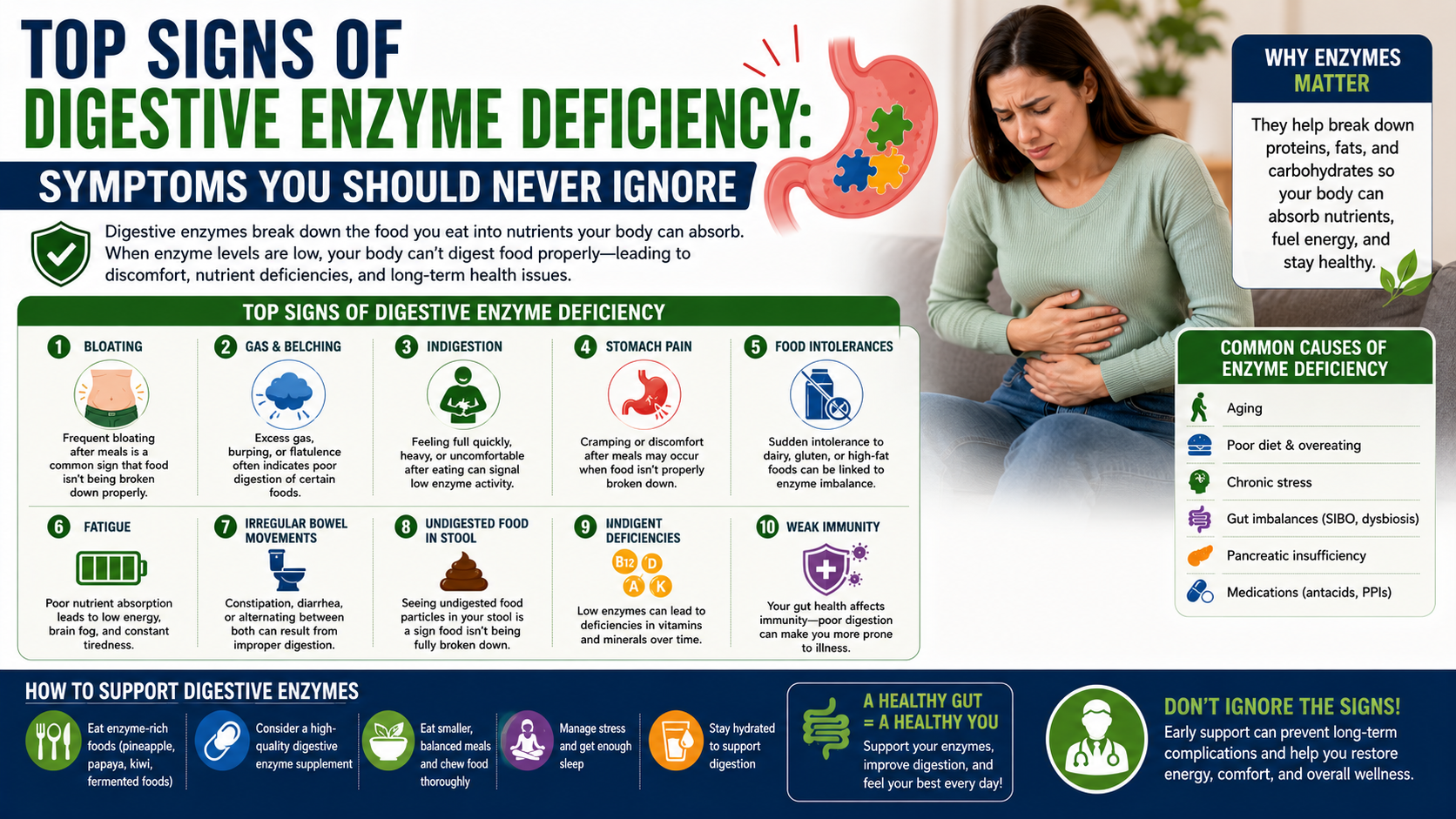
ToggleTHE TOP SIGNS OF DIGESTIVE ENZYME DEFICIENCY
Introduction: Why Digestive Enzymes Matter More Than You Think
Digestive enzymes might not be something you think about daily, but your body depends on them more than you realize. Every bite of food you eat—from a crunchy apple to a juicy burger—needs the help of enzymes to break down nutrients so your cells can use them. Think of enzymes like tiny workers in your digestive tract. Without them, your food simply sits there, partially digested, causing discomfort and chaos in your gut. This is exactly why digestive enzyme deficiency is becoming a growing concern today. Many people experience symptoms for years without knowing the true cause.
Surprisingly, digestive enzyme deficiency can show up in many ways—bloating, fatigue, nutrient deficiencies, and even unexpected weight changes. These signs often get brushed off or blamed on stress, aging, or poor diet. But what if the real problem is that your body simply isn’t producing enough enzymes? The truth is, enzyme deficiency is more common than you might think, especially with modern processed diets, chronic stress, and certain medical conditions.
In this article, we will break down the top signs of digestive enzyme deficiency, why they happen, and what they mean for your overall health. If you often feel uncomfortable after meals, struggle with inconsistent digestion, or notice odd changes in your stools, your body may be signaling that something is off. Understanding these signs is the first step toward restoring healthy digestion, boosting your energy, and improving the way your body absorbs nutrients.
Ready to figure out what your gut has been trying to tell you? Let’s dive in.
What Digestive Enzymes Are and How They Work
Digestive enzymes are special proteins your body produces to break down the food you eat into tiny, usable nutrients. Without these enzymes, your digestive system is basically like a machine missing half its gears—you can put food in, but it won’t process properly. These enzymes are made in several places, including the mouth, stomach, and small intestine, but the pancreas is the main powerhouse behind them. When everything is working smoothly, enzymes break down carbohydrates into sugars, proteins into amino acids, and fats into fatty acids. But when enzyme levels drop, your digestive system struggles, and that’s when uncomfortable symptoms start showing up.
There are three major types of digestive enzymes you depend on daily: amylase, which breaks down carbs; protease, which breaks down proteins; and lipase, which breaks down fats. Each meal you eat triggers these enzymes to jump into action. However, if your body can’t produce enough—for reasons like aging, inflammation, chronic stress, or certain medical conditions—your food doesn’t break down fully. This means instead of nourishing your body, food sits in your gut longer than it should, ferments, and causes issues like gas, bloating, diarrhea, or nutrient deficiencies.
Many people don’t even realize how critical enzymes are until they start having digestive problems. Modern diets filled with processed foods don’t help either; these foods lack natural enzymes and can put even more strain on your digestive system. Over time, your gut ends up working much harder than necessary. When enzymes are low, the ripple effect is big. You might experience discomfort after meals, unexplained fatigue, or even mood changes. Yes, your gut health really does affect your brain!
Understanding how these enzymes work gives you a clearer picture of why enzyme deficiency can trigger so many symptoms. When you know what’s supposed to happen in your gut, it becomes easier to spot when something’s off—and fix it before it gets worse.
The Role of the Pancreas in Enzyme Production
The pancreas plays the starring role in enzyme production, even though it’s one of the body’s most overlooked organs. Most people think of the pancreas only in terms of blood sugar and insulin, but its digestive functions are just as important—if not more. This small organ sits quietly behind your stomach, yet it carries a huge responsibility: producing the digestive enzymes your body needs to break down fats, proteins, and carbohydrates. When the pancreas is working well, digestion feels effortless. But when it starts to struggle, the impact is noticeable and often uncomfortable.
Every time you eat, the pancreas releases a blend of enzymes—lipase, protease, and amylase—into the small intestine. These enzymes then break down your food into absorbable nutrients. But if the pancreas becomes inflamed, overworked, or weakened, enzyme production drops. This condition is known as pancreatic exocrine insufficiency (PEI), and it’s one of the leading causes of digestive enzyme deficiency. People with PEI often deal with chronic bloating, fatty stools, and nutrient deficiencies because their food simply isn’t breaking down properly.
Even if the pancreas isn’t severely damaged, it can still become sluggish due to everyday factors like poor diet, high alcohol intake, stress, smoking, or frequent consumption of processed foods. Over time, this can reduce enzyme output without you even realizing it. The pancreas is incredibly tough, but it’s not invincible. When it’s under constant strain, your digestive system pays the price.
What’s surprising to many people is how closely pancreatic health is linked to energy levels and overall wellbeing. If the pancreas can’t release enough enzymes, the body has to work harder to digest food. This added stress can drain your energy, weaken nutrient absorption, and leave you feeling tired even after eating. In fact, many people who think they’re dealing with IBS or food intolerances are actually experiencing subtle pancreatic insufficiency.
Understanding the pancreas’ role in digestion is key because many symptoms of enzyme deficiency point straight back to pancreatic stress. When you support this organ—through diet, lifestyle changes, and sometimes supplements—you support your entire digestive system.
Top Sign #1: Chronic Bloating and Gas
Chronic bloating and gas are among the most common and frustrating signs of digestive enzyme deficiency. Almost everyone experiences occasional bloating after a big meal, but if you notice it happening regularly—even after eating small or simple meals—your body may be struggling to break down food properly. When enzymes are low, food sits in the stomach or small intestine longer than it should. Instead of being broken down smoothly, it starts to ferment. And guess what fermentation produces? Gas. Lots of it. This gas builds up and causes that uncomfortable, swollen feeling that makes your stomach feel like a balloon ready to pop.
Many people blame gluten, dairy, certain veggies, or “eating too fast,” but the real culprit might be insufficient digestive enzymes. Without enough amylase, carbohydrates don’t break down properly, leading to fermentation and gas. A shortage of lipase leaves fats partially digested, which also contributes to bloating and heaviness. And low protease causes protein to sit undigested, which can produce foul-smelling gas. So if every type of food seems to bother you, it’s often a sign that enzymes—not the foods themselves—are the issue.
Chronic bloating can also make you feel sluggish, embarrassed, or self-conscious, especially when it happens daily. Some people even wake up bloated before they’ve eaten anything, simply because their digestive system is backed up from the day before. This lingering bloat can affect your posture, your clothing choices, and even your mood. When your gut isn’t happy, it’s hard for the rest of your body to feel good.
Another thing people don’t realize is that bloating caused by enzyme deficiency doesn’t always correlate with overeating. You can eat a salad, a smoothie, or a piece of fruit and still feel uncomfortable afterward. That’s because the problem isn’t the food—it’s the breakdown process. If your digestive enzymes are running low, even the healthiest foods can become difficult to digest.
If you constantly feel puffed up, gassy, or overly full after meals, it’s worth looking closely at your enzyme levels. Chronic bloating is one of the earliest and clearest signs your digestive system needs help.
Top Sign #2: Constipation or Sluggish Digestion
Constipation is one of the most overlooked signs of digestive enzyme deficiency, mainly because people tend to blame it on dehydration, stress, or a lack of fiber. While those factors can absolutely play a role, persistent or frequent constipation often points to a deeper issue: your body isn’t breaking down food efficiently. When enzymes are low, food moves through the digestive tract more slowly. Instead of being smoothly digested and passed along, it becomes heavy, sticky, and difficult for the intestines to push forward. This leads to hard stools, infrequent bowel movements, and a general sense of sluggishness in your gut.
Many people don’t realize that enzymes do more than break down food—they also help stimulate proper movement in the digestive tract. When food is broken down correctly, it passes through smoothly. But when it’s not, digestion can feel like traffic during rush hour: slow, backed up, and frustrating. If you find yourself needing to strain, going days without a bowel movement, or feeling like you never fully empty your bowels, enzyme deficiency may be playing a bigger role than you think.
Another important factor is fat digestion. Low lipase levels make it harder for the body to break down fats. Undigested fats can slow the movement of stool even more, creating a sticky texture that makes elimination difficult. Many people with enzyme deficiency notice their constipation worsens after eating fatty foods—even healthy fats like avocado, nuts, or olive oil. This isn’t because the foods are bad; it’s because the body doesn’t have the tools (enzymes) to process them correctly.
Constipation caused by enzyme deficiency often comes with other symptoms too, such as bloating, stomach discomfort, or feeling unusually full even hours after eating. You might notice that your digestion feels sluggish throughout the day, or that you feel “backed up” no matter what you eat. Some people try to fix this by taking more fiber, but surprisingly, excess fiber can make enzyme-related constipation worse because it adds more bulk the body struggles to break down.
If you’re eating well, drinking water, moving your body, and still battling constipation, your digestive enzymes may need some attention. When you support enzyme levels, bowel movements typically become more regular, easier, and more comfortable.
Top Sign #3: Diarrhea After Eating
While constipation is one side of digestive enzyme deficiency, diarrhea—especially shortly after eating—is the other end of the spectrum. Many people don’t realize that diarrhea can be a major sign of enzyme insufficiency, particularly when the body doesn’t have enough enzymes to properly break down fats, proteins, or carbohydrates. When food isn’t broken down efficiently, the body tries to get rid of it quickly. This rapid movement through the digestive tract causes loose stools, urgency, and sometimes cramping, making everyday life inconvenient and unpredictable.
If you frequently experience diarrhea after eating, especially within 30 minutes to an hour, your digestive system may be signaling that it can’t handle the workload. Without enough lipase, fats remain undigested, drawing water into the intestines and speeding up bowel movements. Low amylase makes carbohydrates ferment, creating irritation in the gut. And insufficient protease causes proteins to rot rather than digest, which can trigger inflammation and intestinal distress. The result? Your body sends everything rushing out before it has time to absorb the nutrients.
This type of diarrhea is often mistaken for food intolerances, infections, or even IBS. People cut out dairy, gluten, grains, or fried foods thinking these are the culprits. But in reality, the issue might not be the foods—it might be the fact that your body isn’t producing the enzymes needed to digest them. This is especially true if the diarrhea is unpredictable, happens after multiple types of meals, or comes in waves following larger or richer foods.
Another clue that diarrhea is enzyme-related is when you notice it happens after eating high-fat meals. Fat digestion is heavily dependent on enzymes, and when the body struggles with it, diarrhea often follows. Some people also notice that stools appear oily, leave residue in the toilet, or are difficult to flush—all signs that fats weren’t properly absorbed.
Chronic post-meal diarrhea can affect more than digestion. It can drain your energy, disrupt your daily routine, and cause dehydration or nutrient deficiencies over time. Many people feel embarrassed or anxious about eating in public or going out after meals because they’re worried about finding a restroom quickly.
If diarrhea after eating is a common pattern for you, especially if it’s been happening for months or years, digestive enzyme deficiency is something worth exploring. Supporting enzyme balance often leads to calmer digestion, more predictable bowel movements, and a noticeable decrease in urgency.
Top Sign #4: Undigested Food in the Stool
Seeing undigested food in your stool is one of the clearest indicators that your digestive system isn’t breaking things down the way it should. While it’s normal to occasionally spot small bits of foods like corn or seeds—because those naturally resist digestion—regularly noticing chunks or pieces of vegetables, grains, or other foods means your enzymes aren’t doing their job. This happens when the body lacks enough digestive enzymes, especially amylase and protease, which break down carbohydrates and proteins. When these enzymes are low, food passes through your system without being fully processed.
Having undigested food in your stool can feel alarming, confusing, or even embarrassing, but it’s a very helpful red flag from your body. It’s essentially your digestive system saying, “Hey, I’m struggling here.” When food isn’t properly broken down, your intestines can’t absorb nutrients effectively. Even if you’re eating a nutrient-rich diet, the benefits are lost when the food moves through your gut in larger, unprocessed pieces. Over time, this can lead to deficiencies, fatigue, and a weakened immune system.
One key thing to understand is that this sign is often accompanied by other digestive issues. People who see undigested food in their stools often report symptoms like bloating, stomach cramps, diarrhea, or a feeling of heaviness after meals. That’s because the same lack of enzymes that leaves food undecomposed also causes fermentation, inflammation, and irritation inside the gut. If your stools appear loose and contain visible pieces of food, it’s even more likely that enzyme deficiency is part of the problem.
Another reason this happens is poor chewing habits, which many people don’t realize worsen enzyme deficiency. Chewing is the first step of digestion, where enzymes in your saliva begin breaking down food. When you rush meals or swallow food in large bites, the pancreas has to work even harder, and if enzyme levels are already low, the system becomes overwhelmed quickly. The result? Food moves through too quickly and exits before it’s properly broken down.
If you notice undigested food often, it’s worth paying attention. It’s not something to ignore or brush off as “just how your stomach works.” Supporting enzyme production—through diet, lifestyle changes, or supplementation—often leads to noticeable improvements in digestion and nutrient absorption. Your body is always giving you signals; this one just happens to show itself quite literally in your stool.
Top Sign #5: Persistent Heartburn or Acid Reflux
Persistent heartburn or acid reflux is one of the most misunderstood signs of digestive enzyme deficiency. Most people immediately assume heartburn means they have too much stomach acid, but in many cases, it’s actually the opposite—there’s not enough digestive support, including enzymes, to properly break down food. When food stays in the stomach longer than it should due to insufficient enzymes, it begins to ferment and create pressure. This pressure pushes stomach contents upward, causing that familiar burning sensation in the chest and throat.
Here’s the part many people don’t know: digestive enzymes—especially those involved in protein and fat breakdown—play a huge role in how quickly your stomach empties after a meal. If enzymes are low, digestion slows down dramatically. When the stomach struggles to break down proteins due to low protease, food lingers and acid gets trapped underneath it. The pressure builds, and eventually acid splashes upward. This is why so many people experience heartburn after eating heavy meals, high-fat foods, dense proteins, or rich restaurant dishes. It’s not the meal itself—it’s the lack of enzymes needed to process it.
Another hidden connection is that low enzyme levels can cause the lower esophageal sphincter (LES)—the valve that keeps stomach acid where it belongs—to become irritated or weak. When undigested food ferments, it produces gas, and this gas pushes the LES open. Even a small opening can allow acid to escape, creating that sharp burn most people recognize instantly. Over time, recurring reflux can inflame the throat, affect the voice, and even disrupt sleep.
Many people rely on antacids or acid-blocking medications for relief, but these can worsen enzyme deficiency in the long run. Stomach acid is actually needed to activate certain enzymes. When medications reduce acid too much, the body has an even harder time breaking down food, creating a cycle of poor digestion and more heartburn. This is why some people notice their symptoms get worse the longer they take acid blockers.
If you find yourself dealing with frequent heartburn—especially after meals, at night, or when lying down—digestive enzyme deficiency may be a major factor. When enzyme levels improve, digestion becomes smoother, food moves through the stomach more efficiently, and reflux often decreases naturally. It’s one of those issues where supporting your digestive system internally can bring surprising relief externally.
Top Sign #6: Feeling Full Quickly or Heavy After Meals
Feeling full quickly—sometimes after only a few bites—is one of the most overlooked signs of digestive enzyme deficiency. At first, people assume it’s normal or that they’re just “not that hungry,” but when this feeling becomes consistent, it’s usually a signal that the stomach is struggling to break down food efficiently. When your digestive enzymes are low, food sits in the stomach longer than it should. Instead of moving smoothly into the small intestine, it lingers, creating a heavy, weighted sensation that makes you feel full even though you’ve barely eaten anything.
This isn’t just physical fullness—it’s digestive exhaustion. Your stomach has only one job during meals: to churn food and prepare it for the intestines. But when enzymes are lacking, that job becomes much harder. The stomach works overtime, acid production changes, and the whole process slows down. All of this makes you feel unusually full, sluggish, or bloated shortly after eating. You may even feel pressure in your upper stomach or chest, like the food is simply sitting there and refusing to move.
For many people, this symptom shows up during dinner or larger meals because enzyme levels naturally decline later in the day. Others notice it after eating rich foods, protein-heavy meals, or foods containing a mix of carbs, fats, and proteins. Because each macronutrient requires different enzymes, low enzyme levels make mixed meals especially difficult to digest. This can leave you feeling uncomfortably stuffed even when you haven’t overeaten at all.
Another reason this happens is weak stomach motility—meaning food moves too slowly through the digestive tract. Enzymes play a key role in stimulating movement and signaling the stomach when it’s time to empty. When your body can’t break down foods properly, it doesn’t send the right signals, and digestion becomes delayed. As a result, you may feel full for hours, sometimes long after hunger should have returned.
This symptom often leads to decreased appetite, skipping meals, or eating less than your body needs, which can eventually contribute to nutrient deficiencies, fatigue, and unintentional weight loss. Many people don’t realize that feeling full quickly has nothing to do with willpower or appetite—it has everything to do with your digestive capacity.
If you’ve been wondering why you feel stuffed after small meals or why food seems to sit in your stomach forever, enzyme deficiency could be playing a major role. Supporting enzyme levels often brings noticeable relief—meals feel lighter, digestion flows better, and that heavy, uncomfortable fullness begins to fade.
Top Sign #7: Unexplained Weight Loss
Unexplained weight loss might sound like a good problem at first, but when it happens without trying—or worse, when you’re eating normally—it can be a major warning sign of digestive enzyme deficiency. Weight loss becomes an issue when your body isn’t properly absorbing nutrients from the food you eat. You might be consuming enough calories, but if your enzymes are too low to break that food down, those calories pass right through your body without being used. It’s like filling your car with gas, but the tank has a hole in it—fuel goes in, but the engine never benefits.
When digestive enzymes, especially lipase, amylase, and protease, are insufficient, your body struggles with the breakdown of fats, carbohydrates, and proteins. Fats give you long-lasting energy, proteins help build and repair tissue, and carbs fuel your daily activities. If these nutrients aren’t absorbed, you not only lose weight but also lose strength, energy, and muscle mass. This kind of weight loss often shows up subtly at first—pants fit a little looser, you feel lighter than usual—but over time, it becomes more noticeable.
This weight loss typically comes along with other symptoms such as diarrhea, bloating, greasy stools, fatigue, or appetite changes. That’s because your body is essentially in a nutrient deficit. You may be eating plenty, but your cells aren’t getting the nourishment they need. Even healthy, nutrient-packed meals become useless if the enzymes required to break them down are missing. Some people even feel hungrier than usual yet still lose weight because the food isn’t being processed effectively.
Another thing to keep in mind is that unexplained weight loss may indicate your pancreas is under stress. The pancreas is responsible for producing the majority of your digestive enzymes. If it’s not functioning properly, enzyme output drops, and weight loss becomes more likely. Conditions such as pancreatic insufficiency, chronic pancreatitis, or long-term inflammation can lead to significant weight changes.
Ignoring unexplained weight loss is risky because it usually signals an underlying issue that needs attention. Without enough enzymes, your body starts breaking down its own muscle tissue for energy. Over time, this weakens your immune system, slows your metabolism, and affects your overall health. Many people don’t realize this until fatigue becomes overwhelming or they notice they’re getting sick more often.
If you’re losing weight without trying—especially if you have digestive symptoms as well—enzyme deficiency is worth investigating. Improving enzyme levels can help your body absorb nutrients again, stabilize your weight, and restore your energy levels.
Top Sign #8: Fatigue and Low Energy Levels
Fatigue and low energy levels are symptoms that almost everyone experiences at some point, but when they become constant—no matter how much you sleep, what you eat, or how healthy you try to be—they may be tied to digestive enzyme deficiency. Most people don’t connect digestion with energy, but the truth is simple: your body gets energy from the nutrients you absorb, not just the food you eat. If you’re not breaking down your meals properly, your cells never receive the fuel they need, leaving you tired, drained, and mentally foggy.
Think of it like charging your phone with a faulty cable. It may look like it’s plugging in, but the battery isn’t filling up. That’s what happens when enzyme levels are low—food goes in, but nutrients don’t get absorbed effectively. This leads to chronic fatigue because your body is constantly running on empty.
Enzymes like lipase, amylase, and protease aren’t just helpful—they’re essential for turning your food into usable energy. When they’re lacking, even nutrient-dense meals fall short. This means you could be eating all the “right” foods—greens, lean proteins, healthy fats—and still feel exhausted. Your body simply can’t convert them into energy when enzyme levels are too low.
Fatigue caused by enzyme deficiency also tends to hit at specific times:
-
Shortly after meals, due to the strain of digesting food without enough enzymes
-
Midday, when your body is trying to compensate for poor nutrient absorption
-
After eating heavy or rich foods, because the digestive burden becomes overwhelming
Another clue is brain fog. When nutrients like B12, iron, magnesium, and amino acids aren’t absorbed well, your brain struggles to function at full capacity. This leads to difficulty concentrating, slower thinking, mood changes, and irritability. Many people think they’re experiencing stress or burnout, when in reality their body is simply starving for nutrients.
Low energy can also show up physically. You might feel weak after exercising, struggle with motivation, or notice that your stamina has dropped significantly. Everyday tasks start to feel harder than they should, and the exhaustion becomes a regular part of your routine.
If you find yourself tired all the time—even when you sleep well and eat well—your digestive system may be the culprit. Supporting your enzyme levels can dramatically improve your energy, mental clarity, and overall vitality because your body finally gets access to the nutrients it’s been missing.
Top Sign #9: Frequent Nutrient Deficiencies
Frequent nutrient deficiencies are one of the strongest and most serious signs of digestive enzyme deficiency. Many people assume nutrient deficiencies only happen when you don’t eat well, but that’s only part of the story. Even if you’re consuming a balanced, nutrient-rich diet, your body can still become deficient in key vitamins and minerals if it doesn’t have enough digestive enzymes to properly break down and absorb what you eat. In other words, you could be eating all the right foods but still be starving at a cellular level.
When enzymes—especially lipase, protease, and amylase—are low, food passes through the digestive tract partially digested. This prevents nutrients from being extracted and absorbed into the bloodstream. Over time, this creates deficiencies that can affect everything from your energy levels to your immune system, mood, skin health, and even your hormonal balance.
B12 Deficiency
Vitamin B12 is one of the first nutrients to drop when digestive enzymes are low. B12 absorption requires proper protein breakdown, and if protease is weak, the vitamin can’t be released from food. Low B12 leads to fatigue, dizziness, poor memory, numbness, and mood changes. Many people end up taking supplements or shots without realizing the real issue lies in their digestive enzymes.
Iron Deficiency
Iron deficiency is another common sign. When protein digestion is compromised, iron isn’t absorbed well—especially heme iron from animal foods. This can result in anemia, brittle nails, hair thinning, and constant fatigue. Many individuals assume they’re simply “low iron people,” when the real issue is their digestive system isn’t breaking down food effectively enough to access the iron.
Fat-Soluble Vitamin Deficiencies (A, D, E, K)
Fat-soluble vitamin deficiencies are among the clearest signs of low lipase, the enzyme responsible for fat digestion. These vitamins need fat to be absorbed, and without lipase, they pass through the body unused.
Common symptoms include:
-
Dry skin and poor night vision (Vitamin A)
-
Low immunity and weak bones (Vitamin D)
-
Muscle weakness and oxidative stress (Vitamin E)
-
Easy bruising, poor circulation, and clotting issues (Vitamin K)
If you eat healthy fats but still lack fat-soluble vitamins, enzyme deficiency is almost always involved.
When multiple deficiencies show up together—B12, iron, vitamin D, or magnesium—it’s a strong sign that the gut isn’t absorbing nutrients properly. Instead of taking more supplements, the deeper issue to address is digestion itself.
Supporting digestive enzymes helps your body actually access and use the nutrients you consume, restoring balance from the inside out.
Top Sign #10: Greasy, Pale, or Floating Stools (Steatorrhea)
One of the most telling—and often uncomfortable—signs of digestive enzyme deficiency is greasy, pale, or floating stools. This condition is known as steatorrhea, and it happens when your body is unable to properly digest and absorb fats. Normally, fats should be broken down by an enzyme called lipase, which is produced by the pancreas. When lipase levels drop, fats remain undigested and pass straight through the digestive system. The result? Stools that look oily, appear lighter in color, float at the top of the toilet bowl, or leave a greasy film behind.
This can be alarming the first time you notice it, but many people experience it regularly without understanding the cause. They may think it’s just something they ate or assume it’s linked to a temporary stomach issue. But when this becomes a pattern, it’s a strong sign that your digestive enzymes—especially lipase—are not doing their job.
Why does this happen? When your body can’t break down fats, they don’t get absorbed. Instead, they move into the large intestine, where they irritate the colon and speed up bowel movements. This explains why many people with enzyme deficiency also experience diarrhea, cramping, or urgency after eating high-fat foods. Even healthy fats like avocado, salmon, nuts, and olive oil can trigger symptoms because the issue isn’t the food—it’s the lack of enzymes required to digest it.
Steatorrhea is also closely linked to nutrient deficiencies. Fat-soluble vitamins—A, D, E, and K—need fat to be absorbed. If fats remain undigested, these vitamins simply wash out of your system. Over time, this can weaken immunity, impact bone health, blur vision at night, and even affect blood clotting. Many people who struggle with recurring fatty stools also report frequent fatigue, brittle nails, poor skin health, and low mood—all signs that their body isn’t absorbing essential nutrients.
Another clue is the smell. Stools caused by poor fat digestion often have a stronger, more pungent odor. This happens because undigested fats ferment in the gut, producing foul-smelling compounds. While it’s not the most pleasant symptom to talk about, it’s one your body uses to communicate that something is off.
If you’re consistently noticing pale or floating stools, or if your stool leaves residue in the toilet bowl, digestive enzyme deficiency is a strong possibility. Supporting your enzyme levels—particularly lipase—can dramatically improve digestion, stool quality, and overall nutrient absorption.
Foods and Lifestyle Factors That Can Cause Enzyme Deficiency
Digestive enzyme deficiency doesn’t usually appear overnight. In many cases, it slowly develops because of daily habits, food choices, and lifestyle factors that gradually weaken your digestive system. While some causes are medical, many people unknowingly create an environment in their body where enzyme production declines over time. Understanding these triggers is an important step in restoring healthy digestion and preventing symptoms from becoming worse.
One of the biggest contributors to enzyme deficiency is a diet high in processed foods. These foods lack natural enzymes, vitamins, and minerals that support digestion. Since they’re often cooked at high temperatures, any natural enzymes they once contained are destroyed. When your diet leans heavily toward packaged meals, fast food, fried food, or refined snacks, your digestive system is forced to do all the work on its own—with fewer tools. Over time, this strains the pancreas and reduces enzyme output.
Another major factor is chronic stress. When your body is stuck in “fight or flight” mode, digestion becomes a low priority. Blood flow diverts away from the digestive organs, stomach acid drops, and enzyme production slows. If you’ve ever felt your stomach tighten or lose your appetite when stressed, that’s your body’s way of telling you digestion has been put on hold. Long-term stress can dramatically impact enzyme activity, leading to slower breakdown of food and more digestive discomfort.
Aging also plays a natural role. As we get older, the pancreas becomes less efficient at producing digestive enzymes. This is why many adults notice increasingly sensitive digestion, heavier feelings after meals, or intolerance to foods they once handled easily. Although aging itself is unavoidable, its impact on enzymes can be managed with the right habits and support.
Certain lifestyle choices like excessive alcohol consumption and smoking also take a toll on enzyme production. Alcohol irritates the pancreas, and over time can contribute to inflammation that reduces enzyme output. Smoking weakens both the digestive tract and pancreatic function, slowing enzyme release and disrupting nutrient absorption.
Finally, frequently eating large meals, eating too quickly, or not chewing food thoroughly can overwhelm the digestive system. Chewing is actually the first step in enzyme production. When you swallow food in big chunks, your pancreas has to work harder, creating extra strain that eventually reduces enzyme availability.
These lifestyle factors may seem small individually, but together, they create a perfect storm for enzyme deficiency. The good news is that identifying them gives you the power to make changes that can dramatically improve digestion and overall health.
Medical Conditions Linked to Enzyme Deficiency
Digestive enzyme deficiency doesn’t always come from diet or lifestyle alone. In many cases, it’s tied to underlying medical conditions that directly affect the pancreas, stomach, or small intestine—three key areas responsible for producing and activating digestive enzymes. When these organs are stressed, damaged, or inflamed, enzyme production drops dramatically. This is why some people experience chronic digestive issues for years without realizing that the root cause is a medical condition impacting enzyme availability.
One of the most well-known conditions associated with enzyme deficiency is chronic pancreatitis. This condition occurs when the pancreas becomes repeatedly inflamed, which over time damages the cells responsible for making enzymes. As a result, people with chronic pancreatitis often experience symptoms like greasy stools, abdominal pain, bloating, unintended weight loss, and nutrient deficiencies. Even mild or early-stage pancreatitis can reduce enzyme output enough to cause digestive problems.
Another major condition linked to enzyme deficiency is pancreatic exocrine insufficiency (PEI). PEI happens when the pancreas is unable to produce enough digestive enzymes to break down food properly. It can be caused by long-term inflammation, pancreatic surgery, gallstones, or certain genetic conditions. Individuals with PEI often notice symptoms like diarrhea after meals, floating stools, and significant difficulty digesting fats. Without proper diagnosis and enzyme support, PEI can lead to severe malnutrition over time.
Celiac disease is another common contributor. This autoimmune disorder damages the lining of the small intestine when gluten is consumed. Since digestive enzymes are activated and absorbed in this part of the gut, celiac disease can reduce enzyme efficiency dramatically. Even after switching to a gluten-free diet, some people continue experiencing digestive issues simply because the gut lining needs time to heal and enzyme production must be restored.
Crohn’s disease and ulcerative colitis, which are forms of inflammatory bowel disease (IBD), can also interfere with enzyme activity. Chronic inflammation disrupts the digestive environment, making it harder for enzymes to function effectively. This can lead to poor absorption of nutrients, chronic diarrhea, and irregular bowel habits.
Other conditions that may reduce enzyme production include diabetes (which affects pancreatic function), gallbladder disease, cystic fibrosis, small intestinal bacterial overgrowth (SIBO), and even hypothyroidism, which slows metabolic and digestive processes.
When digestive enzyme deficiency is connected to a medical condition, symptoms tend to be more persistent and severe. Addressing the underlying issue, along with supporting enzyme levels, is essential for long-term digestive health and recovery.
How Digestive Enzyme Deficiency Is Diagnosed
Digestive enzyme deficiency can be tricky to diagnose because many of its symptoms overlap with other digestive issues like IBS, food intolerances, or general inflammation. However, when the problem is rooted in enzyme insufficiency, the signs tend to follow recognizable patterns—bloating after meals, fatty stools, nutrient deficiencies, and unexplained weight changes. Even though these clues are helpful, confirming enzyme deficiency usually requires specific testing and professional evaluation. The good news is that many of these tests are straightforward, non-invasive, and can provide valuable insight into what’s really happening inside your digestive system.
One of the most common ways to diagnose enzyme deficiency is through a stool analysis. This test examines the fat content in your stool as well as enzymes themselves. If your stool contains high levels of fat—known as steatorrhea—it’s a strong sign that your body isn’t producing enough lipase to break fats down. Advanced stool tests can also measure pancreatic elastase, an enzyme that reflects how well your pancreas is functioning. Low levels of elastase usually indicate pancreatic insufficiency or a general digestive enzyme shortage.
Blood tests may also be used to check for nutrient deficiencies, such as low levels of vitamin D, vitamin A, vitamin E, vitamin K, B12, iron, or folate. While these tests don’t diagnose enzyme deficiency directly, they provide clues that your body isn’t breaking down or absorbing nutrients efficiently. Chronic deficiencies almost always point to a deeper digestive problem.
In some cases, doctors use imaging tests—such as ultrasound or CT scans—to assess the pancreas. These can help identify inflammation, structural changes, or other issues that may be impairing enzyme production. People with chronic digestive issues, unexplained weight loss, or persistent fatty stools are often advised to undergo these scans.
Another diagnostic tool is the secretin stimulation test, which measures how well the pancreas responds to stimulation. This test is more specialized and typically used when pancreatic problems are strongly suspected.
For individuals experiencing symptoms without a clear medical diagnosis, doctors may recommend a trial of digestive enzyme supplements. If symptoms improve significantly while using enzymes, it often confirms that enzyme deficiency is a major factor.
Because enzyme deficiency can stem from many causes—dietary, lifestyle-related, or medical—a thorough diagnosis ensures the right treatment approach. The sooner the deficiency is identified, the easier it is to restore healthy digestion and prevent long-term complications.
Natural Ways to Boost Digestive Enzymes
Boosting your digestive enzymes naturally is not only possible—it’s often one of the most effective ways to restore healthy digestion and improve nutrient absorption. While enzyme supplements can be incredibly helpful, many people find that lifestyle changes and food-based strategies make a significant difference. The body is designed to produce enzymes on its own, and with the right support, you can enhance your natural digestive power and reduce symptoms like bloating, gas, diarrhea, constipation, and fatigue.
One of the best ways to improve enzyme levels is by eating more raw fruits and vegetables, especially those naturally rich in enzymes. Foods like pineapple (which contains bromelain), papaya (which contains papain), mango, kiwi, bananas, avocados, and raw honey all contain enzymes that help break down proteins, fats, and carbohydrates. Adding these foods to meals—especially heavy or protein-rich ones—can give your digestive system a helpful boost.
Another powerful strategy is incorporating fermented foods into your diet. Fermented foods such as sauerkraut, kimchi, kefir, yogurt, miso, and kombucha contain beneficial bacteria that support gut health and help break down food more efficiently. These probiotics don’t replace digestive enzymes, but they do create a healthier environment in the gut, which allows enzymes to function more effectively.
Eating smaller, more frequent meals can also help. When you overload your digestive system with large portions, the pancreas has to work harder to release enough enzymes. Breaking meals into smaller servings reduces the strain and leads to smoother digestion. Chewing your food thoroughly is another simple yet powerful habit that boosts enzyme activity. Saliva contains amylase, the enzyme responsible for breaking down carbohydrates. When you chew longer, you activate more enzymes and make digestion easier for the rest of your system.
Staying hydrated is also essential. Water helps transport enzymes throughout the digestive tract and keeps the digestive process running smoothly. Aim to drink water between meals rather than during them, as too much liquid with food can dilute stomach acids and slow digestion.
Managing stress is equally important. Chronic stress suppresses enzyme production and disrupts stomach acid levels. Practicing mindfulness, meditation, deep breathing, or even light exercise can lower stress levels and support digestive health.
Finally, some herbs and spices can naturally stimulate enzyme production. Ginger, turmeric, fennel, peppermint, and cinnamon have long been used to support digestion and reduce discomfort after meals.
By combining food choices, lifestyle improvements, and mindful eating habits, you can naturally boost your enzyme levels and enjoy more comfortable, efficient digestion.
When to Talk to a Doctor
Digestive enzyme deficiency can often be improved with diet and lifestyle changes, but there are times when speaking to a doctor becomes absolutely necessary. Many people try to manage symptoms like bloating, gas, diarrhea, or fatigue on their own for months—or even years—without realizing that an underlying medical issue may be contributing to the problem. If your symptoms are frequent, severe, or worsening over time, getting professional guidance ensures you receive the right diagnosis and treatment before things become more serious.
A clear sign that you should consult a doctor is unexplained or rapid weight loss. When your body can’t absorb nutrients properly, weight can drop quickly even if your appetite and eating habits remain the same. This can indicate enzyme deficiency caused by pancreatic insufficiency, celiac disease, inflammatory bowel disease, or other gastrointestinal disorders. Sudden changes in weight should never be ignored, as they are often the body’s way of signaling that something deeper is going on.
Another red flag is persistent greasy, pale, or floating stools. While occasional changes in stool appearance are normal, consistently oily or floating stools strongly indicate fat malabsorption, a hallmark symptom of low lipase levels or pancreatic dysfunction. If this type of stool becomes your “new normal,” it’s time for a medical evaluation.
Chronic diarrhea or constipation that doesn’t improve—even after increasing fiber, drinking more water, or adjusting your diet—also warrants medical attention. Long-term constipation may point to enzyme deficiency, but it can also signal thyroid issues or intestinal motility problems. Constant diarrhea can lead to dehydration, nutrient deficiencies, and electrolyte imbalances, making it important to seek help before the situation worsens.
If you frequently experience heartburn, upper abdominal pain, or feelings of heaviness after meals, a doctor can determine whether low enzymes, acid imbalance, gallbladder issues, or pancreatic inflammation are to blame. These symptoms often overlap, so proper diagnosis ensures you receive the right treatment.
Finally, if you have a family history of pancreatic disease, celiac disease, cystic fibrosis, or digestive disorders, you should talk to a doctor sooner rather than later, especially if symptoms are developing. Early intervention can prevent complications and help maintain healthy digestion long-term.
Seeking medical support isn’t just about treating symptoms—it’s about understanding what’s causing them. When enzyme deficiency is diagnosed correctly, treatment becomes easier, more effective, and far more personalized.
Conclusion
Digestive enzyme deficiency is far more common than most people realize, yet it’s one of the most overlooked causes of chronic digestive discomfort. Many people live for years with symptoms like bloating, gas, constipation, diarrhea, fatigue, nutrient deficiencies, or unexplained weight changes—never connecting the dots back to enzyme function. But your body is always sending signals when something isn’t right. Every symptom is a message, and understanding these messages is the first step in restoring healthy digestion and overall well-being.
What makes enzyme deficiency tricky is that it can be caused by a wide range of factors: modern diets filled with processed foods, chronic stress, aging, underlying medical conditions, or even habits like eating too quickly. No matter the cause, the impact is the same—your body cannot fully break down and absorb the nutrients from your food. When this happens, everything from energy levels to immune strength to gut health begins to suffer.
The good news is that once you identify the signs, you can take meaningful steps to support your digestive enzymes. Whether it’s adding enzyme-rich foods, improving your eating habits, managing stress, using fermented foods, or exploring enzyme supplements, there are many powerful ways to give your digestive system the support it needs. And for those with persistent or severe symptoms, talking to a doctor ensures you get the right diagnosis and personalized care.
Digestive health is truly the foundation of overall health. When your digestion works well, everything else—from your energy to your mood to your metabolism—begins to improve. Listening to your body, recognizing the signs, and taking proactive steps can make a life-changing difference. Your gut is always working hard for you—supporting it is one of the best investments you can make in your long-term health.
FAQs
1. Can digestive enzyme deficiency go away on its own?
In some cases, mild enzyme deficiency can improve with diet changes, better eating habits, and stress reduction. However, if the deficiency is caused by a medical condition like pancreatic insufficiency or celiac disease, it won’t resolve without proper treatment or enzyme support.
2. Are digestive enzyme supplements safe to use daily?
For most people, yes. Digestive enzyme supplements are generally safe when taken as recommended. Many people use them long-term without issues, especially if their pancreas produces low enzyme levels. However, those with medical conditions should consult a doctor first.
3. What foods naturally boost digestive enzymes?
Foods like pineapple, papaya, kiwi, mango, bananas, avocados, raw honey, kefir, yogurt, sauerkraut, and kimchi can help support natural enzyme activity. Raw fruits and fermented foods are especially beneficial for improving digestion.
4. Is enzyme deficiency the same as food intolerance?
Not exactly, but they can feel similar. Food intolerances happen when your body reacts poorly to specific foods (like lactose or gluten), while enzyme deficiency affects your ability to break down any food efficiently. Sometimes enzyme deficiency can cause or worsen food intolerances.
5. Can stress really lower digestive enzyme levels?
Absolutely. Chronic stress activates the body’s fight-or-flight response, which slows down digestive function, reduces stomach acid, and suppresses enzyme production. Managing stress can significantly improve digestion and nutrient absorption.
1 thought on “Top Signs of Digestive Enzyme Deficiency: Symptoms You Should Never Ignore”