Table of Contents
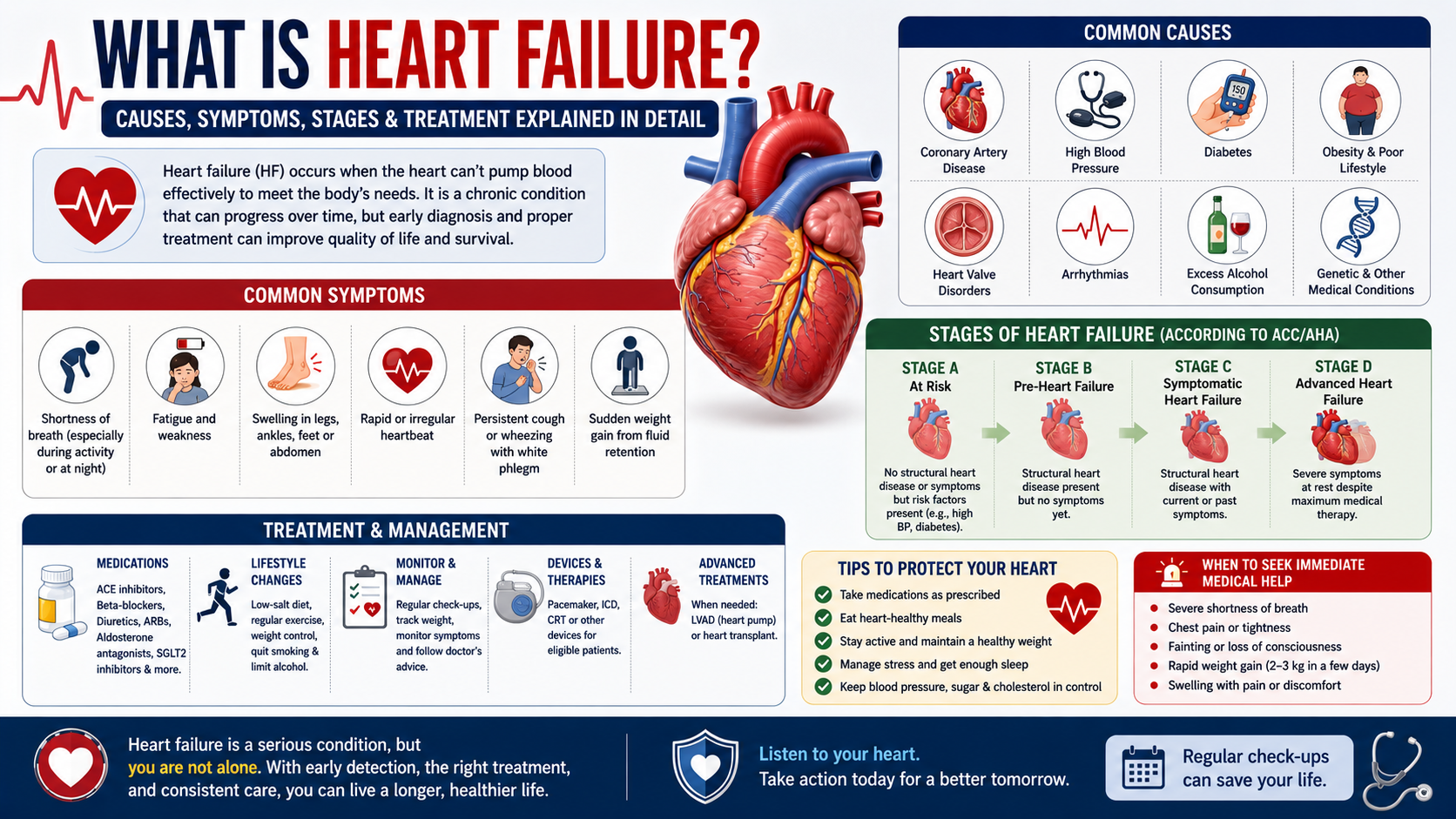
ToggleWhat Is Heart Failure? Causes, Symptoms, Stages & Treatment Explained in Detail
Introduction
Heart failure is one of those medical terms that sounds scarier than it actually is. The phrase alone can make someone think the heart has stopped working altogether, but that’s not the case at all. Heart failure is more like a situation where your heart is still running the race, but it’s running out of breath, struggling to keep up with the body’s demands. Think of your heart like a hardworking pump that has been functioning non-stop since before you were born. If that pump starts to weaken, stiffen, or simply lose its ability to push enough blood forward, everything downstream starts feeling the effects. That, in simple words, is heart failure.
What makes heart failure tricky is that it doesn’t happen overnight. It creeps in slowly, sometimes without any noticeable symptoms at first. Many people walk around with early signs—like getting tired faster than usual or feeling short of breath—but mistake them for stress, aging, or a lack of fitness. This is why awareness is so important. Understanding what heart failure actually is, how it develops, and what the early signals look like can literally change the course of someone’s life.
Another reason heart failure needs more attention is that it’s becoming incredibly common. With longer life expectancy, busier lifestyles, high-stress environments, and increased rates of conditions like hypertension and diabetes, more people are at risk than ever before. But here’s the hopeful part: heart failure is manageable. People can live long, meaningful, comfortable lives with it—if they understand it and treat it properly. Knowledge truly becomes power in this situation, turning something that sounds frightening into something manageable and understandable.
What Is Heart Failure?
Heart failure is one of those conditions that people hear about often, yet most don’t fully understand what it really means. At its core, heart failure is a chronic condition in which the heart cannot pump blood effectively enough to meet the body’s needs. But this doesn’t mean the heart has stopped or is about to stop at any moment. Instead, think of it as a heart that’s doing its best but simply can’t keep up with the workload. It’s similar to trying to run a marathon with a backpack full of bricks—you’re still moving, but everything takes more effort, and eventually your body starts showing signs of strain.
To understand heart failure better, imagine your blood vessels as a network of highways and your blood as the vehicles traveling through them. Your heart is the main engine that keeps these vehicles moving. When the engine weakens, traffic slows down, and congestion builds up. This is exactly what happens inside the body. Blood starts pooling in certain areas, fluid builds up in the lungs or legs, and organs that depend on a steady flow of oxygen-rich blood start struggling to function. This is why heart failure can cause breathlessness, fatigue, swelling, coughing, and even confusion.
Another thing that’s important to understand is that heart failure isn’t one single disease—it’s an umbrella term that covers various conditions where the heart’s pumping power is impaired. Some people have hearts that are too weak to squeeze hard enough. Others have hearts that are stiff and can’t relax properly to fill with enough blood. In some people, only one side of the heart is affected. In others, both sides struggle. All these variations still fall under the category of heart failure.
Despite its seriousness, heart failure is very treatable today. With modern medicine, lifestyle changes, and sometimes devices or surgeries, people can manage symptoms, prevent complications, and improve their quality of life significantly. Many individuals live for decades with heart failure when it’s detected early and managed properly. The biggest challenge is awareness—recognizing the signs before the condition becomes severe. Heart failure is not the end of the road; it’s a condition that demands attention, understanding, and consistent care.
How a Healthy Heart Works
To truly understand heart failure, it helps to first understand how a healthy heart functions on a daily basis. The heart is often described as a pump, but that description barely captures how incredible it really is. This small, fist-sized organ beats about 100,000 times a day without you ever having to think about it. From the moment you’re born to your very last breath, it never takes a break, never hits a pause button, and never asks for a day off. It is, quite literally, the most hardworking muscle in your body—yet it’s also one of the most delicate.
A healthy heart consists of four chambers: two upper chambers called atria and two lower chambers called ventricles. The right side of the heart receives oxygen-poor blood from the body and sends it to the lungs, where it picks up oxygen. The left side of the heart then receives this freshly oxygenated blood and pumps it out to the rest of the body. This cycle repeats over and over, like a beautifully synchronized rhythm. When everything is functioning properly, you feel energetic, clear-headed, and ready to go about your day without even noticing the magic happening inside your chest.
Each heartbeat has two main phases: the squeezing phase (systole) and the relaxing phase (diastole). During systole, the heart contracts and pushes blood forward. During diastole, it relaxes and fills with blood again. Both phases are equally important. If your heart can’t squeeze hard enough, your body doesn’t get the oxygen and nutrients it needs. If it can’t relax properly, there isn’t enough blood to pump out in the first place. Heart failure often occurs when one or both of these functions start weakening.
A healthy heart also relies on a well-coordinated electrical system that keeps your heartbeat steady and regular. This electrical signaling ensures that the chambers of the heart contract at the right moment, in the right order, and with the right strength. When that electrical system malfunctions, the heart may beat too fast, too slow, or irregularly—conditions that can eventually lead to or worsen heart failure.
Blood pressure also plays a significant role. When your arteries are flexible and open, blood flows smoothly. But if your arteries are stiff or narrowed, the heart must push harder to move blood through them—imagine trying to blow air through a straw that’s been pinched. Over time, this extra effort wears the heart down, just like lifting heavy weights without rest would strain a muscle.
Overall, a healthy heart is a marvel of design. It works efficiently, rhythmically, and silently in the background, allowing every part of your body—from your brain to your toes—to function smoothly. When this balance is disrupted, trouble begins. Understanding how the heart should work makes it much easier to appreciate what goes wrong in heart failure.
How Heart Failure Develops
Heart failure doesn’t usually appear suddenly; it develops slowly, often over many years. You can think of it like the gradual wear-and-tear on a car engine that’s been running non-stop for decades. At first, small changes occur inside the heart that most people don’t notice. The heart begins adjusting, compensating, and adapting to whatever stress or damage it’s experiencing. But over time, these temporary fixes become long-term problems, and the heart eventually can’t keep up with the demands placed on it.
One of the early changes that leads to heart failure involves the heart’s structure. When the heart has to work harder—maybe because of high blood pressure, clogged arteries, or a previous heart attack—the muscle walls can start to thicken. This thickening, called hypertrophy, might sound like a good thing, like a muscle getting stronger. But the heart is different. Thicker walls actually make the heart stiffer, reducing its ability to relax and fill with enough blood. On the other hand, some hearts become enlarged, stretched out, and weaker over time—a condition known as dilation. In this case, the heart becomes like a worn-out rubber band that has lost its elasticity.
Along with structural changes, the heart’s function also begins to decline. It may not squeeze with the same force it once did, causing systolic heart failure. Or, it may have trouble relaxing and filling properly, which causes diastolic heart failure. Both types limit the amount of blood being circulated. At first, the body tries to compensate by increasing heart rate, retaining more fluid, or redirecting blood to essential organs like the brain. These adjustments might help temporarily, but they also strain the heart even further.
Another major factor in the development of heart failure is the body’s hormonal response. When the heart begins to struggle, the body releases hormones like adrenaline and angiotensin to help boost heart function and blood pressure. While this might help in the short term, long-term exposure to these hormones makes the heart work harder than it should, causing more damage. It’s like revving a car engine continuously—it gives you more power initially, but ultimately burns out the engine.
Inflammation, oxidative stress, and scarring of heart tissue can also contribute to the decline. If the heart experiences repeated stress or injury, scar tissue forms and prevents the heart from contracting efficiently. These small patches of stiff tissue make the heart less flexible and disrupt the smooth flow of electrical signals that control the heartbeat.
Eventually, the heart’s weakening condition leads to symptoms like fatigue, swelling, and shortness of breath. But by the time these symptoms appear, the underlying heart damage has often been developing for years. Understanding how heart failure develops makes early detection even more important because catching these issues early can slow or even prevent the progression of the disease.
Types of Heart Failure
Heart failure isn’t a single condition but a collection of different problems that affect how the heart works. Understanding the different types helps people know what’s happening inside their body and what kind of treatment they might need. While all types of heart failure involve the heart struggling to pump blood, the way it struggles can vary significantly. Think of heart failure like a car that can’t run properly—sometimes the problem is the engine’s power, sometimes it’s the fuel system, and sometimes it’s the electrical wiring. Each issue affects performance, but for different reasons.
One of the most common ways doctors classify heart failure is by looking at which side of the heart is affected. Left-sided heart failure is the most common type. The left ventricle is the powerhouse of the heart, pumping oxygen-rich blood to the entire body. When it weakens or stiffens, blood starts backing up into the lungs. This is why people with left-sided heart failure often experience shortness of breath, coughing, or trouble breathing when lying flat. Left-sided heart failure can be either systolic (difficulty squeezing) or diastolic (difficulty relaxing), and each requires a different approach to management.
On the other hand, right-sided heart failure happens when the right ventricle has trouble pumping blood to the lungs. When the right side fails, blood begins backing up into the veins, causing swelling in the legs, ankles, feet, and even the abdomen. Many people with right-sided heart failure feel heavy, bloated, or uncomfortable, especially after eating. Right-sided heart failure is often a consequence of left-sided failure—when the left side struggles, the right side eventually gets overwhelmed—but it can also be caused by lung diseases like COPD or pulmonary hypertension.
Another important classification is based on how strongly the heart squeezes. This is where systolic versus diastolic heart failure comes in. Systolic heart failure, also called reduced ejection fraction (HFrEF), occurs when the heart muscle becomes weak and can’t pump blood forcefully. The heart becomes enlarged and stretched out, like a tired rubber band. Diastolic heart failure, or preserved ejection fraction (HFpEF), happens when the heart becomes stiff. It pumps normally but can’t fill properly. This type is often tied to aging, high blood pressure, and diabetes.
There are also more specialized forms of heart failure, such as acute heart failure, which comes on suddenly and requires emergency treatment, and chronic heart failure, which develops gradually and lasts long-term. Some people experience high-output heart failure, where the heart is working hard but still can’t keep up due to conditions like severe anemia or thyroid disease.
Understanding the type of heart failure someone has is crucial because treatment isn’t one-size-fits-all. Each type requires a tailored approach, different medications, and specific lifestyle adjustments. Knowing the exact kind of heart failure helps patients take control of their health and work closely with their doctors to manage symptoms effectively.
Stages of Heart Failure
Heart failure is not something that just appears out of nowhere. It usually progresses through well-defined stages, each representing a different level of risk, damage, and symptom severity. Understanding these stages is incredibly helpful because it gives people a clear picture of where they stand and what steps they should take to manage or slow the progression of the disease. Think of it like climbing down a staircase—you can catch yourself early and stop the descent, or you can keep going downward until symptoms become harder to control. These stages, labeled A through D, help doctors assess how far heart failure has developed and guide the best treatment approach.
Stage A is considered the “high-risk” stage. At this point, a person does not actually have heart failure yet. Instead, they have risk factors that increase their chance of developing it in the future. These might include high blood pressure, diabetes, obesity, family history of heart problems, smoking, high cholesterol, metabolic syndrome, or frequent alcohol consumption. Many people live in Stage A without knowing it because they feel completely normal. This stage is crucial because it’s where preventive care can make the biggest difference. Managing blood pressure, maintaining a healthy weight, exercising, and eating well can keep a person from ever advancing to the next stage.
Stage B is when structural changes begin to appear in the heart. These changes may include thickening of the heart muscle, enlargement of the chambers, or damage from a previous heart attack. Even though the heart is not functioning perfectly, many people still don’t feel any symptoms. This stage is sometimes called “silent heart failure” because the heart is already struggling, but the body hasn’t shown obvious signs yet. Early diagnosis at this stage can help prevent long-term damage. Medications like ACE inhibitors, beta blockers, and lifestyle adjustments become particularly important here.
Stage C is when symptoms finally start to appear. This is typically when shortness of breath, fatigue, swelling in the legs, and reduced exercise tolerance become noticeable. At this point, the person officially has heart failure. However, even within Stage C, symptoms can vary widely. Some individuals feel tired only when exerting themselves, while others may struggle with daily tasks like walking short distances or climbing stairs. Treatment at this stage often involves multiple medications, dietary changes, exercise therapy, and sometimes devices or procedures to support heart function.
Stage D is the advanced stage of heart failure. Symptoms become severe and persistent, even at rest. People in this stage may struggle with fluid buildup that doesn’t respond well to medication, difficulty breathing, and extreme fatigue. This is when more aggressive treatments come into play, such as heart pumps, continuous infusion medications, or even heart transplant evaluation. While Stage D is serious, proper treatment can still significantly improve comfort and quality of life.
Understanding the stages of heart failure empowers people to take control early. Recognizing where you are on this spectrum can help you work with your healthcare team to slow progression, relieve symptoms, and maintain a fulfilling life for as long as possible.
Common Symptoms of Heart Failure
Heart failure symptoms can be confusing because they often begin subtly, almost whispering rather than shouting. Many people brush them off as signs of aging, stress, or simply being “out of shape,” which is why heart failure often goes undiagnosed until it becomes more serious. But the body has a way of sending signals when something isn’t right, and recognizing these early warning signs can make a world of difference in treatment and long-term health. The symptoms of heart failure generally fall into three categories: early symptoms, progressing symptoms, and severe or emergency symptoms.
One of the earliest signs is shortness of breath, particularly during physical activity. You might notice you’re unable to walk as far as you used to without getting winded, or climbing stairs suddenly feels like climbing a mountain. Another early symptom is fatigue. This isn’t the type of tiredness that goes away after a good night’s sleep. Instead, it’s a persistent low-energy feeling that makes even simple tasks—like grocery shopping or carrying bags—feel exhausting. This happens because your heart is struggling to deliver enough oxygen-rich blood to your muscles, forcing your body to prioritize vital organs and leave you feeling drained.
As heart failure progresses, symptoms become more noticeable. Swelling in the legs, ankles, feet, or stomach, known as edema, is very common. This occurs when blood cannot flow efficiently and fluid begins to leak into surrounding tissues. Some people notice their shoes feel tighter, or they may see indentations in their skin after pressing on their legs. Another common symptom is rapid weight gain, often caused by fluid retention rather than fat. Gaining more than two to three pounds in a day or five pounds in a week can be a sign that the heart is struggling.
Another concerning symptom is difficulty breathing when lying flat, a condition called orthopnea. People often prop themselves up with extra pillows to sleep comfortably, or they may wake in the middle of the night gasping for air—which is called paroxysmal nocturnal dyspnea. This happens when fluid builds up in the lungs, making it harder to breathe. Some individuals also experience a persistent cough, wheezing, or a feeling of tightness in the chest. At this stage, daily activities become more challenging, and physical stamina drops noticeably.
In severe cases, symptoms escalate to the point where medical attention becomes urgent. These may include chest pain, confusion, rapid heartbeat, fainting, or severe shortness of breath, even at rest. The person may also have bluish lips or fingers, indicating a lack of oxygen. These symptoms require immediate emergency care.
Recognizing symptoms early is crucial because early treatment can slow progression, improve quality of life, and prevent complications. The key is paying attention to your body and not dismissing changes that persist or worsen over time. Listening to these subtle signals can be the difference between catching heart failure early or facing more advanced stages where treatment becomes more complex.
Causes and Risk Factors
Heart failure doesn’t happen for just one reason; rather, it’s usually the result of a combination of health issues, lifestyle habits, and underlying medical conditions that gradually weaken or damage the heart. Understanding the causes and risk factors is incredibly important because it allows people to take preventive steps long before the heart begins to struggle. Think of it like a puzzle—each risk factor adds one more piece, and when enough pieces fit together, heart failure becomes much more likely. The good news? Many of these risk factors can be controlled, reduced, or even reversed with the right approach.
One of the most common causes of heart failure is coronary artery disease (CAD). This occurs when the arteries supplying blood to the heart become narrowed or blocked by plaque buildup. When blood flow to the heart is reduced, the heart muscle becomes starved of oxygen, weakening over time. A heart attack—which is often the result of severe CAD—can cause sudden and permanent damage to the heart muscle, making it one of the leading direct causes of heart failure.
Another major contributor is high blood pressure. When the arteries are tight or stiff, the heart has to pump harder to push blood through them. Imagine trying to water your garden with a hose that’s been partially pinched—that extra pressure eventually wears out the pump. Over time, this constant strain causes the heart muscle to thicken and stiffen, weakening its ability to fill and pump effectively. High blood pressure is especially dangerous because it often has no symptoms, so people may not realize the damage is happening until it’s too late.
Diabetes is another powerful risk factor. High blood sugar levels can damage blood vessels and nerves that control the heart. Diabetes also contributes to obesity, high cholesterol, and inflammation—all of which increase the risk of heart failure. People with diabetes are two to four times more likely to develop heart failure compared to those without it.
Lifestyle choices also play a massive role. Smoking damages the heart and blood vessels, reduces oxygen levels, and accelerates plaque buildup. Excessive alcohol use weakens the heart muscle, a condition called alcoholic cardiomyopathy. Obesity forces the heart to work harder, contributes to inflammation, and is closely linked to diabetes and hypertension—making it one of the most preventable causes of heart failure.
There are also risk factors that people can’t control. Age is one of them—the risk of heart failure increases significantly after age 60. Genetics also plays a role. Some people inherit conditions that affect the heart muscle, such as cardiomyopathies or valve disorders. Others may inherit a predisposition to high blood pressure, high cholesterol, or diabetes, all of which indirectly raise the risk of heart failure.
Additionally, conditions like valve disease, irregular heart rhythms (arrhythmias), thyroid disorders, lung diseases, and chronic kidney disease can all contribute to the development of heart failure. Each condition places additional strain on the heart, making it harder for the heart to maintain normal function.
The important takeaway is this: heart failure typically results from a cluster of risk factors building up over time. Identifying these risks early—and addressing them—can drastically reduce the chance of heart failure developing later on.
How Heart Failure Is Diagnosed
Diagnosing heart failure is a bit like solving a mystery. Doctors don’t rely on just one clue; instead, they collect a series of pieces—symptoms, medical history, physical findings, blood tests, and imaging results—to form a complete picture of what’s happening inside the heart. Because heart failure can be sneaky and mimic other health problems like lung disease, fatigue, or kidney issues, getting an accurate diagnosis is essential. The earlier it’s detected, the easier it becomes to manage and slow down its progression.
The diagnostic process usually begins with a detailed medical history. A doctor will ask about symptoms such as shortness of breath, swelling, fatigue, persistent coughing, weight gain, or difficulty lying flat. They’ll also ask about lifestyle habits, family history of heart conditions, previous illnesses, smoking, alcohol use, and long-term medical conditions like diabetes or high blood pressure. This conversation alone can provide major clues about heart function.
Next comes the physical examination, where the doctor listens to the heart and lungs using a stethoscope. They may check for fluid buildup in the lungs, irregular heart rhythms, or heart murmurs that might indicate valve problems. The doctor will also look for swelling in the legs, ankles, and abdomen and evaluate blood pressure, heart rate, and oxygen levels. Sometimes just these visible signs are enough to raise strong suspicion of heart failure.
One of the most important tools in diagnosing heart failure is the blood test for BNP or NT-proBNP. These are hormones released when the heart is under stress or stretched. High levels of these biomarkers are strong indicators that the heart is struggling. These tests are quick, minimally invasive, and highly informative.
Another powerful diagnostic tool is the echocardiogram, often called an “echo.” This painless ultrasound test uses sound waves to create images of the heart in motion. It shows how well the heart pumps blood, whether its walls are thick or stiff, and whether the valves are working properly. One of the most important measurements from an echo is the ejection fraction (EF), which tells how much blood the heart pumps out with each beat. A low EF often indicates systolic heart failure.
Doctors may also use an electrocardiogram (ECG or EKG) to check the heart’s electrical activity. This test can detect irregular rhythms, previous heart attacks, and thickened heart walls. Additionally, a chest X-ray might be done to look for fluid in the lungs or changes in heart size.
In more complex cases, advanced tests may be needed. These include stress tests, cardiac MRI, coronary angiography, and CT scans, which help evaluate blood flow, heart structure, and possible blockages in the arteries.
Diagnosing heart failure is never based on one test alone. It’s a comprehensive process that blends science, observation, and medical expertise. And while it may seem overwhelming, this thorough evaluation ensures the most accurate diagnosis and the best possible treatment plan moving forward.
Complications of Heart Failure
Heart failure is not just a problem of the heart—it is a condition that can affect nearly every organ in the body. When the heart cannot pump efficiently, the ripple effects spread far and wide, creating a chain reaction that impacts the kidneys, liver, lungs, brain, and even the immune system. Understanding these complications is important because they can worsen symptoms, reduce quality of life, and increase the risk of hospitalizations. The good news is that many complications can be prevented or managed when detected early.
One of the most common complications is kidney dysfunction, often called cardiorenal syndrome. The kidneys rely on a steady flow of blood to filter waste and maintain fluid balance. When the heart struggles to pump, the kidneys receive less blood and begin to malfunction. This can lead to fluid retention, electrolyte imbalances, and even kidney failure in severe cases. As the kidneys weaken, they send signals that cause the body to retain even more fluid, which makes the heart work harder—a vicious cycle that requires careful monitoring and treatment.
Another major complication is lung congestion, also known as pulmonary edema. When blood backs up into the lungs due to left-sided heart failure, fluid leaks into the air spaces, making breathing difficult. People may experience coughing, wheezing, rapid breathing, or a feeling of drowning when lying down. Severe pulmonary edema is a medical emergency that requires immediate treatment to restore proper breathing and reduce fluid buildup.
Heart failure also increases the risk of arrhythmias, or irregular heartbeats. When the heart’s electrical system becomes disrupted, it may beat too fast, too slow, or in an unstable rhythm. Atrial fibrillation is especially common in people with heart failure. These irregular rhythms can reduce the heart’s pumping ability even further and may increase the risk of stroke or blood clots.
Another serious complication is liver congestion, which happens when blood flow from the heart backs up into the liver. Over time, this can cause swelling, inflammation, scar tissue, and even permanent damage. Some patients develop abnormal liver function tests or experience abdominal discomfort, loss of appetite, or nausea.
Other complications include cognitive decline, often related to reduced blood flow to the brain; muscle wasting, caused by reduced circulation and inactivity; depression and anxiety, which are extremely common among heart failure patients; and a weakened immune system, making the body more susceptible to infections.
Heart failure is a complex condition, but understanding its possible complications helps patients stay vigilant. With proper medical care, monitoring, and lifestyle changes, many complications can be delayed or even prevented entirely.
Treatment Options
Treating heart failure is a comprehensive process that involves medications, lifestyle adjustments, medical devices, and sometimes surgery. The goal is simple: help the heart pump more effectively, reduce symptoms, prevent complications, and improve quality of life. Treatment varies depending on the type and stage of heart failure, but modern medicine offers many tools that allow people to live long, comfortable lives with the condition.
Medications are the cornerstone of heart failure treatment. ACE inhibitors and ARBs help relax blood vessels, lower blood pressure, and reduce strain on the heart. Beta blockers slow the heart rate and reduce the heart’s workload, improving long-term outcomes. Diuretics, often known as water pills, help remove excess fluid from the body, relieving swelling and improving breathing. Aldosterone antagonists help prevent fluid retention and reduce scarring in the heart. In recent years, medications like ARNIs and SGLT2 inhibitors have revolutionized heart failure treatment by significantly reducing hospitalizations and improving heart function.
Lifestyle changes are equally important. Patients are encouraged to follow a low-sodium diet, monitor their weight daily, stay physically active, reduce stress, quit smoking, and limit alcohol. Even small adjustments—like walking 20 minutes a day or reducing salt intake—can make a dramatic difference. Cardiac rehabilitation programs provide personalized exercise routines, education, and emotional support, helping patients regain confidence and strength.
For more advanced cases, medical devices may be necessary. Pacemakers help regulate slow heart rhythms, while implantable cardioverter-defibrillators (ICDs) prevent sudden cardiac arrest caused by dangerous arrhythmias. Cardiac resynchronization therapy (CRT) helps coordinate contractions between the right and left ventricles. In severe cases, left ventricular assist devices (LVADs) can take over much of the heart’s pumping work and may serve as either a long-term solution or a bridge to heart transplantation.
Surgery may be needed when structural issues are the underlying cause. This includes repairing or replacing damaged heart valves, bypass surgery for blocked arteries, or procedures to correct congenital defects. In the most advanced cases where other treatments fail, a heart transplant may be considered.
Treatment plans are personalized because no two patients experience heart failure the same way. The key is consistency—taking medications as prescribed, staying active, and regularly following up with healthcare providers can dramatically improve outcomes.
Diet for Heart Failure Patients
Diet plays a crucial role in managing heart failure because what you eat directly affects fluid balance, blood pressure, weight, and overall heart function. A carefully planned diet can reduce symptoms like swelling and shortness of breath while preventing hospitalization. Many people underestimate how powerful dietary changes can be, but for heart failure patients, food truly becomes medicine.
The most important dietary rule is to limit sodium. Sodium causes the body to retain fluid, which increases the workload on the heart. Heart failure patients are typically advised to keep sodium intake below 1,500–2,000 mg per day. This means avoiding processed foods, canned soups, packaged snacks, fast food, and salty condiments. Instead, flavor can come from herbs, garlic, onion, lemon, pepper, and salt-free seasonings.
Another important factor is fluid management. Some patients, especially those with severe symptoms, may need to limit daily fluids to prevent fluid overload. Drinking excessive amounts of water, sugary beverages, or alcohol can increase swelling and shortness of breath.
A heart-healthy diet should focus on fresh fruits, vegetables, whole grains, lean proteins, nuts, seeds, and healthy fats like olive oil. Foods rich in potassium—such as bananas, sweet potatoes, and spinach—are particularly beneficial because potassium helps balance sodium levels and regulate heart rhythm. However, some patients with kidney problems must monitor potassium carefully.
Foods to avoid include salty snacks, processed meat, canned foods, pickles, fried dishes, sugary sweets, and anything high in saturated or trans fats. Grocery shopping tips include reading labels carefully, choosing low-sodium products, avoiding foods with more than 140 mg of sodium per serving, and cooking meals at home instead of relying on restaurants.
A healthy diet can truly transform heart failure management. It helps reduce symptoms, increases energy, supports weight control, and improves overall heart health. The impact of good nutrition cannot be overstated.
Living With Heart Failure
Living with heart failure doesn’t mean giving up your independence or the things you enjoy. It means learning how to adapt, taking care of your body, and being mindful of the warning signs. Many people live full, active lives with heart failure by embracing a set of healthy habits that support heart function and prevent complications.
Daily weight monitoring is one of the most important habits. Sudden weight gain often indicates fluid buildup, which can signal worsening heart failure. Patients are encouraged to weigh themselves every morning and report increases of two or more pounds in a day or five pounds in a week. This simple routine can prevent hospitalizations by catching fluid overload early.
Staying active is another key part of managing heart failure. Exercise strengthens the heart, reduces stress, and boosts energy levels. Even light to moderate activity like walking, swimming, or cycling can make a big difference. Cardiac rehabilitation programs provide personalized exercise plans tailored to each patient’s needs and limitations.
Managing stress is equally important. Chronic stress increases blood pressure, heart rate, and inflammation—all of which worsen heart failure. Relaxation techniques such as deep breathing, meditation, yoga, journaling, and spending time with supportive people help maintain emotional balance.
Medication adherence is essential. Missing doses can lead to worsening symptoms, higher fluid retention, and increased risk of hospitalization. Using pill organizers, setting phone reminders, or linking medication times to daily routines can help ensure consistent treatment.
Living with heart failure also involves regular follow-up appointments, monitoring blood pressure, eating heart-healthy meals, avoiding smoking, and limiting alcohol intake. Emotional support is vital as well—many patients experience anxiety or depression, so joining support groups or speaking with a counselor can make the journey easier.
With the right habits, people with heart failure can maintain independence, enjoy meaningful relationships, and continue doing many of the activities they love.
Preventing Heart Failure
Preventing heart failure starts long before symptoms appear. In fact, most cases of heart failure can be avoided by addressing key risk factors early in life. Prevention involves building habits that protect heart health, managing chronic conditions, and staying aware of changes in your body.
The most effective prevention strategy is controlling blood pressure, which is one of the leading causes of heart failure. Regular monitoring, reducing salt intake, staying active, and managing stress all help keep blood pressure in a healthy range. Managing cholesterol through diet and medication also helps prevent artery buildup that can weaken the heart.
Another major preventive step is maintaining a healthy weight. Excess body fat forces the heart to work harder and increases the risk of diabetes and high blood pressure. Even losing 5–10% of body weight can significantly reduce heart failure risk.
Regular physical activity strengthens the heart, improves circulation, helps control weight, and reduces stress. A combination of aerobic exercise and strength training is ideal.
Avoiding smoking and limiting alcohol consumption also play a huge role in prevention. Smoking damages blood vessels, reduces oxygen levels, and accelerates plaque buildup. Alcohol, especially in large amounts, weakens the heart muscle over time.
Managing chronic conditions like diabetes, thyroid problems, and kidney disease is essential because these conditions place extra stress on the heart.
Preventing heart failure is all about long-term habits. Taking care of your heart now can protect you for decades to come.
Myths and Misconceptions About Heart Failure
There are many myths surrounding heart failure, and believing them can delay treatment or create unnecessary fear. One common myth is that “heart failure means the heart is about to stop.” In reality, heart failure means the heart is struggling, not failing completely. Another myth is that people with heart failure should avoid exercise. The truth is that the right kind of activity actually strengthens the heart and improves symptoms.
Some people believe heart failure only affects the elderly, but it can occur at any age, especially in those with genetic conditions, chronic diseases, or lifestyle risk factors. Another misconception is that symptoms like fatigue or swelling are just part of aging, when in fact they may be early signs of heart failure.
Understanding the truth about heart failure empowers people to seek care sooner and manage the condition more effectively.
When to See a Doctor
People should seek medical advice if they experience persistent shortness of breath, swelling in the legs, sudden weight gain, fatigue, dizziness, or chest discomfort. Even mild symptoms should not be ignored, especially if they worsen over time. Emergency care is needed for severe shortness of breath, fainting, chest pain, confusion, or a rapid irregular heartbeat.
Regular checkups are important for anyone with risk factors such as high blood pressure, diabetes, obesity, or a family history of heart problems. Early detection can prevent years of complications.
Conclusion
Heart failure is a serious but manageable condition. With early detection, the right treatment plan, and consistent lifestyle changes, people can live long, fulfilling lives despite the diagnosis. Understanding what heart failure is, how it develops, its symptoms, causes, risk factors, and treatment options empowers individuals to take charge of their health. The key is awareness, consistency, and partnership with healthcare professionals.
FAQs
1. Can heart failure be reversed?
Heart failure cannot always be reversed, but with proper treatment, symptoms can improve significantly and progression can slow dramatically.
2. Is heart failure the same as a heart attack?
No. A heart attack is a sudden event caused by blocked blood flow, while heart failure is a chronic condition where the heart gradually weakens.
3. How long can someone live with heart failure?
Many people live for decades with heart failure when properly treated and monitored.
4. Can exercise help heart failure?
Yes. Safe, guided exercise improves strength, reduces symptoms, and enhances overall heart health.
5. Does heart failure always require surgery?
Not always. Many patients manage heart failure with medications and lifestyle changes alone.
1 thought on “What Is Heart Failure? Causes, Symptoms, Stages & Treatment Explained in Detail”