Table of Contents
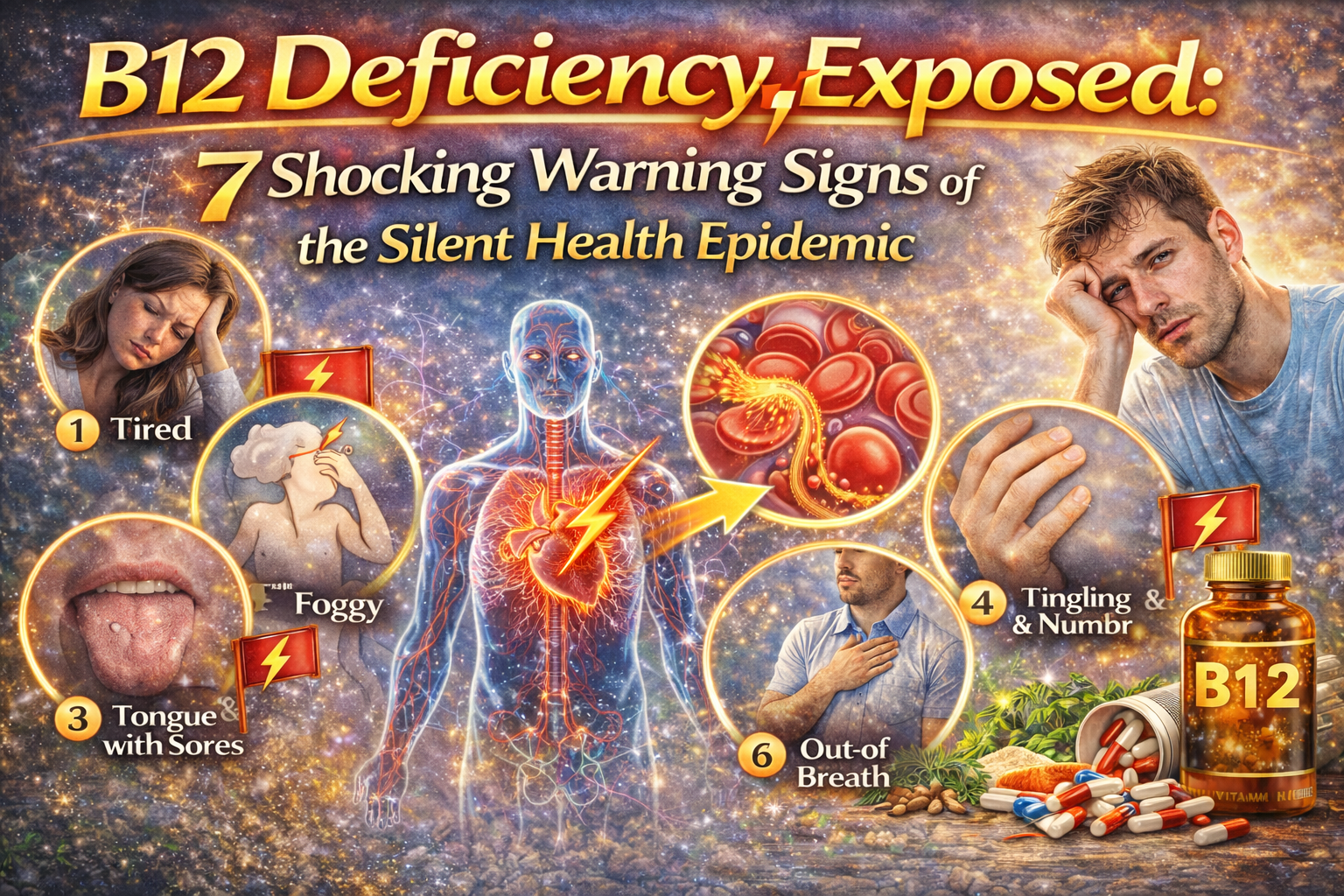
ToggleB12 Deficiency Exposed: 7 Shocking Warning Signs of the Silent Health Epidemic
Introduction: The Hidden Crisis of Vitamin B12 Deficiency
If you’ve been feeling tired, moody, or foggy-headed lately, you might blame stress or lack of sleep. But what if the real culprit is something as simple—and as overlooked—as Vitamin B12 deficiency? This unassuming vitamin plays a role in nearly every major function of your body: energy production, DNA synthesis, and even brain health. Yet millions of people walk around with dangerously low levels without even realizing it.
Experts are now calling it a “silent epidemic” because the signs creep up slowly. By the time most people catch it, they’re already struggling with symptoms that can mimic other illnesses—like depression, chronic fatigue syndrome, or even early dementia. The scary part? Even small deficiencies can cause lasting damage if left untreated.
As diets change and lifestyles shift toward convenience foods and plant-based alternatives, B12 deficiency is becoming more common than ever. Let’s dive into what makes this deficiency so stealthy, the 7 controversial warning signs you shouldn’t ignore, and why it might be one of the most underdiagnosed health issues of our time.
What Exactly Is Vitamin B12?
Vitamin B12, also known as cobalamin, is a water-soluble vitamin that your body can’t produce on its own. That means you have to get it from food or supplements. It’s a powerhouse nutrient involved in making DNA, maintaining nerve cells, and producing red blood cells that carry oxygen throughout your body. Without it, your energy, memory, and overall vitality take a serious hit.
You’ll find B12 primarily in animal-based foods such as meat, eggs, fish, poultry, and dairy. That’s why vegans and strict vegetarians are at higher risk of deficiency—they’re cutting out the main natural sources. While some plant-based milks and cereals are fortified with synthetic B12, absorption can vary from person to person.
Biochemically, B12 plays a crucial role in the methylation process, a metabolic pathway that influences everything from mood regulation to detoxification. In simpler terms, it’s like a spark plug for your body’s cellular engines—without it, the system starts sputtering.
Now that you understand its importance, let’s look at how this deficiency has quietly spread across the globe, and why so many people are missing the signs.
The Global Rise of B12 Deficiency
Over the past few decades, Vitamin B12 deficiency has transformed from a rare condition to a widespread health issue. What’s alarming is that it doesn’t discriminate—it affects young and old, meat-eaters and vegans, men and women alike. According to global health surveys, nearly 1 in 5 adults may have suboptimal B12 levels, with even higher rates among the elderly and those following plant-based diets.
One of the biggest drivers behind this rise is the modern diet. Processed foods dominate our meals, while nutrient-dense whole foods have taken a backseat. Add to that the increasing popularity of vegan and vegetarian lifestyles—though healthy in many ways, these diets can lack reliable sources of B12 unless carefully supplemented.
But that’s not all. Aging plays a significant role too. As people get older, their stomachs produce less acid, which is essential for absorbing B12 from food. Medications like antacids, metformin (used for diabetes), and even certain antibiotics can also interfere with absorption.
Even those who eat meat regularly aren’t safe from deficiency. Stress, alcohol consumption, and gut health issues such as Crohn’s disease or celiac disease can impair absorption, leading to a gradual drop in B12 levels.
In short, B12 deficiency is no longer confined to niche groups—it’s becoming a public health concern. And because its symptoms are subtle and develop slowly, it often goes unnoticed for years.
Why B12 Deficiency Often Goes Undiagnosed
Here’s the tricky part: B12 deficiency can masquerade as dozens of other conditions. Its symptoms—fatigue, mood changes, forgetfulness, and tingling—are nonspecific and can easily be blamed on aging, anxiety, or lifestyle factors. That’s why doctors often misdiagnose it or overlook it entirely.
To make matters worse, standard blood tests can be misleading. A typical B12 test measures total B12 levels in the blood, but that doesn’t necessarily reflect how much of it your body can actually use. Many people fall into a “gray zone,” where their levels appear normal on paper, but they still show clear symptoms of deficiency.
What’s more, B12 deficiency can mimic serious conditions like multiple sclerosis, depression, or dementia. Patients are often treated for those issues while the root cause—low B12—remains hidden. It’s a diagnostic blind spot that has caused unnecessary suffering for millions.
Some advanced tests, like methylmalonic acid (MMA) or homocysteine measurements, are much more accurate. They detect functional B12 deficiency—the kind that truly affects how your body operates. Unfortunately, these aren’t always part of routine checkups.
So, if you’ve been feeling “off” without a clear explanation, it might be worth asking your doctor for a deeper look into your B12 levels.
Warning Sign #1: Chronic Fatigue and Weakness
Feeling tired all the time? It’s one of the most common—and earliest—symptoms of B12 deficiency. Here’s why: B12 is essential for producing red blood cells, which carry oxygen to your tissues. Without enough B12, your body produces fewer (and weaker) red blood cells, leading to megaloblastic anemia. The result? Your cells don’t get enough oxygen, leaving you drained no matter how much rest you get.
You might notice you can’t climb stairs as easily, workouts feel harder, or even daily chores seem exhausting. Some people describe it as a deep, bone-level fatigue that doesn’t go away with sleep.
This type of fatigue is different from being just “tired.” It’s a physiological exhaustion that seeps into every part of your life—mental fog, poor concentration, and a feeling of being constantly run down. Because the symptoms are gradual, many people adapt to feeling sluggish without realizing something’s wrong.
Over time, chronic fatigue caused by B12 deficiency can evolve into full-blown anemia, leading to dizziness, shortness of breath, and even heart palpitations. The good news? Once identified, B12 supplementation can restore energy levels dramatically—often within days or weeks.
Warning Sign #2: Numbness and Tingling Sensations
If you’ve ever felt pins and needles in your hands, feet, or legs, your body might be crying out for B12. This vitamin is crucial for maintaining the myelin sheath—the protective covering that insulates your nerves and ensures efficient signal transmission.
When B12 levels drop, the myelin sheath starts to deteriorate, leading to nerve damage. The result is a tingling, burning, or “electric shock” sensation that typically starts in the extremities and can spread over time. In severe cases, it can cause balance problems and difficulty walking.
The scary part? Neurological symptoms can become irreversible if the deficiency isn’t treated early enough. That’s why recognizing tingling or numbness early is critical. Many people mistakenly attribute it to poor circulation or posture when, in fact, it’s a sign that their nervous system is under stress.
So, if your hands or feet frequently feel like they’ve “fallen asleep,” and it’s happening more often than not, it’s time to check your B12 status before the damage becomes permanent.
Warning Sign #3: Cognitive Decline and Memory Problems
Ever walked into a room and completely forgotten why you went there? Occasional forgetfulness happens to everyone, but if it’s becoming a daily struggle, your brain might be signaling a deeper problem—possibly a Vitamin B12 deficiency.
B12 plays a crucial role in maintaining healthy brain cells and supporting the myelin sheath, which protects the nerves responsible for communication between your brain and body. When levels of B12 drop, your brain’s ability to process information slows down, leading to forgetfulness, confusion, and even disorientation.
In severe cases, B12 deficiency can mimic dementia or Alzheimer’s disease. Some studies have shown that people with low B12 levels are more likely to experience cognitive impairment, poor focus, and memory lapses. What’s more troubling is that many older adults diagnosed with age-related memory loss may, in fact, be suffering from something treatable—B12 deficiency.
One remarkable study published in the American Journal of Clinical Nutrition revealed that supplementing B12 can improve mental clarity, mood, and focus in individuals with low levels. In short, your “brain fog” might not be due to stress—it could be your body pleading for more B12.
If you find yourself struggling with concentration, losing track of conversations, or constantly misplacing items, don’t ignore it. A simple blood test could uncover whether B12 deficiency is behind your cognitive decline.
Warning Sign #4: Mood Swings, Anxiety, and Depression
Here’s where things get really interesting: your mood might be directly linked to your B12 levels. B12 is essential for producing neurotransmitters such as serotonin and dopamine—the chemicals that control your happiness, motivation, and emotional stability.
When your B12 levels drop, your brain can’t produce enough of these “feel-good” chemicals, leading to emotional turbulence. People with low B12 often describe feeling unusually sad, anxious, or irritable for no clear reason. Some even experience panic attacks or symptoms of depression that don’t improve with therapy or medication until their deficiency is addressed.
What’s shocking is that B12 deficiency can make antidepressants less effective because your brain simply doesn’t have the biological building blocks to stabilize mood. That’s why psychiatrists increasingly recommend checking B12 levels in patients with persistent depression or anxiety.
Think of B12 as the spark that ignites emotional balance. Without it, your brain’s chemistry falters, and you’re left battling unexplained mood swings or apathy. Thankfully, correcting the deficiency—through supplements, injections, or dietary changes—can lead to significant mood improvement within a few weeks.
So, the next time you feel “off,” it might not just be stress. It could be your body signaling a deeper biochemical imbalance linked to B12.
Warning Sign #5: Pale or Jaundiced Skin
Another telltale sign of B12 deficiency often appears right on your skin. Have you noticed a pale, washed-out look or a subtle yellow tint? That’s not just lack of sunlight—it could be your body revealing a shortage of Vitamin B12.
Here’s the science behind it: B12 helps in the formation of red blood cells. When the body doesn’t have enough B12, it produces abnormally large and fragile red blood cells that die faster than they should. This leads to fewer red blood cells circulating in your bloodstream, resulting in anemia and a pale appearance.
In some cases, the breakdown of these cells releases bilirubin, a yellowish pigment, which gives your skin and eyes a slight yellow hue—a condition known as jaundice. It’s subtle at first but can become noticeable over time, especially around the eyes and nails.
Many people dismiss these changes as harmless, but they’re actually early red flags. Pale or yellowed skin, combined with fatigue and weakness, often points to B12-related anemia. Correcting the deficiency not only restores your skin’s natural glow but also boosts oxygen flow and overall vitality.
So, next time you catch your reflection looking a bit more ghostly than usual, it might not just be stress or lack of sleep—it could be your body quietly signaling a B12 imbalance.
Warning Sign #6: Shortness of Breath and Dizziness
Feeling dizzy when you stand up? Struggling to catch your breath after mild exertion? These symptoms can be unsettling—and they might trace back to a hidden Vitamin B12 deficiency.
As mentioned earlier, B12 is critical for making healthy red blood cells. When you’re deficient, your body can’t transport enough oxygen to your organs and muscles, leaving you breathless and lightheaded even with minimal activity. It’s like your body’s “fuel supply” is running on empty.
Some people experience these symptoms so subtly that they write them off as being out of shape or having anxiety. But if you frequently feel dizzy, especially when rising quickly or doing everyday tasks, your blood oxygen levels could be compromised due to B12-related anemia.
In more advanced cases, the heart has to pump harder to compensate for the lack of oxygen, which can lead to heart palpitations or even chest discomfort. It’s your body’s desperate attempt to keep up with the oxygen demand.
If you find yourself gasping for air during light activity, don’t ignore it. A quick B12 check could save you from long-term complications—and bring your energy and breath back in sync.
Warning Sign #7: Glossitis and Mouth Ulcers
Your mouth can be one of the first places to reveal a Vitamin B12 deficiency. Ever noticed your tongue looking swollen, smooth, or unusually red? That’s a classic sign of glossitis—inflammation of the tongue caused by low B12 levels.
This condition can make eating and speaking uncomfortable. Some people describe it as a “burning tongue,” while others notice tiny painful ulcers forming inside their mouth or on the lips. Because B12 is vital for maintaining the health of your mucous membranes, its absence weakens your oral tissues, making them more prone to infection and irritation.
Even your sense of taste can change. Food may seem dull or metallic, and your appetite might decrease. Over time, these symptoms can impact nutrition further, creating a vicious cycle of deficiency.
Luckily, these oral symptoms are among the earliest and most reversible signs of B12 deficiency. Supplementation—either through diet, oral pills, or injections—can restore the health of your tongue and mouth within weeks.
If your tongue looks sore, swollen, or strangely smooth, don’t ignore it. It could be your body’s first visible plea for help.
The Controversy: Are We Overlooking a Global Health Issue?
Here’s where the story gets complicated. Many health experts now argue that Vitamin B12 deficiency is one of the most underdiagnosed conditions of the modern age. Despite being easy to prevent and relatively inexpensive to treat, millions remain unaware that they’re running on dangerously low levels of this essential vitamin.
So why is it being overlooked? Part of the issue lies in medical testing and interpretation. Traditional diagnostic cutoffs for B12 are often too low, meaning that people with “borderline” levels might still be symptomatic but get told their results are “normal.” Different countries even use different reference ranges, adding to the confusion.
Then there’s the nutritional debate. Some experts argue that the rise of veganism and vegetarianism—while beneficial for the planet—has inadvertently increased the risk of B12 deficiency, since plant foods don’t naturally contain active B12. Others point out that even meat-eaters are showing low levels due to declining soil quality and increased food processing, which reduces the nutrient content in what we eat.
Adding fuel to the controversy are fortified foods and supplements. Many processed foods are now enriched with synthetic B12, but research shows not everyone absorbs it effectively, especially people with gut disorders or low stomach acid. This has led to ongoing debate about whether current recommended daily intakes (RDIs) are truly sufficient.
Ultimately, the controversy boils down to one alarming reality: millions may be walking around with symptoms that doctors dismiss as “normal aging” or “stress,” when, in fact, they’re experiencing a treatable nutritional deficiency.
Who Is Most at Risk?
While anyone can develop B12 deficiency, certain groups are particularly vulnerable:
-
Vegans and Vegetarians:
Since B12 is naturally found only in animal products, people following plant-based diets are at the highest risk. Even fortified foods might not provide consistent or sufficient absorption. -
Older Adults:
As we age, our stomach acid levels decrease. This makes it harder to extract B12 from food. Studies suggest that up to 30% of adults over 50 have trouble absorbing B12 efficiently. -
People with Digestive Disorders:
Conditions like Crohn’s disease, celiac disease, or small intestinal bacterial overgrowth (SIBO) can impair nutrient absorption. -
Those on Certain Medications:
Long-term use of metformin (for diabetes) or antacids (for heartburn) can interfere with B12 absorption by altering stomach acid levels. -
Pregnant and Breastfeeding Women:
Women who are vegan or vegetarian and pregnant may pass on lower B12 stores to their babies, which can lead to developmental issues if not monitored.
In short, anyone with restricted diets, digestive issues, or specific medication use should monitor their B12 status regularly. Prevention is much easier than reversal.
Diagnosis: How to Accurately Detect B12 Deficiency
So, how do you know if you’re deficient? The first step is to request a blood test that measures serum B12 levels. However, as mentioned earlier, standard tests aren’t always reliable. You could have “normal” B12 levels on paper but still show symptoms of deficiency.
That’s why more advanced markers are essential:
-
Methylmalonic Acid (MMA): Elevated levels suggest that your cells aren’t getting enough usable B12.
-
Homocysteine: High levels can indicate poor B12 (and folate) metabolism.
-
Holotranscobalamin (Active B12): Measures the form of B12 your body can actually use.
A comprehensive test that includes these markers gives a more accurate picture of your B12 health.
Beyond bloodwork, pay attention to symptoms—fatigue, memory loss, numbness, or tongue soreness. Your body often sends warnings long before test results catch up.
Once diagnosed, doctors may recommend oral supplements, sublingual (under-the-tongue) tablets, or B12 injections depending on severity. The goal is to restore levels and repair any nerve damage as quickly as possible.
Prevention and Treatment Options
The best part about B12 deficiency? It’s completely preventable and highly treatable once identified.
-
Dietary Sources:
-
Meat (beef, liver, chicken)
-
Fish (salmon, tuna, sardines)
-
Dairy products and eggs
-
Fortified cereals and plant-based milks
Regular consumption of these foods can maintain healthy B12 levels in most people.
-
-
Supplements:
For those who can’t get enough from food, B12 supplements are an easy fix. They come in several forms—cyanocobalamin, methylcobalamin, and hydroxocobalamin. Methylcobalamin is often preferred for better bioavailability. -
Injections:
People with absorption issues may need intramuscular injections of B12, usually administered by a healthcare provider. These bypass the digestive system and deliver the vitamin directly into the bloodstream for faster results. -
Lifestyle Habits:
-
Limit alcohol consumption (which interferes with absorption)
-
Manage stress and get enough sleep
-
Maintain good gut health through probiotics and balanced nutrition
-
With consistent care, most people see improvement within weeks—more energy, clearer thinking, and a brighter mood.
B12 Myths vs. Facts
Let’s clear up some confusion surrounding B12:
| Myth | Fact |
|---|---|
| Only vegans get B12 deficiency. | False. Many meat-eaters suffer due to poor absorption or medication side effects. |
| You can get enough B12 from spirulina or seaweed. | False. These sources contain pseudo-B12, which isn’t bioavailable for humans. |
| If your B12 levels are normal, you can’t be deficient. | False. Functional deficiencies can occur even with normal blood readings. |
| B12 injections are unsafe. | False. They are safe and highly effective under medical supervision. |
| You only need to worry about B12 when you’re older. | False. Deficiency affects people of all ages, especially those on restrictive diets. |
Conclusion: Is B12 Deficiency the Silent Epidemic of Our Time?
After exploring the science, symptoms, and controversy surrounding Vitamin B12 deficiency, one thing becomes crystal clear—this is more than just another nutritional gap. It’s a global health concern hiding in plain sight. Millions suffer from fatigue, anxiety, and cognitive issues without realizing that something as simple as restoring B12 levels could transform their lives.
Unlike many modern health challenges, B12 deficiency isn’t about expensive treatments or complex therapies—it’s about awareness. The tragedy is that it often goes undiagnosed, brushed off as stress, aging, or depression, when in reality, it’s a biological cry for help.
So, what’s the takeaway?
Don’t ignore the subtle signals your body sends. If you’re feeling chronically tired, foggy-headed, or emotionally unstable, get your B12 levels checked. Prevention starts with education—and small lifestyle choices like eating fortified foods, supplementing when necessary, and maintaining good gut health can make all the difference.
Ultimately, the so-called “silent epidemic” doesn’t have to remain silent. By speaking up, getting tested, and spreading awareness, we can help others avoid years of unexplained suffering. Your health is in your hands—and sometimes, the solution is as small as a single vitamin.
FAQs
1. What are the first signs of B12 deficiency?
The earliest symptoms usually include fatigue, weakness, tingling in the hands or feet, and difficulty concentrating. Over time, these can progress into memory problems, mood swings, and even nerve damage if untreated.
2. Can I get enough B12 from a vegan diet?
Not without careful planning. Since plant-based foods don’t naturally contain active B12, vegans should rely on fortified products (like plant milks and cereals) or take a daily supplement to maintain optimal levels.
3. How long does it take to recover from a B12 deficiency?
Recovery depends on how severe the deficiency is and how it’s treated. Mild cases may improve within a few weeks of supplementation, while nerve-related symptoms can take several months to resolve completely.
4. Are B12 injections better than pills?
For people with absorption issues—such as those with gut disorders or older adults—B12 injections are more effective because they bypass the digestive system. However, for most individuals, high-quality oral or sublingual supplements work just as well.
5. What happens if B12 deficiency is left untreated?
Long-term deficiency can lead to irreversible nerve damage, severe anemia, and cognitive decline. Early diagnosis and treatment are essential to prevent permanent complications.
Final Thoughts
B12 deficiency might not grab headlines, but its impact is far-reaching. It affects your energy, emotions, and even your ability to think clearly. By understanding the warning signs and acting early, you can reclaim your vitality and protect your long-term health.
Don’t wait for the symptoms to become severe—get proactive today.
7 Effective Ways to Beat Depression
Best site for Parrots Health…