Table of Contents
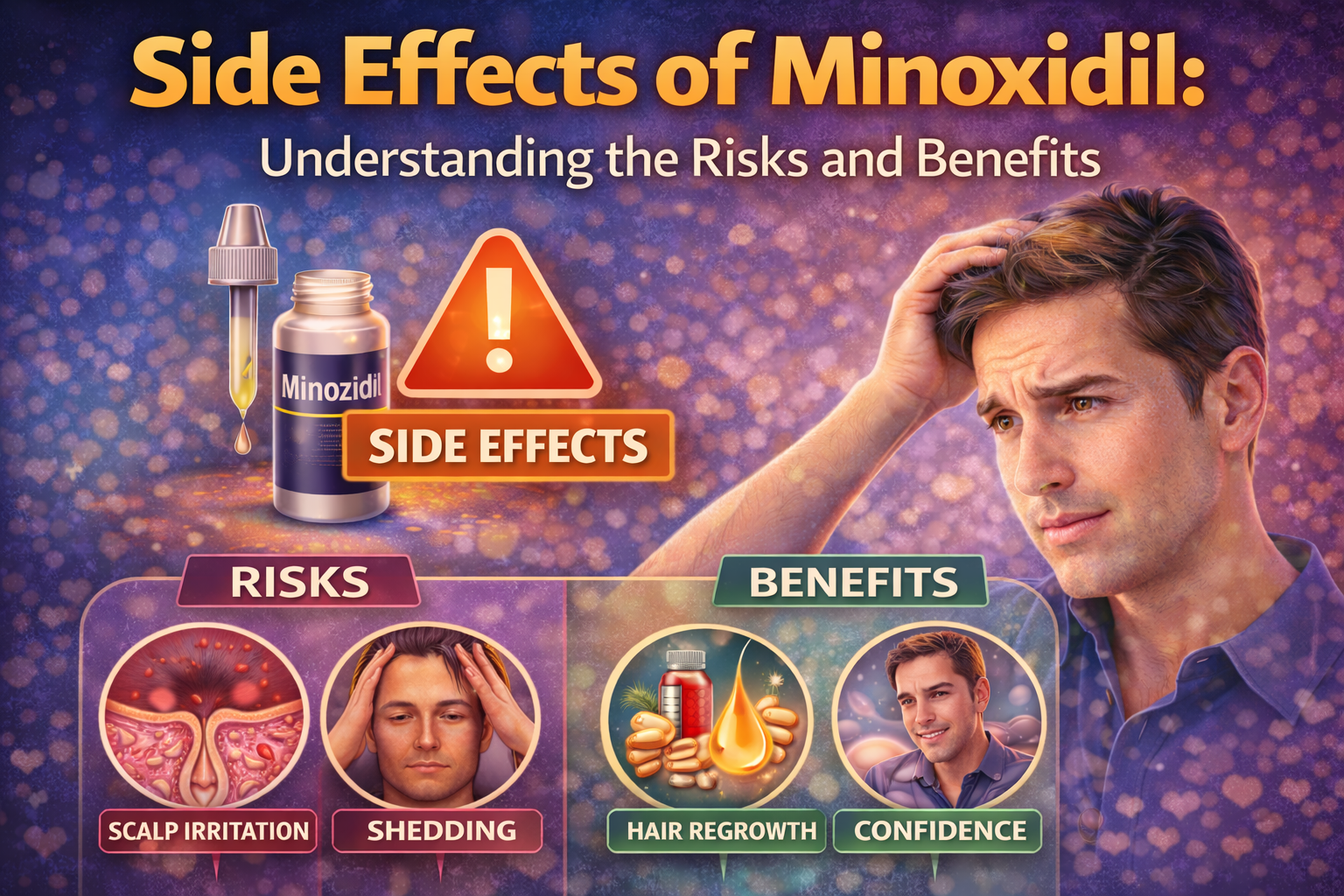
ToggleSide Effects of Minoxidil: Understanding the Risks and Benefits
Introduction to Minoxidil
What is Minoxidil?
Minoxidil is a medication originally developed to treat high blood pressure, but it’s now most famous for its unexpected and much-welcomed side effect—hair growth. If you’ve ever scanned the ingredients of over-the-counter hair loss treatments like Rogaine, you’ve probably seen minoxidil listed front and center. It’s been a game-changer in the world of hair restoration, offering hope to millions struggling with thinning hair or baldness.
Originally approved by the FDA in the 1970s as an oral medication for hypertension, doctors noticed that patients taking minoxidil started to grow hair in unexpected places. This curious phenomenon led to its development in a topical form to specifically target hair loss on the scalp. In the late 1980s, the topical version gained FDA approval for treating androgenetic alopecia (male and female pattern baldness), and it has been widely used ever since.
Minoxidil comes in two main concentrations: 2% and 5%, and it’s available as a foam or liquid solution. While it’s not a cure for baldness, it can slow down hair loss and promote regrowth in many users. But, like all medications, it’s not without its risks—and that’s what we’re diving into today.
Common Uses of Minoxidil in Medicine and Cosmetics
Minoxidil isn’t just for your scalp. Its versatility extends to treating various medical and cosmetic concerns. Here’s a closer look:
-
Hair loss treatment: The most common use, especially for male and female pattern baldness. Minoxidil can increase hair density, prolong the growth phase of hair, and reduce the rate of hair shedding.
-
Eyebrow enhancement: Some off-label users apply it to their eyebrows to promote fuller, denser growth.
-
Beard thickening: Yes, even patchy beards can benefit. Many men have used it off-label to improve facial hair growth.
-
Alopecia areata treatment: Though less effective, some dermatologists use it for treating patchy hair loss conditions.
-
Oral minoxidil: In rare cases, it’s still prescribed for severe hypertension when other treatments fail.
While its cosmetic benefits are often celebrated, it’s crucial to remember that minoxidil is a pharmacological substance with systemic effects, especially when misused or overused. It can enter the bloodstream and cause side effects that go beyond your scalp.
How Minoxidil Works
The Science Behind Hair Regrowth
So, how does this miracle lotion help hair grow? It’s not entirely magic—it’s biology mixed with a bit of chemistry. Minoxidil is a vasodilator, meaning it widens blood vessels. When applied topically to the scalp, it increases blood flow to hair follicles. This improved circulation delivers more oxygen and nutrients to hair roots, rejuvenating dormant follicles and encouraging new hair growth.
Hair grows in cycles: anagen (growth), catagen (transition), and telogen (resting). Minoxidil is believed to prolong the anagen phase and decrease the telogen phase, meaning your hair spends more time growing and less time falling out.
Interestingly, minoxidil doesn’t affect hormones, which sets it apart from treatments like finasteride that alter testosterone levels. That’s why it’s commonly used by both men and women without the hormonal complications.
However, because it stimulates hair growth through increased blood supply, it can also affect areas where it’s not intended, like the face, shoulders, or back—especially if the product drips or is transferred by touch.
FDA Approval and Clinical Evidence
Minoxidil is one of the few hair loss treatments with solid clinical backing and FDA approval, which gives it a credibility edge over countless gimmicky serums and pills.
-
1988: Minoxidil 2% was approved by the FDA for male pattern baldness.
-
1992: Approval extended to include female pattern hair loss.
-
1997: The 5% strength was approved, offering a more potent solution for advanced hair loss.
Clinical trials have shown that about 60% of men using the 5% solution experience significant hair regrowth within 4 to 6 months. Women also benefit, though they typically use the 2% solution to reduce the risk of facial hair growth.
In most studies, users who stick with the treatment for at least six months see the best results. However, the catch is that once you stop using it, the benefits start to fade. Hair growth typically reverts to its previous state within three to six months after discontinuation.
Despite the promising stats, it’s important to remember that minoxidil doesn’t work for everyone. Genetics, underlying medical conditions, and how early you start treatment all influence your outcome.
Common Side Effects of Minoxidil
Scalp Irritation and Itching
One of the most frequently reported side effects of minoxidil is scalp irritation. This includes dryness, flaking, redness, and a burning or itching sensation. It’s most common with the liquid version, which contains propylene glycol—a known skin irritant for some people.
Symptoms can range from mild discomfort to more intense inflammation. You might notice redness around the hairline, tightness on the scalp, or tiny white flakes that resemble dandruff. For some, the itchiness is enough to stop treatment altogether.
To manage this, many people switch to the foam version, which is propylene glycol-free and generally more gentle. You can also try moisturizing your scalp or using anti-inflammatory shampoos like those containing ketoconazole or aloe vera.
Importantly, not all irritation is due to an allergic reaction. Often, it’s simply the skin reacting to a foreign chemical compound. But if you notice blisters, hives, or severe pain, stop using minoxidil and see a doctor immediately.
Unwanted Facial Hair Growth
Here’s a side effect no one wants to deal with—sprouting hair where you least expect it. Facial hair growth in women, particularly on the upper lip, cheeks, or chin, has been reported by users applying minoxidil to their scalp.
This usually happens when the product accidentally drips onto the face, or if hands aren’t washed thoroughly after application. Because minoxidil boosts hair growth wherever it touches, even tiny amounts transferred from your pillowcase or hands can trigger follicles.
For men, this may not seem like a big deal, but for women, especially those using it for female pattern hair loss, it can be distressing. The good news is that this side effect is usually reversible. If you stop using minoxidil or ensure better application practices, the extra hair will typically fall out after a few weeks to months.
Prevent this by applying minoxidil precisely, avoiding spillage, and always washing your hands after each use. Using it at least two hours before bed can also reduce the chance of the product transferring to your pillow and then to your face.
Dizziness and Headaches
Though rare, some people report dizziness, lightheadedness, or mild headaches after using minoxidil. This is more likely with the oral version but can occasionally happen with topical use, especially in those sensitive to medications that alter blood flow.
Minoxidil dilates blood vessels, which can lower blood pressure slightly. In people already prone to low blood pressure or circulatory issues, this could lead to feeling faint or off-balance. If the symptoms persist or worsen, it’s crucial to stop the treatment and consult a healthcare provider.
To minimize this risk, avoid using more than the recommended dose, and ensure you’re applying it only to the scalp—not the entire head or body. Always follow the product instructions to the letter.
Serious Side Effects You Shouldn’t Ignore
Rapid Heartbeat and Chest Pain
While rare, a rapid heartbeat (tachycardia) and chest pain are two of the most concerning side effects of minoxidil—especially when using the medication in higher concentrations or applying more than recommended. These symptoms can indicate that the drug is being absorbed systemically rather than remaining localized to the scalp.
Minoxidil was originally designed as an oral medication to treat high blood pressure. Its systemic effects are powerful. When applied topically in large amounts or too frequently, it can still enter the bloodstream and impact your cardiovascular system. This can result in palpitations, irregular heartbeat, and chest discomfort that may mimic angina.
In such cases, you should immediately discontinue use and seek medical attention. It’s also wise to monitor your pulse and blood pressure if you start noticing these symptoms. They might not appear right away but could gradually intensify with prolonged use.
This side effect is particularly dangerous for individuals with preexisting heart conditions. If you have any history of cardiac issues, consult a doctor before even considering minoxidil. Your heart health isn’t worth the risk of thicker hair.
Sudden Weight Gain and Swelling
Another serious side effect linked to minoxidil—particularly oral or high-dose topical use—is sudden weight gain, usually accompanied by swelling in the hands, ankles, feet, or face. This isn’t your typical “water weight” from a cheat day; it’s often due to fluid retention caused by changes in blood flow and capillary permeability.
What’s happening internally is that minoxidil causes sodium and water to be retained in the body. This effect, while helpful in a hypertensive patient who needs lower vascular resistance, becomes problematic in cosmetic users focused on hair loss. The excess fluid accumulates in tissues, leading to puffiness, bloating, and noticeable swelling in extremities.
In some people, these symptoms can also lead to shortness of breath or pressure in the lungs—a medical emergency. If you notice unexplained weight gain (2-5 pounds in a week), swollen feet, or difficulty breathing, stop using the product and contact your doctor immediately.
You can reduce your risk by following the correct dosage and avoiding other products that may exacerbate water retention, like high-sodium diets or diuretics.
Allergic Reactions
Though uncommon, allergic reactions to minoxidil do happen. These can be mild, like a rash or itchiness, or severe, involving symptoms such as difficulty breathing, swelling of the throat or tongue, and full-body hives.
In most cases, people are not allergic to minoxidil itself but to one of the inactive ingredients—such as propylene glycol or alcohol in the solution. The foam formulation, which omits propylene glycol, is often a better choice for those with sensitivities.
Signs of an allergic reaction may include:
-
Red, blistered, or peeling skin
-
Severe itching or burning sensation
-
Swelling, especially around the eyes or lips
-
Tightness in the chest or difficulty swallowing
If you experience any of the above, discontinue use immediately. Mild symptoms may be treated with antihistamines, but severe reactions warrant an emergency visit. Don’t brush it off—your immune system is telling you something important.
Differences in Side Effects Between Genders
Minoxidil for Men
For men, minoxidil is typically used in the 5% concentration. It’s marketed to combat male pattern baldness, specifically targeting the crown and receding hairline areas. Most men tolerate the treatment well, but they’re also more prone to certain side effects like:
-
Scalp dryness and irritation
-
Increased hair shedding during the first few weeks
-
Unwanted hair growth on the back or forehead
Men are less likely to experience facial hair side effects (since facial hair is already present) but may still deal with acne flare-ups or clogged pores due to the solution’s greasy residue. Some also notice temporary thinning before regrowth kicks in, a phenomenon known as “shedding phase,” which can be emotionally taxing.
Sexual side effects are rare with minoxidil, especially compared to finasteride, but anxiety over appearance and treatment response can contribute to stress and decreased confidence—issues often confused as side effects.
Minoxidil for Women
Women, on the other hand, are more sensitive to minoxidil, which is why the 2% solution is generally recommended. However, many women also use the 5% version with caution and under supervision. The common side effects among women include:
-
Facial hair growth, especially around the chin, upper lip, and cheeks
-
Skin irritation, often more severe than in men
-
Hormonal-like changes (though minoxidil is non-hormonal), like changes in texture or thickness of existing hair
Because female pattern hair loss usually affects the entire top of the scalp rather than just the crown or hairline, application can be more widespread, increasing the chance of side effects.
Women trying to conceive, are pregnant, or breastfeeding should not use minoxidil unless specifically advised by a healthcare provider, as its safety profile in these conditions is not well established.
In both men and women, the key takeaway is simple: follow dosage instructions, be patient, and observe how your body responds. The benefits can be remarkable, but only if side effects are properly managed.
Long-Term Use of Minoxidil
Dependency and Continuous Use
One of the most significant caveats with minoxidil is its dependency factor. It’s not a one-and-done type of treatment. You don’t apply it for a few months and then stop, expecting the results to last forever. If anything, minoxidil creates a sort of dependency where continued use is essential to maintain hair growth.
Why? Because minoxidil doesn’t address the root cause of hair loss. It merely stimulates dormant hair follicles to re-enter the growth phase. Once you stop using it, the follicles typically return to their previous inactive state, and any hair regrowth gained will likely be lost within 3 to 6 months.
This long-term commitment can be overwhelming for some users. Not only do you have to apply it daily—sometimes twice a day—but the cost, consistency, and potential side effects all become part of your ongoing routine. Missing a few days here and there might not cause drastic changes, but extended periods without it usually result in noticeable shedding.
The key is to understand that minoxidil is a maintenance therapy. It works well while you’re using it, but it doesn’t rewire your genetics or permanently correct hormonal imbalances that contribute to hair thinning. If you’re not ready for a long-term commitment, this might not be the best option for you.
What Happens if You Stop Using It
Discontinuing minoxidil can feel like a step backward, especially after seeing positive results. Within a few weeks of stopping, users may notice increased shedding, which can quickly spiral into significant hair loss. This rebound shedding is often worse than the original condition because the newly regrown hair—being less stable—falls out first.
Here’s what typically happens after stopping minoxidil:
-
First 2–4 weeks: Minimal change. You might still enjoy the benefits of past use.
-
1–3 months: Noticeable shedding begins. Hair may feel thinner or weaker.
-
3–6 months: Most regrown hair is lost, and the hairline or crown returns to its pre-treatment state.
Emotionally, this can be tough to handle. Many users report feeling discouraged or betrayed by the “reversal,” not realizing that minoxidil was only effective for as long as it was in use.
If you’re considering stopping, do it gradually (if possible) and consult a dermatologist. You might also transition to alternative therapies or supportive treatments like laser combs or nutritional supplements to cushion the loss.
Minoxidil Application Methods and Side Effect Intensity
Foam vs. Liquid: Which Has More Side Effects?
Minoxidil comes in two main forms—foam and liquid—and while both are effective, they differ significantly in terms of user experience and side effects.
Foam Minoxidil:
-
Pros: Easier to apply, dries faster, less greasy, and doesn’t contain propylene glycol (a common irritant).
-
Cons: Slightly more expensive, can be harder to control dosage for some users.
-
Side Effects: Generally milder. Lower risk of irritation and itching.
Liquid Minoxidil:
-
Pros: More affordable, easier to measure precise amounts with a dropper.
-
Cons: Greasier, takes longer to dry, and contains propylene glycol.
-
Side Effects: Higher incidence of scalp irritation, flaking, and allergic reactions.
Many users start with the liquid due to cost and availability but end up switching to the foam for better tolerance. Foam is especially recommended for those with sensitive skin or a history of allergic reactions. However, effectiveness between the two forms is comparable, so your choice may boil down to skin sensitivity and personal preference.
Overuse and Incorrect Application
Applying more minoxidil doesn’t mean faster or better results—in fact, it often leads to more harm than good. Overuse can increase systemic absorption, causing side effects like rapid heartbeat, dizziness, and severe irritation.
Here’s what not to do:
-
Applying it more than twice daily: More frequent applications don’t increase efficacy. The hair growth cycle takes time, and overuse just stresses your body.
-
Using large quantities at once: A higher dose won’t speed up results and will increase risk.
-
Applying it on broken or irritated skin: This boosts absorption into the bloodstream and may lead to systemic side effects.
-
Not washing hands afterward: Residue can be transferred to the face, causing unwanted hair growth.
-
Sleeping immediately after application: This can transfer minoxidil to pillows and inadvertently to your face or partner.
Stick to the instructions. One milliliter twice daily is sufficient for the scalp. Consistency beats quantity every time when it comes to minoxidil.
Mitigating Side Effects
Proper Application Techniques
Minimizing side effects often starts with how you apply the product. A sloppy approach invites irritation, while a disciplined technique helps ensure the product works exactly where and how it’s supposed to.
Tips for safe and effective application:
-
Clean and dry scalp: Never apply minoxidil to a wet or sweaty scalp.
-
Use only the recommended amount: Usually 1 ml twice daily.
-
Target the thinning area: Apply directly to the scalp, not the hair.
-
Allow time to dry: Wait at least 2–4 hours before washing your hair or lying down.
-
Wash hands thoroughly: Prevents accidental spreading to other parts of your body.
-
Avoid harsh hair products: Gels, sprays, and alcohol-based styling aids can irritate the scalp when used with minoxidil.
By mastering the application, you not only improve results but also dramatically reduce your chances of side effects.
When to Consult a Dermatologist
Minoxidil is available over the counter, which makes it easy to access—but that doesn’t mean it’s one-size-fits-all. Consulting a dermatologist before or during treatment can be a game-changer.
Here’s when to bring in the pros:
-
You experience moderate to severe side effects
-
There’s no improvement after 6–9 months
-
You’re unsure about the best concentration or form
-
You suspect an allergic reaction
-
You want to combine treatments (e.g., finasteride, microneedling, PRP therapy)
A dermatologist can offer guidance, recommend complementary treatments, and even prescribe stronger solutions if needed. Don’t tough it out alone—expert help can turn a frustrating experience into a success story.
Alternative Treatments for Hair Loss
Natural Remedies
While minoxidil is one of the most researched treatments for hair loss, many people prefer natural options—either due to side effects, personal beliefs, or budget constraints. Although natural remedies often lack the scientific rigor of pharmaceutical solutions, some show promising anecdotal and small-scale clinical results.
Popular natural remedies include:
-
Rosemary oil: A 2015 study showed that rosemary oil was as effective as 2% minoxidil over six months, with fewer side effects like itching.
-
Onion juice: Surprisingly effective in one small study, onion juice helped promote regrowth in participants with patchy alopecia.
-
Pumpkin seed oil: Contains phytosterols, which may inhibit 5-alpha-reductase—the enzyme that converts testosterone to DHT (a hormone linked to hair loss).
-
Saw palmetto: Often used as a natural alternative to finasteride, it may block DHT and reduce hair shedding.
-
Scalp massage and microneedling: Improves blood circulation and promotes the absorption of topical treatments.
These remedies work best as complementary treatments. While they won’t replace minoxidil for severe or genetic hair loss, they can support overall scalp health and improve the environment for hair regrowth.
Other FDA-Approved Medications
Besides minoxidil, there are a few other FDA-approved or clinically accepted treatments for hair loss, especially in men:
-
Finasteride (Propecia): A prescription oral medication that reduces DHT levels. It’s particularly effective for male pattern baldness but comes with potential sexual side effects.
-
Dutasteride: More potent than finasteride, though not FDA-approved for hair loss in the U.S., it’s often prescribed off-label.
-
Low-Level Laser Therapy (LLLT): FDA-cleared devices like laser combs and helmets stimulate hair follicles through light energy.
-
Platelet-Rich Plasma (PRP) therapy: Involves injecting a patient’s own blood plasma into the scalp to promote hair growth.
-
Ketoconazole shampoo (Nizoral): While primarily antifungal, it has anti-androgenic properties that may help reduce hair loss.
Each of these treatments has its own set of risks and benefits. For those who can’t tolerate minoxidil or need a multi-pronged approach, exploring these alternatives with a doctor is a good strategy.
Myths and Misconceptions About Minoxidil
“Minoxidil Causes Permanent Hair Regrowth”
Let’s bust this myth right away: minoxidil does not cause permanent hair regrowth. The results you see while using it are maintained only as long as you continue the treatment. Once you stop, any progress you made will slowly reverse.
This misconception often leads to disappointment when users quit after a few months of success, only to experience rapid shedding. It’s not that the product failed—it’s just that it doesn’t fix the underlying problem causing hair loss, like hormonal imbalances or genetics.
Think of minoxidil like watering a plant. Stop watering it, and it won’t continue to grow. You need to maintain it consistently to enjoy lasting benefits.
“Side Effects Are Extremely Rare”
Many people believe minoxidil has no side effects or that they’re so rare they’re not worth considering. That’s misleading. While severe side effects are indeed uncommon, mild to moderate side effects are actually fairly common—especially among new users or those with sensitive skin.
These may include:
-
Dry, itchy, or flaky scalp
-
Dizziness or mild headaches
-
Unwanted hair growth in areas like the face or neck
-
Temporary increased hair shedding
These aren’t rare anomalies; they’re documented and often expected to some extent. The key is knowing which side effects are manageable and which require you to stop using the product and seek medical help.
Don’t brush off persistent irritation or new symptoms. Your body’s response matters—and acknowledging it is part of a responsible treatment journey.
Conclusion
Minoxidil has rightfully earned its place as a front-runner in the fight against hair loss. It’s accessible, easy to apply, and backed by decades of research. For many, it offers visible improvements, renewed confidence, and a chance to reclaim a fuller head of hair.
But it’s not without its trade-offs. From scalp irritation to unwanted facial hair, the side effects of minoxidil can vary widely depending on your skin sensitivity, usage habits, and overall health. Some people will breeze through treatment with minimal issues, while others might struggle with uncomfortable reactions.
Understanding the risks and benefits is key. Minoxidil isn’t a miracle cure—it’s a tool. Used correctly and consistently, it can deliver great results. Misused or misunderstood, it can be disappointing or even harmful.
If you’re considering minoxidil, approach it with clear expectations, monitor your body closely, and when in doubt, talk to a dermatologist. With the right guidance, you can make an informed decision that supports both your scalp and your peace of mind.
FAQs
Can I use minoxidil without a prescription?
Yes, topical minoxidil is available over-the-counter in most countries. However, consulting a doctor before use—especially for long-term application—is highly recommended.
How soon can I expect results from minoxidil?
You may notice less shedding within the first 2–3 months. Visible regrowth typically appears between 4 to 6 months, with full results often seen at the 12-month mark.
Are there long-term health risks with minoxidil?
For most users, long-term use is safe. However, systemic side effects like fluid retention or cardiovascular symptoms may occur if the product is misused or over-absorbed.
Can I combine minoxidil with other hair growth products?
Yes, minoxidil is often combined with treatments like finasteride, ketoconazole shampoo, or microneedling. Always consult a professional before combining treatments.
Is shedding a side effect or a sign of progress?
Early shedding (called the “dread shed”) is common and often a sign the treatment is working by pushing old hairs out to make way for new ones.
What is the relationship between prolactin and AMH levels in women?…..
2 thoughts on “Side Effects of Minoxidil: Understanding the Risks and Benefits”