Table of Contents
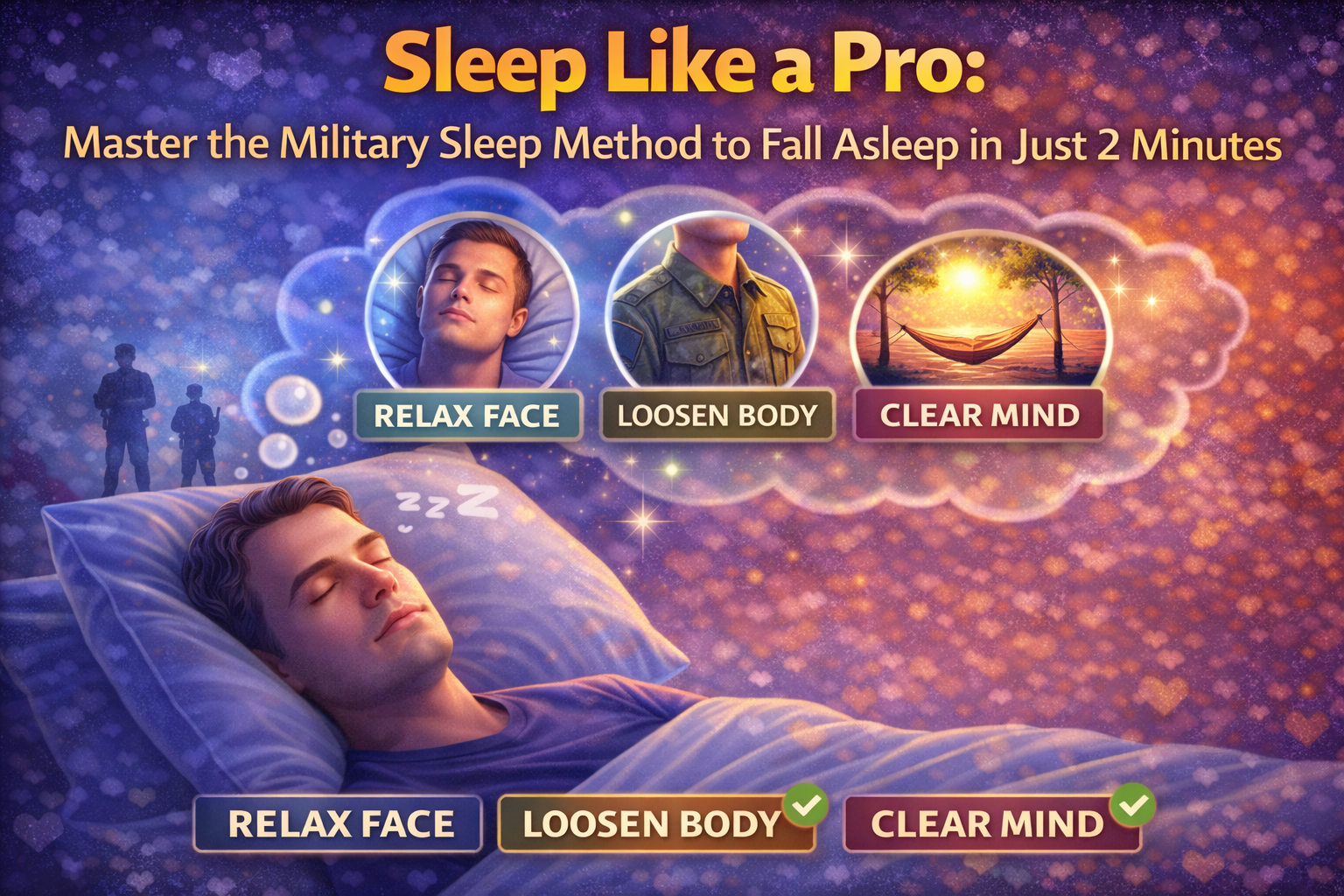
ToggleSleep Like a Pro: Master the Military Sleep Method to Fall Asleep in Just 2 Minutes
We’ve all been there—lying in bed, staring at the ceiling, counting sheep, scrolling through our phones, or trying every relaxation trick we’ve ever heard of… and still, sleep refuses to come. But what if there was a way to fall asleep in under two minutes—a method so effective it was designed for soldiers on the battlefield? That’s the promise of the “Military Sleep Method,” a technique that’s been making waves across social media, wellness blogs, and even in medical circles.
The method claims to help anyone—no matter how stressed, caffeinated, or restless—fall asleep in record time. But behind its simplicity lies a fascinating story, scientific reasoning, and yes, a bit of controversy. Let’s explore how this unusual sleep hack came to be, what makes it work, and whether it’s truly the fastest route to instant Zzz’s.
Introduction — Why Falling Asleep Fast Feels Impossible Today
The modern-day sleep struggle
In our always-on, screen-lit world, quality sleep has become a luxury. Most adults struggle to drift off quickly, averaging 20 to 30 minutes just to fall asleep—if not longer. Blue light exposure, stress, caffeine, and irregular schedules all conspire against a good night’s rest. We live in an age where sleep deprivation is practically a badge of honor, but our brains and bodies are paying the price.
Why the military method is suddenly trending
Recently, the “military method” has exploded in popularity on platforms like TikTok and YouTube. Influencers claim they can fall asleep in 120 seconds or less, and millions have tested it themselves. The method’s origin—linked to military training manuals—adds a layer of mystique and credibility. After all, if it can help soldiers sleep in war zones, imagine what it can do for you in your cozy bedroom.
What makes this method controversial
Despite its popularity, experts are divided. Some praise its relaxation and mindfulness approach, while others call it overhyped pseudo-science. Critics argue that sleep cannot be forced or timed. Yet countless users insist it works wonders—especially when practiced consistently. So, is it a miracle method or just clever marketing? Let’s dig deeper.
The Origins of the Military Sleep Method
Born from the battlefield
The military method’s story begins in the U.S. Navy Pre-Flight School during World War II. Pilots needed to rest between missions, even under intense pressure and noise. A training manual later compiled by Lloyd Bud Winter, a sports coach turned military instructor, detailed this relaxation method designed to help pilots sleep anytime, anywhere—in just two minutes.
How the U.S. Navy developed the technique
The Navy’s goal was simple: reduce fatigue, boost alertness, and prevent errors in combat. Sleep deprivation was costing lives. Over several weeks, pilots were trained to completely relax their bodies and quiet their minds, even under stressful conditions. After six weeks of practice, 96% of them could fall asleep within two minutes—even while sitting upright or hearing gunfire simulations.
The psychology behind it
The method wasn’t about “forcing” sleep—it was about tricking the body into relaxation so the brain follows. By relaxing each muscle group and mentally detaching from external thoughts, soldiers could reset their nervous system. In modern terms, it’s a form of progressive muscle relaxation and guided imagery, combined into a simple, practical technique.
Step-by-Step Breakdown of the Military Method
So, how do you actually do it? Here’s the official step-by-step guide used by Navy pilots and adapted for modern use.
Step 1 – Relax your face and upper body
Start by loosening every muscle in your face—your forehead, eyes, jaw, and even tongue. Release all tension from your face and let it feel heavy. This step is crucial because facial tension sends a “stress signal” to the brain. When your face relaxes, your brain gets the message: it’s time to rest.
Step 2 – Drop your shoulders and hands
Next, let your shoulders drop naturally, releasing the tightness you didn’t realize you were holding. Let your arms and hands fall loosely by your sides. Imagine them sinking into the bed. As tension melts away, you’ll feel a gentle wave of calm moving down your body.
Step 3 – Exhale and relax your chest
Take a deep breath, then slowly exhale, letting your chest soften with each breath. Don’t force it—just let your breathing slow down naturally. This mimics what happens in deep sleep and signals your body that it’s safe to let go.
Step 4 – Relax your legs
Now move downward—relax your thighs, calves, and feet one at a time. Imagine warmth or heaviness spreading through your legs, like gravity gently pulling you toward the mattress.
Step 5 – Clear your mind in 10 seconds
Here’s the tricky part. Once your body is loose, you need to clear your mind for 10 full seconds. If intrusive thoughts appear, replace them with calming mental images:
-
Imagine you’re lying in a canoe floating on a still lake.
-
Picture a dark, quiet room wrapped in soft blankets.
-
Or repeat silently, “Don’t think, don’t think.”
If you stay mentally still for even a few seconds, your body will take over—and sleep will follow almost automatically.
The Science Behind the Method
Why muscle relaxation matters
Every time you clench a muscle—whether from stress or habit—your brain remains in “alert mode.” The military method’s step-by-step relaxation works by deactivating the sympathetic nervous system, the one responsible for your fight-or-flight response. When muscles soften, blood pressure drops, and your body switches to its parasympathetic mode, which promotes rest and repair.
The power of mental imagery
Visualization isn’t just imagination—it’s neuroscience. When you picture yourself in a calm environment, your brain recreates the same signals it would if you were actually there. This reduces cortisol levels, slows heart rate, and prepares the mind for sleep.
How it activates your parasympathetic nervous system
Think of this system as your internal “brake pedal.” The military method presses that brake by combining slow breathing, muscle release, and mental stillness. It’s the perfect recipe for physiological calm. Once the body believes it’s safe, sleep becomes almost inevitable.
Common Mistakes People Make While Trying the Military Method
Overthinking the process
The biggest mistake people make? Trying too hard. Sleep is a passive state; you can’t force it. The key is to allow relaxation, not chase it. Focus on following the steps gently, not perfectly.
Trying too hard to sleep
Ironically, worrying about falling asleep keeps your brain active. The method’s goal is not instant sleep but total physical relaxation—sleep is just the natural result.
Skipping relaxation steps
Many people jump straight to mental imagery without first relaxing their bodies. But without physical release, your mind won’t calm down. Think of it like shutting down a computer—you can’t just close the screen; you have to power down every part.
Comparing the Military Method with Other Sleep Techniques
4-7-8 Breathing Technique
One of the most well-known relaxation methods is the 4-7-8 breathing technique, developed by Dr. Andrew Weil. It involves inhaling for 4 seconds, holding the breath for 7 seconds, and exhaling for 8 seconds. This technique slows your heart rate, promotes oxygen exchange, and creates a rhythm that calms the nervous system. Compared to the military method, it focuses purely on breathing control, while the military method emphasizes muscle relaxation and mental clarity. Many people combine both for maximum effect—using 4-7-8 breathing to quiet the mind before diving into the military relaxation sequence.
Progressive Muscle Relaxation
Progressive Muscle Relaxation (PMR) has been around for nearly a century. It involves tensing and releasing muscle groups from head to toe to relieve tension. The military method draws directly from PMR but simplifies it. Instead of deliberate tension and release, it skips straight to the relaxation phase. Think of PMR as a workout for your relaxation muscles, and the military method as the fast track to calmness once you’ve mastered it.
Visualization and Meditation
Visualization techniques—such as imagining serene places or guided meditations—help you detach from intrusive thoughts. Meditation, particularly mindfulness, trains your brain to observe thoughts without attachment. The military method borrows from both but keeps things minimal: a single peaceful image or repetitive phrase is enough to quiet the mind. Where meditation might take years of practice, the military method’s simplicity is its greatest advantage.
Does the Military Method Really Work? What Experts Say
Sleep psychologists’ opinions
Sleep experts are cautiously optimistic about the military method. Dr. Michael Breus, a clinical psychologist specializing in sleep, notes that while it’s not magic, it’s effective because it promotes physiological relaxation. When muscles unwind and breathing slows, your brain naturally follows into rest mode.
Military veterans’ experiences
Many veterans confirm they were trained in similar techniques during service. While not all call it the “military method,” the practice of systematic relaxation is standard in training environments. Soldiers often report it helped them rest during high-stress missions and stay mentally sharp when sleep opportunities were scarce.
Studies and trials
While direct research on the “military method” is limited, studies on related techniques—like muscle relaxation and visualization—show strong results. According to the Journal of Behavioral Sleep Medicine, progressive muscle relaxation reduces insomnia symptoms by up to 60%. Another study found that visualization improved sleep latency (the time it takes to fall asleep) by 37%. The takeaway? Even without official military data, the underlying science supports the method’s effectiveness.
Benefits Beyond Sleep
Reduced anxiety and stress
When you practice the military method regularly, you’re not just improving your sleep—you’re training your nervous system to handle stress better. Deep muscle relaxation and visualization lower cortisol levels, the stress hormone that keeps your mind racing.
Improved focus and performance
Because it’s designed for soldiers, the military method helps sharpen mental clarity. When your body learns to relax quickly, your reaction time, decision-making, and alertness improve the next day. It’s no coincidence that top athletes and CEOs now use similar pre-performance relaxation methods.
Boosted emotional stability
Better sleep leads to balanced emotions. By reducing nighttime anxiety and improving rest quality, you wake up with greater patience and a calmer outlook. People who use the method consistently report feeling less reactive and more composed under pressure—a benefit that extends far beyond bedtime.
The Controversy — Myths and Misconceptions
Is it really used by soldiers today?
One of the biggest debates is whether today’s military still uses this method. While it was popularized during WWII, current military training has evolved with modern sleep science. However, variations of the method still exist—particularly in pilot training and survival courses where sleep deprivation is common.
Is it a mind-control tactic?
Some online conspiracy theories suggest the method was created for mind control or hypnosis. This is false. It’s simply a neuromuscular relaxation technique, similar to what’s taught in clinical therapy and sports psychology. Its goal is self-regulation, not manipulation.
Why some people can’t make it work
Many first-time users quit after one or two tries, claiming it “doesn’t work.” But like any skill, it requires practice and consistency. The original study at the U.S. Navy found that pilots needed six weeks of daily practice before seeing results. The method works best when you repeat it nightly, training your body to associate the steps with sleep readiness.
Step-by-Step: Training Your Body to Adapt
Consistency and routine
The military method thrives on repetition. Try performing it at the same time every night to establish a sleep routine. Within weeks, your body will start relaxing as soon as you begin Step 1. Think of it like muscle memory—your nervous system learns to switch off automatically.
Best times to practice
The best time to use the method is right before bedtime or during naps. However, practicing it in non-sleep environments (like during a break or on public transport) helps your brain learn flexibility. This way, you can fall asleep faster anywhere, even when traveling or stressed.
Tracking progress effectively
Keep a simple sleep journal. Record how long it takes to fall asleep, how rested you feel, and whether you completed all steps. Over time, you’ll notice patterns—like shorter sleep latency and fewer nighttime awakenings. Many people report dramatic improvements after just two weeks of consistent practice.
When the Military Method Might Not Work
Underlying medical issues
If you’ve practiced for weeks without improvement, consider consulting a doctor. Conditions like sleep apnea, chronic pain, or hormonal imbalances can interfere with sleep, no matter the technique.
Anxiety and sleep disorders
For people with insomnia or anxiety disorders, relaxation alone may not solve the root cause. In such cases, Cognitive Behavioral Therapy for Insomnia (CBT-I) might be a more structured solution, often incorporating methods like the military technique as part of a larger plan.
Environmental distractions
The military method can help you fall asleep in challenging conditions, but even soldiers need basic comfort. Loud noises, bright screens, and poor bedding can delay sleep onset. Combining the method with sound machines, blackout curtains, or earplugs often amplifies its results.
Real-Life Success Stories
Athletes and performers using it
Many athletes have adopted the military sleep method to improve recovery and performance. For example, professional sports teams now teach relaxation techniques inspired by this method to help players unwind after high-intensity games. Some Olympic athletes even credit it for helping them sleep faster between training sessions, allowing for better physical and mental recovery.
Performers and musicians also benefit. Before major concerts or performances, nerves often make rest impossible. Practicing this method helps them calm their heart rate, clear their mind, and rest efficiently even in noisy hotel rooms. What’s fascinating is that this technique works universally—whether you’re a combat pilot or a marathon runner, the body’s need for deep rest is the same.
Night-shift workers’ experiences
Night-shift workers—nurses, factory staff, and emergency responders—are among the biggest fans of the military method. Because they often need to sleep during the day, their circadian rhythms can be misaligned. The method helps them override the brain’s wake signals by inducing relaxation regardless of the time of day.
One ICU nurse reported that after a week of using the method, she could fall asleep at 9 a.m. after a 12-hour shift without any medication. Another worker mentioned how this routine saved her from burnout by helping her achieve consistent rest in a rotating shift schedule.
Everyday people who swear by it
From busy parents to stressed college students, countless people online claim the military method has changed their sleep game. On Reddit and TikTok, users share stories of falling asleep midway through Step 3 after just a few nights of practice. While skeptics remain, it’s clear that for many, this technique has become a powerful, drug-free solution for insomnia and restlessness.
Practical Tips to Boost Its Effectiveness
Create a sleep-friendly environment
Even the best relaxation technique can struggle against a chaotic environment. To make the military method more effective, optimize your surroundings:
-
Keep your room cool (around 65°F or 18°C).
-
Use dim or red-toned lighting before bed.
-
Eliminate blue light from phones or TVs an hour before sleeping.
-
Invest in a comfortable mattress and pillow that supports your spine.
When your environment supports relaxation, your body will respond more quickly to the method’s cues.
Combine with breathing techniques
Pairing the military method with controlled breathing can deepen its effect. Try integrating 4-7-8 breathing at the start or end of the routine. This slows your heart rate and oxygenates your blood, creating a calm state that invites sleep faster.
Some people also find benefit in diaphragmatic breathing, focusing on belly expansion rather than chest movement. When combined with muscle relaxation, it mimics the breathing pattern of deep sleep—a signal your brain recognizes instantly.
Avoid caffeine and blue light before bed
Caffeine can linger in your system for up to 10 hours, and blue light from screens suppresses melatonin—the hormone that triggers sleep. If you’re using the military method but still staring at your phone or sipping coffee late at night, you’re working against yourself.
Try setting a digital curfew and switching to caffeine-free beverages after 2 p.m. These small adjustments can dramatically improve your success rate with the technique.
Conclusion — Can You Sleep Like a Soldier?
The military method isn’t just a viral sleep hack—it’s a time-tested tool rooted in psychology, physiology, and discipline. While it may not be a miracle cure for everyone, it teaches an essential skill that modern life often neglects: the ability to let go.
Think of it as training your mind and body to work together instead of against each other. With consistent practice, this method can transform restless nights into peaceful slumber. You’ll learn how to command your body to relax on demand, no matter where you are—on a plane, after a stressful day, or even during a sleepless night.
So yes, you can sleep like a soldier—but not because you’re forcing yourself to. You’ll sleep because you’ve mastered the art of surrendering to calmness, the ultimate secret to true rest.
FAQs
1. Can the military sleep method really make you fall asleep in 2 minutes?
Yes, but only with consistent practice. Most people need around 4–6 weeks to condition their body to respond that quickly. Once mastered, many can drift off within two minutes or less.
2. How long does it take to master the military method?
On average, it takes about six weeks of nightly practice to fully experience results. Some feel improvements in as little as one week, while others may take longer depending on stress and lifestyle.
3. Is this safe for people with insomnia?
Absolutely. It’s a natural, non-invasive technique suitable for most people with mild to moderate insomnia. However, those with chronic or severe sleep disorders should consult a doctor or sleep specialist.
4. Does it work for naps?
Yes! In fact, many soldiers and athletes use it to take power naps between tasks. It helps them reach deep rest quickly, even during short breaks.
5. Can kids or teenagers use this method?
Definitely. It’s safe and can even help children who have trouble winding down at night. Just simplify the steps—focus on breathing and relaxing their body in stages.
Final Thoughts
The controversial yet effective military method continues to prove that sleep isn’t about exhaustion—it’s about control and calm. Whether you’re an overworked professional, a student, or a night-shift worker, mastering this simple method could be your secret weapon for better sleep and better days ahead.
SEO Tags:
military sleep method, fall asleep fast, sleep hack, how to sleep in 2 minutes, military sleep technique, better sleep tips, relaxation method, navy sleep method, sleep like a soldier, how to fall asleep quickly, sleep tricks, instant sleep technique, stress relief, insomnia solution, sleep training, sleep meditation, military relaxation method
Stroke: Causes, Symptoms, Treatment & Prevention – The Hidden Truth You Must Know….
Learn About Parrots……